
Chef Lupita
Aguascalientes Beef Tongue Pozole (Pozole de Lengua)
Aguascalientes' Bajio pozole de lengua, built with cacahuazintle hominy, tender beef tongue, chile ancho and guajillo, with xoconostle brightness and table garnishes.
A cooking platform built around craft, culture, and the stories behind what we eat.
Created by
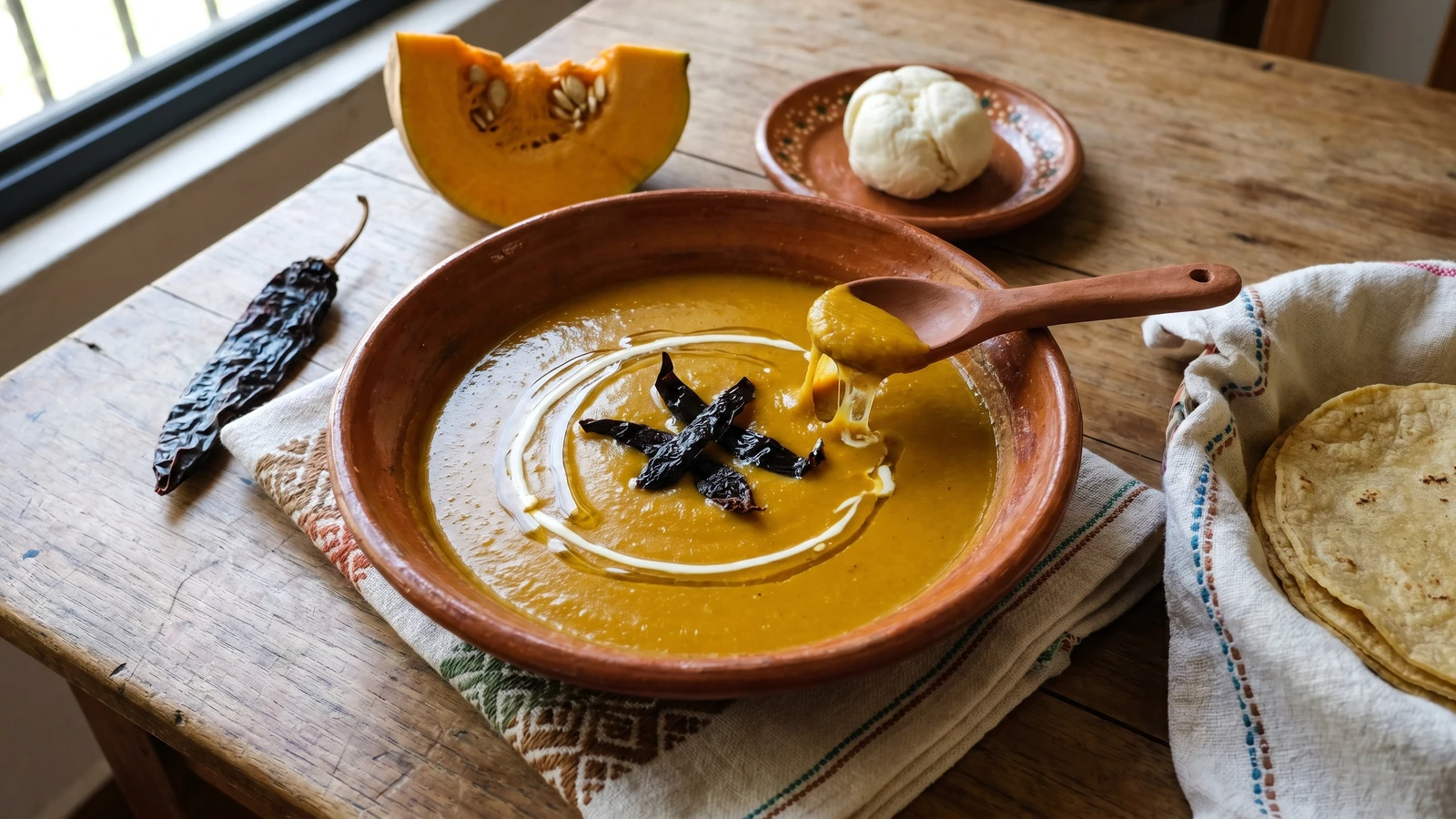
Oaxaca's velvety calabaza de Castilla soup, slow-simmered with white onion and epazote, blended smooth and poured scalding over quesillo that stretches into long strings at the bottom of the bowl.
This is an Oaxacan soup. Not a generic Mexican pumpkin soup, not a butternut bisque with a Latin twist. This is crema de calabaza the way the senoras in the Valles Centrales make it: calabaza de Castilla cooked down with white onion, garlic, and a sprig of epazote, blended until the pot gives you something the color of burnt gold, and poured scalding hot over a tangle of quesillo sitting at the bottom of a clay bowl.
The calabaza de Castilla is the squash that matters here. It's the one with the hard gray-green rind and the deep orange flesh that tastes like the earth remembered what sweetness was. In the mercados of Oaxaca, from the Central de Abastos to the smaller tianguis in Tlacolula and Ocotlan, you'll find them piled in pyramids from September through February. The vendors will thump them for you and tell you which ones are ready. If your calabaza is watery or bland, the soup will be watery and bland. Si no conoces el mercado, no conoces la cocina.
The quesillo is what turns this from a simple crema into something that makes you sit down and pay attention. You tear it into long strings, coil them at the bottom of the bowl, and pour the hot soup over them. The heat softens the cheese without dissolving it. You pull a spoonful and the quesillo stretches from the bowl to your mouth in a single unbroken thread. That pull is the dish. My mother didn't make this one, she was from Jalisco and her soups were different, but the first time a woman in Etla handed me a bowl of this at her kitchen table, I wrote the recipe in my notebook before I finished eating. I've made it a hundred times since. Recetas probadas y garantizadas.
The chile pasilla oaxaqueno crumbled on top is not decoration. It's the smoky, fruity heat that keeps the sweetness of the calabaza honest. One chile, toasted on the comal, torn into pieces. That's all it takes to remind you this is Oaxaca, not a spa menu.
Calabaza de Castilla (Cucurbita moschata) is one of the oldest cultivated plants in Mesoamerica, domesticated alongside corn and beans as the third pillar of the milpa system at least 7,000 years ago in what is now southern Mexico. Oaxaca's quesillo, the stretched-curd cheese also called queso Oaxaca, originated in the Valles Centrales in the late 19th century and is traditionally attributed to a young girl in the town of Reyes Etla who accidentally left fresh curds in hot water too long and discovered they could be pulled into long elastic strands, a technique analogous to Italian mozzarella but developed independently. The pairing of calabaza and fresh cheese in soups and guisados predates the colonial period, when indigenous cooks combined squash with fresh curd from goat's or cow's milk introduced by the Spanish, creating a marriage of Old and New World ingredients that became a daily-life staple rather than a ceremonial one.
Quantity
2 pounds
peeled, seeded, and cut into 2-inch chunks
Quantity
1 tablespoon
Quantity
1 medium
roughly chopped
Quantity
2
peeled and smashed
Quantity
4 cups
Quantity
1 sprig
Quantity
1 teaspoon, plus more to taste
Quantity
8 ounces
pulled into long strings
Quantity
1
Quantity
2 tablespoons
| Ingredient | Quantity |
|---|---|
| calabaza de Castillapeeled, seeded, and cut into 2-inch chunks | 2 pounds |
| manteca de cerdo | 1 tablespoon |
| white onionroughly chopped | 1 medium |
| garlic clovespeeled and smashed | 2 |
| homemade chicken broth | 4 cups |
| fresh epazote | 1 sprig |
| kosher salt | 1 teaspoon, plus more to taste |
| quesillo (Oaxacan string cheese)pulled into long strings | 8 ounces |
| dried chile pasilla oaxaqueno | 1 |
| crema mexicana (optional) | 2 tablespoons |
Melt the manteca de cerdo in a heavy 4-quart pot or cazuela over medium heat. Add the chopped onion and smashed garlic. Cook for four to five minutes, stirring occasionally, until the onion is soft and translucent but has taken no color. You are not caramelizing. You are building a base. The sweetness of this soup comes from the calabaza, not from browned onions. Keep the heat honest and patient.
Add the calabaza chunks to the pot and stir them through the softened onion. Pour in the chicken broth. The liquid should just cover the squash. If it doesn't, add a little water. Bring to a simmer, then lower the heat until you see a lazy bubble every few seconds. Add the epazote sprig and the salt. Cover and cook for 25 to 30 minutes, until the calabaza is completely soft and falling apart when you press it with the back of a spoon. The flesh should be deep orange and yielding.
While the calabaza simmers, heat a dry comal or heavy skillet over medium. Lay the dried chile pasilla oaxaqueno flat on the surface and press it gently with a spatula. Toast for about 15 seconds per side, until the skin puffs and the chile releases a deep, smoky, almost fruity aroma. Do not let it blacken. Pull it off the comal immediately, let it cool, then tear it into rough pieces with your fingers. Set aside. This is your garnish and it does the work of tying the whole bowl back to Oaxaca.
Remove and discard the epazote sprig. Working in batches if necessary, transfer the soup to a blender and blend on high until completely smooth. You want the texture of heavy cream: no chunks, no fibers, no graininess. If the soup is too thick, add a splash of broth. If it is too thin, you used too much liquid or your calabaza was watery. Taste for salt now. The soup should taste deeply of squash, savory from the broth, with the faint mineral note of the epazote lingering underneath.
Pull the quesillo apart into long, thin strings. Do not cut it. Cutting defeats the point. The beauty of quesillo is the pull, the way it stretches and clings. Take a generous handful of strings for each bowl and coil them loosely at the bottom, like a nest. The cheese should sit there waiting for the hot soup to do its work.
Return the blended soup to the pot and bring it back to a full simmer. It needs to be very hot, hot enough to soften the quesillo the moment it makes contact. Ladle the soup directly over the coiled cheese in each bowl. You will see the edges of the quesillo go glossy and start to yield. If using crema mexicana, drizzle a thin line across the surface. Scatter the torn chile pasilla oaxaqueno over the top. Serve immediately. The first spoonful should pull a string of cheese from the bottom of the bowl to your mouth. That pull is the dish. Asi se hace y punto.
1 serving (about 400g)
Culinary guides, cultural storytelling, and the editorial depth that makes cooking meaningful.
Discover Culinary ExplorerChef Lupita
Aguascalientes' Bajio pozole de lengua, built with cacahuazintle hominy, tender beef tongue, chile ancho and guajillo, with xoconostle brightness and table garnishes.

Chef Lupita
Veracruz's Gulf coast rice from Alvarado, built with seafood stock, tomato, chile chipotle, epazote, shrimp, fish, jaiba, and pulpo, served loose and brothy in a clay cazuela.

Chef Lupita
Costa Chica's wet salt-beef stew, built from chile costeño, guajillo, tomato, manteca, yuca, plantain, and masa dumplings, the ranching pot of Cuajinicuilapa and Pinotepa.

Chef Lupita
Michoacán's P'urhépecha atápakua is a masa-thickened sauce and stew at once, built with pork, chile guajillo, and hierbabuena added only at the end.