
Chef Juliana
Açaí com Camarão do Pará
You think açaí belongs with banana and granola because that's the version that traveled. In Pará, thick unsweetened açaí sits beside shrimp, rice, and farinha. Anota aí: same fruit, different meal.
A cooking platform built around craft, culture, and the stories behind what we eat.
Created by
If fish on the grill makes you whisper isso não é pra mim, anota aí: salt, garlic, chicória, hot coals, and attention. Cooking isn't a gift, it's something you learn.
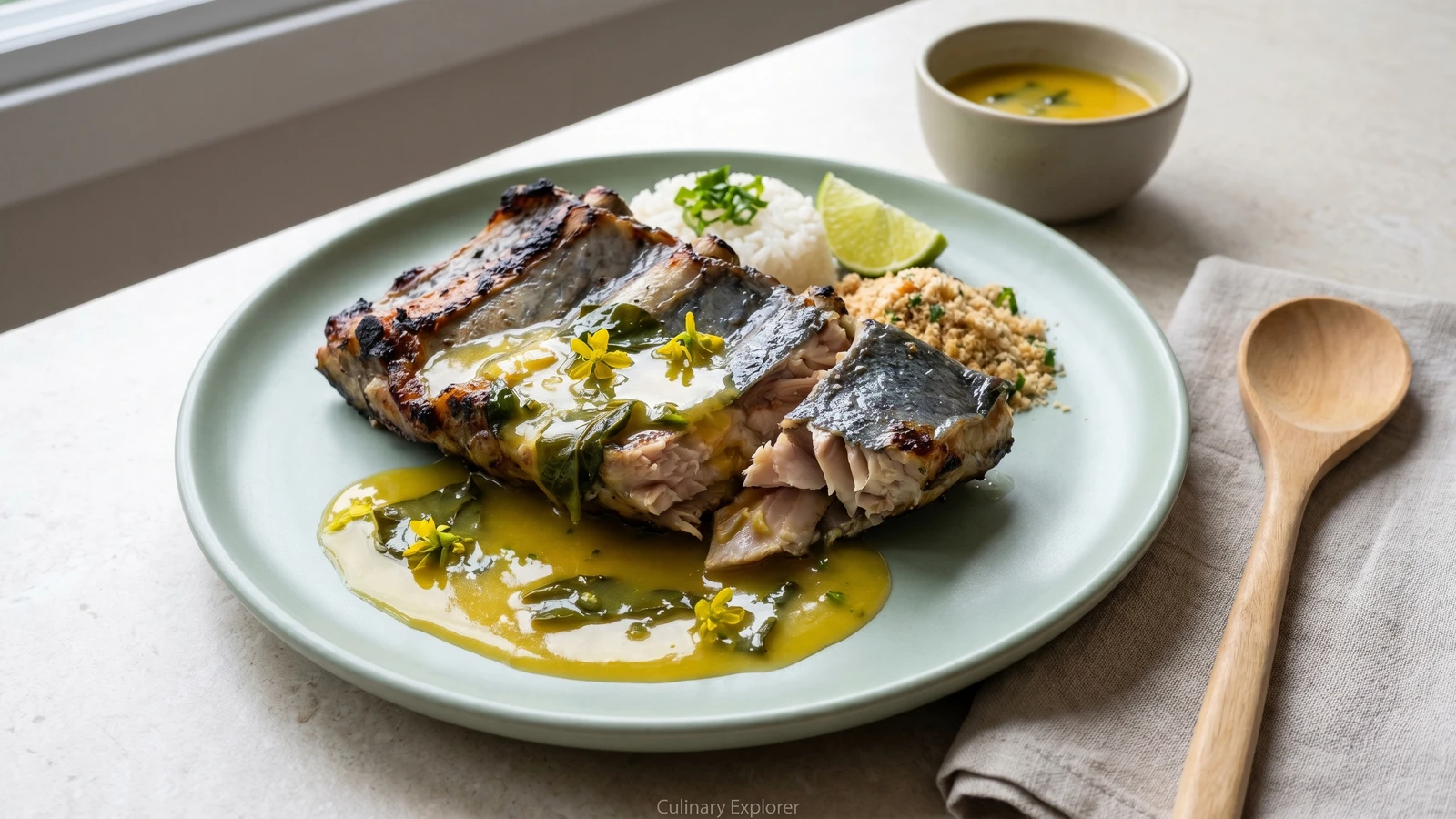
You look at a rack of tambaqui ribs and think, quietly, isso não é pra mim. Too regional, too grill, too easy to ruin. Good. That's the exact little lie a gente is going to cook through, because fish over coals is not a performance. It's heat, salt, patience, and knowing when to stop poking it.
I don't own this tradition. The cooks of Amazonas and Pará carry it, and anyone with sense should listen to them first. What I can do is teach a home version that respects the foundation: real fish, a paste of garlic and chicória-do-pará, and a tucupi base made from the real bottled thing. Molho amarelo from the shelf is not tucupi. It's a costume. Real tucupi has already gone through the long boil that makes mandioca brava safe by driving off its cyanogenic compounds, and that is the only honest starting point here.
The method is simple on purpose. Season the ribs so the salt reaches the meat. Grill skin-side down until the fat under the skin begins to shine and the edges darken. Brush with tucupi near the end, not at the beginning, because its acidity and color belong on the fish, not burnt onto the grate. If you find jambu, use it. That trembly, green bite is part of the plate. If you don't, say the truth and make the dish without it. Don't throw spinach in there and pretend.
Serve it like comida de verdade: arroz soltinho, feijão if you have it, farofa or mandioca, and something green. Even when the protein is river fish and the sauce is tucupi, the pê-efe is still doing its quiet job, feeding people and keeping the country itself.
Tambaqui is one of the great table fish of the Amazon basin, especially associated with Manaus and river markets where its fatty ribs are prized for grilling over charcoal. Tucupi belongs to the cassava traditions of the north, especially Pará and Amazonas, and is made from the yellow liquid pressed from mandioca brava, then boiled long enough to become safe and usable. Jambu, the mouth-tingling green used in dishes like tacacá and pato no tucupi, marks the regional plate clearly when it is available, but the tradition is carried by local cooks, not borrowed as decoration.
Quantity
4 ribs, about 2 1/2 to 3 pounds total
Quantity
1 1/2 teaspoons, plus more to taste
Quantity
2 tablespoons
Quantity
3 tablespoons, divided
Quantity
5 cloves
minced
Quantity
1/2 cup, divided
finely chopped
Quantity
1 small
finely chopped
Quantity
2 cups
already properly boiled and safe for cooking
Quantity
1 small
slit lengthwise
Quantity
1 cup
cleaned
Quantity
2 tablespoons
chopped
Quantity
as needed
for serving
Quantity
as needed
for serving
Quantity
as needed
for serving
| Ingredient | Quantity |
|---|---|
| tambaqui ribs | 4 ribs, about 2 1/2 to 3 pounds total |
| fine salt | 1 1/2 teaspoons, plus more to taste |
| lime juice | 2 tablespoons |
| neutral oil | 3 tablespoons, divided |
| garlicminced | 5 cloves |
| chicória-do-paráfinely chopped | 1/2 cup, divided |
| onionfinely chopped | 1 small |
| real bottled tucupialready properly boiled and safe for cooking | 2 cups |
| fresh chile (optional)slit lengthwise | 1 small |
| jambu leaves and tender stems (optional)cleaned | 1 cup |
| cheiro-verde (optional)chopped | 2 tablespoons |
| cooked white ricefor serving | as needed |
| farofa or boiled mandiocafor serving | as needed |
| lime wedgesfor serving | as needed |
Pat the tambaqui ribs dry, especially the skin side, then rub them with the salt, lime juice, 1 tablespoon of oil, 3 minced garlic cloves, and 1/4 cup of the chicória-do-pará. Let them sit for 20 minutes while you light the grill. Dry fish browns; wet fish sticks and tears, and then you stand there blaming yourself instead of the paper towel.
Warm 1 tablespoon of oil in a small pot over medium heat. Add the onion and cook until it goes soft and see-through, about 5 minutes. Add the remaining 2 garlic cloves and cook for 1 minute, just until you smell it, then stir in the remaining 1/4 cup chicória-do-pará. This refogado is the base, because tucupi needs company, not a packet pretending to be flavor.
Pour in the tucupi and add the slit chile if using. Bring it to a lively simmer, then lower the heat and let it bubble gently for 20 minutes, until the smell turns rounded and savory instead of sharp. If you have jambu, add it for the last 3 minutes, just until the leaves murchar and turn deep green. If you don't have it, leave it out and say so plainly. The dish still eats well.
Set up a charcoal grill for medium-hot heat, with one hotter side and one gentler side. Hold your hand about 5 inches above the grate: you should want to pull it away after 3 to 4 seconds. Too hot and the outside burns before the thick rib meat cooks; too weak and the fish dries out while you wait.
Oil the grate with the remaining 1 tablespoon oil, then lay the ribs skin-side down over the gentler heat. Cook without moving them for 12 to 15 minutes, until the skin tightens, the fat begins to shine, and the edges take on dark char. Leave them alone. Fish releases when it has browned enough; force it early and it stays on the grate.
Turn the ribs carefully with tongs and grill the flesh side for 5 to 8 minutes, until the thickest part flakes when pressed with a fork but still looks juicy. Brush with a few spoonfuls of hot tucupi during the last 2 minutes only. Brush too early and the garlic and tucupi burn bitter, which is a very silly way to lose a good fish.
Rest the ribs for 5 minutes, then spoon the hot tucupi and jambu over and around them. Finish with cheiro-verde if using and lime wedges on the side. Serve with arroz soltinho, farofa or mandioca, and something green. That's the pê-efe doing its job, river by river, plate by plate.
1 serving (about 500g)
Culinary guides, cultural storytelling, and the editorial depth that makes cooking meaningful.
Discover Culinary ExplorerChef Juliana
You think açaí belongs with banana and granola because that's the version that traveled. In Pará, thick unsweetened açaí sits beside shrimp, rice, and farinha. Anota aí: same fruit, different meal.

Chef Juliana
You think savory açaí is not for you. I understand. Then you taste the cold, dark bowl beside hot fried fish, rice, greens, and farinha, and dinner gets very quiet.

Chef Juliana
You think salted beef and rice sound like trouble. Anota aí: soak the charque, brown it properly, build the refogado, and this one pot resolves dinner.

Chef Juliana
You think a Maranhão green rice belongs to somebody else's clever hands. It doesn't. Wilt the vinagreira, build the refogado, fold it through arroz soltinho, and dinner gets bright, coastal, and yours.