
Chef Lupita
Acitrón de Cidra Conventual
Puebla's convent-style acitrón, made from cidra peel instead of endangered biznaga, built through repeated syrup soakings until the cubes turn firm, translucent, and ready for rosca or chiles en nogada.
A cooking platform built around craft, culture, and the stories behind what we eat.
Created by
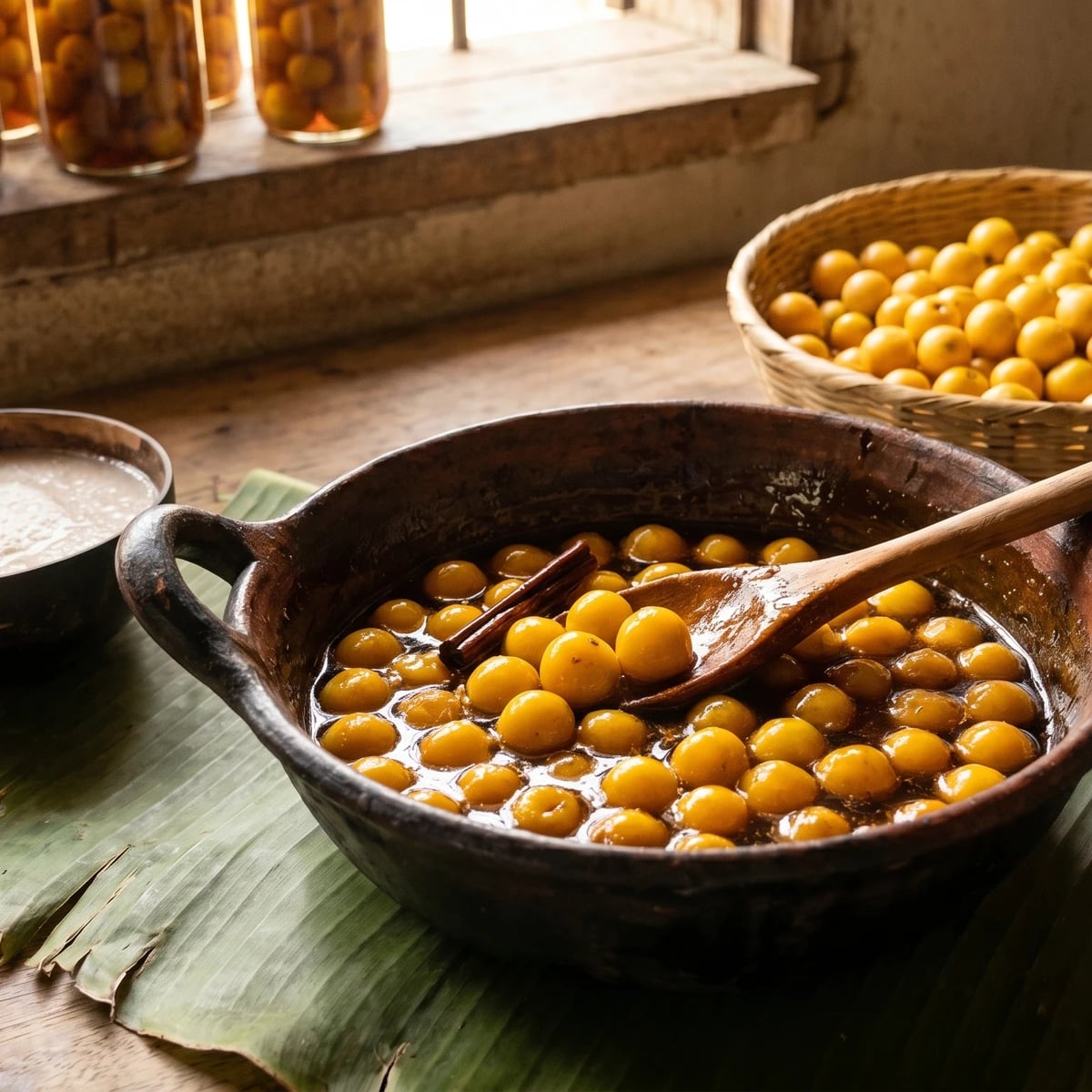
Tabasco's lowland nance cooked slowly in piloncillo syrup until the fruit turns glossy, tart, and fragrant, the kind of jar you see on market shelves in Villahermosa and the Chontalpa.
Tabasco, especially the Chontalpa and the lowlands around Villahermosa, is where this conserva belongs. Nance grows where the heat is heavy, the rivers are close, and the fruit sellers know exactly when the yellow fruit has crossed from hard and bitter to tart, floral, and ready for syrup.
This is not a fine-pastry dessert. It is market candy. The fruit stays whole, with its pit, because the pleasure is in eating it slowly and letting the piloncillo cling to the skin. The syrup should be dark amber, thick enough to coat a spoon, but not burnt. If you cook it too fast, the fruit wrinkles and the syrup tastes harsh. No me vengas con atajos.
I learned this style from a woman near the Pino Suarez market in Villahermosa who kept her jars lined on a wooden shelf, next to cocoyol, papaya, and oreja de mico. She told me the fruit decides the sugar. Tart nance takes more piloncillo. Sweeter nance takes less. Preguntale a las senoras del mercado. They know before the recipe does.
Serve it in a small clay cazuelita with a spoonful of syrup, beside pozol or black coffee. Cada estado, su propia cocina. Tabasco gives you heat, river fruit, cacao, and preserves that last because women made household economy into technique.
Nance, Byrsonima crassifolia, is native to tropical Mesoamerica and has been eaten fresh, fermented, and preserved since before the colonial period. In Tabasco and neighboring Chiapas, Campeche, and Veracruz, fruit preserves became a practical way to hold seasonal abundance through heat and humidity, using cane sugar, piloncillo, and clay or glass storage vessels introduced and expanded during the colonial sugar economy. The Chontal lowlands kept nance in both sweet conserva and fermented drinks, which is why aged jars can carry a faint tang without being a liquor.
Quantity
2 pounds
picked over, stems removed, rinsed
Quantity
6 cups
divided
Quantity
1 1/2 pounds
chopped
Quantity
1 cup
Quantity
1
Quantity
3
Quantity
1/2 teaspoon
Quantity
1/4 cup
Quantity
1 teaspoon
| Ingredient | Quantity |
|---|---|
| ripe yellow nancepicked over, stems removed, rinsed | 2 pounds |
| waterdivided | 6 cups |
| piloncillochopped | 1 1/2 pounds |
| granulated cane sugar | 1 cup |
| Mexican cinnamon stick (canela) | 1 |
| whole cloves | 3 |
| fine sea salt | 1/2 teaspoon |
| fresh Mexican lime juice | 1/4 cup |
| Mexican vanilla extract (optional) | 1 teaspoon |
Pick through the nance carefully. Keep the ripe yellow fruit that gives slightly under your fingers. Throw out any fruit with mold, deep bruises, or a sour rotten smell. Nance has a strong aroma naturally, almost cheesy to people who don't know it, but rotten fruit smells dirty. Learn the difference.
Bring 4 cups of water to a boil in a wide pot. Add the nance and simmer for 8 to 10 minutes, just until the skins relax and the fruit turns a deeper yellow. Drain. This takes away the raw edge and helps the syrup enter the fruit without breaking it apart.
In a heavy cazuela or wide stainless pot, combine the remaining 2 cups water, piloncillo, cane sugar, canela, cloves, and salt. Cook over medium heat, stirring until the piloncillo dissolves. Let it bubble gently for 10 minutes. The syrup should smell like cane, cinnamon, and dark caramel, not smoke.
Add the blanched nance to the syrup. Lower the heat and simmer uncovered for 45 to 55 minutes, stirring gently from the bottom every 10 minutes. Do not mash the fruit. The nance should stay whole, glossy, and plump, while the syrup thickens to the weight of warm honey. If the syrup reduces too fast before the fruit is tender, add 1/4 cup water and keep going.
Stir in the lime juice and simmer 5 minutes more. Add the vanilla only if using it, then turn off the heat. The lime sharpens the fruit and helps the syrup keep clean. Taste one nance when it is cool enough. It should be tart first, sweet second. That is Tabasco fruit, not supermarket jam.
Pack the hot fruit into clean hot pint jars, then ladle syrup over it, leaving 1/2 inch headspace. Tap the jars gently to release trapped air. Wipe the rims clean and close with lids. For refrigerator storage, cool completely and refrigerate. For shelf storage, process the closed jars in a boiling water bath for 10 minutes, then let them stand undisturbed until sealed.
Let the conserva rest at least 3 days before serving. A week is better. The syrup moves into the fruit and the nance gives back its tart perfume. Serve a few fruits with their thick syrup in a small clay dish. The pit stays inside, so eat it the way people eat it at home: slowly, without pretending fruit has to be convenient.
1 serving (about 150g)
Culinary guides, cultural storytelling, and the editorial depth that makes cooking meaningful.
Discover Culinary Explorer
Chef Lupita
Puebla's convent-style acitrón, made from cidra peel instead of endangered biznaga, built through repeated syrup soakings until the cubes turn firm, translucent, and ready for rosca or chiles en nogada.

Chef Lupita
Ciudad de México's Tulyehualco alegría is popped huautli folded into piloncillo honey, pressed with peanuts, pepitas, and raisins, then cut into the rectangular bars that built a pueblo's identity.

Chef Lupita
Oaxaca's pre-Columbian amaranth bar, popped on a hot comal and bound with piloncillo, honey, and the sacred Zapotec grain that the Spanish tried, and failed, to outlaw.

Chef Lupita
Querétaro's mercado candy of popped amaranto pressed with dark piloncillo syrup, pepitas, pecans, and cacahuate, a Bajío sweet that respects the seed before it decorates the table.