
Chef Lupita
Agua de Alfalfa
Ciudad de México's highland market agua fresca, fresh alfalfa blended with pineapple and lime until bright green, strained clean, and poured cold from the vitrolero.
A cooking platform built around craft, culture, and the stories behind what we eat.

Created by
Chiapas's highland spirit from Comitán, born from maguey aguamiel, timbre bark, piloncillo, fermentation, and licensed distillation. Serve it simply so the honeyed, herbal character stays in charge.
Chiapas, Los Llanos de Comitán. That is where Comiteco lives, in the cool highland air near the Guatemalan border, not in some generic bar menu under 'agave spirits.' This is the drink of Comitán de Domínguez, made from aguamiel, the sweet sap of maguey, worked by people who understood fermentation before anyone wrote fashionable words about it.
The defining ingredient is aguamiel. Not roasted agave piñas like mezcal. Not blue agave like tequila. Aguamiel. It is the liquid that comes from the living maguey before it becomes pulque, and in Comitán it was traditionally fermented with timbre bark and piloncillo, then distilled into a clear spirit with a soft sweetness and a green, herbal back edge. This is Chiapas answering in its own voice. Cada estado, su propia cocina.
I am not going to teach you to run an illegal still in your kitchen. No me vengas con atajos. Distillation belongs to trained, licensed producers because bad equipment can poison people or burn down a house. What I will teach you is how to serve Comiteco properly: cold but not frozen, in small copitas, with sour orange and a little piloncillo syrup only if the bottle needs rounding. The spirit should still taste like Comitán, not like a sugary cocktail hiding its origin.
In the markets around Comitán, people will tell you which bottle is serious and which one is just sweet alcohol with a pretty label. Pregúntale a las señoras del mercado. They know who is making it with respect and who is selling costume. Saber cocinar es saber vivir, and knowing what you pour is part of that.
Comiteco developed in and around Comitán de Domínguez, Chiapas, where producers distilled fermented aguamiel from maguey rather than the cooked agave mash used for mezcal. Historical accounts place its strongest regional identity in the 19th and early 20th centuries, before legal restrictions on small distillation and changing agave cultivation reduced production. Its traditional fermentation with timbre bark and piloncillo connects it to pulque-family practices while making it distinct from both mezcal and tequila.
Quantity
12 ounces
chilled
Quantity
1/2 cup
Quantity
2 ounces
chopped
Quantity
1 strip
without white pith
Quantity
1 tablespoon, plus more to taste
Quantity
1 pinch
Quantity
for serving
| Ingredient | Quantity |
|---|---|
| legally produced Comiteco de Comitánchilled | 12 ounces |
| water | 1/2 cup |
| piloncillochopped | 2 ounces |
| sour orange peelwithout white pith | 1 strip |
| fresh sour orange juice | 1 tablespoon, plus more to taste |
| sea salt from Chiapas or other fine sea salt | 1 pinch |
| sour orange wedges (optional) | for serving |
Start with legally produced Comiteco from Comitán or from a producer who identifies the aguamiel source. Read the label. If it says only 'agave spirit' and tastes like neutral alcohol with sugar, keep walking. Comiteco should have a soft honeyed nose, a green maguey note, and a finish that is clean, not harsh.
Combine the water, chopped piloncillo, sour orange peel, and salt in a small saucepan. Warm over medium-low heat, stirring until the piloncillo dissolves completely and the syrup looks clear brown and glossy. Do not boil it hard. You want the cane flavor to open, not turn bitter.
Remove the pan from the heat and let the syrup cool to room temperature. Pull out the sour orange peel. Stir in one tablespoon of sour orange juice. Taste it. It should be lightly bitter, lightly sweet, and bright enough to wake up the spirit without covering it.
Place six small clay copitas or narrow glasses on the table. Pour 2 ounces of chilled Comiteco into each one. Add 1/2 teaspoon piloncillo-sour orange syrup to each glass only if the spirit needs it. Serious bottles often need nothing. Así se hace y punto.
Serve with sour orange wedges on the side. Let each person add a few drops if they want a sharper edge. Sip it small. This is a celebration drink, not a glass to fill to the top. The first taste should show aguamiel sweetness, the second should show the herbal maguey character, and the finish should stay clean.
1 serving (about 85g)
Culinary guides, cultural storytelling, and the editorial depth that makes cooking meaningful.
Discover Culinary ExplorerChef Lupita
Ciudad de México's highland market agua fresca, fresh alfalfa blended with pineapple and lime until bright green, strained clean, and poured cold from the vitrolero.
Chef Lupita
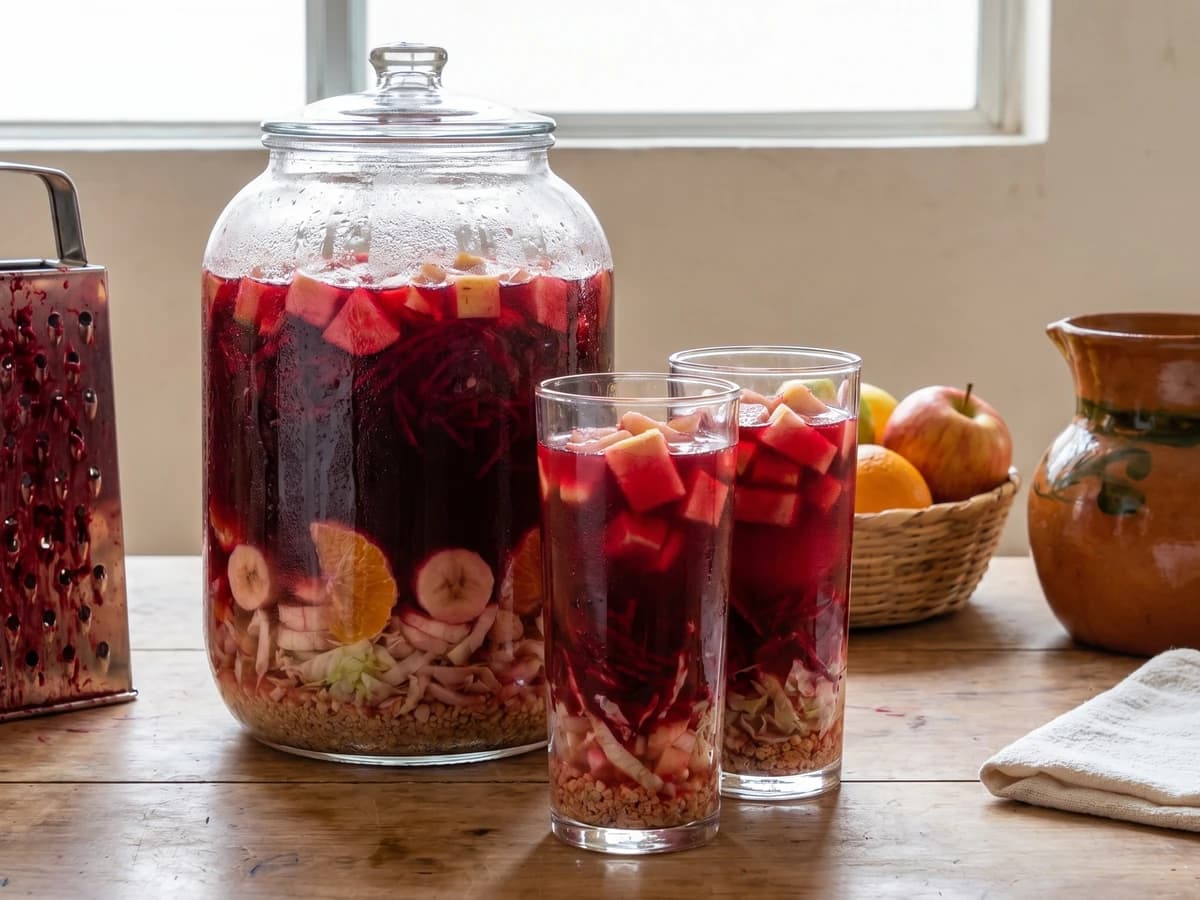
Aguascalientes' Lenten agua fresca, jewel-red from cooked beet and full of apple, banana, orange, lettuce, and ground peanuts, served cold when Holy Week meets the Feria de San Marcos.

Chef Lupita
Sonora and Sinaloa's creamy malted barley water, built on toasted cebada perla, Mexican canela, vanilla from Papantla, and evaporated milk. Pink-beige, rich, and served cold over heavy ice in a heavy glass tumbler. Liquid cookie comfort the northwest way.

Chef Lupita
Yucatán's everyday tonic of boiled chaya leaves blended with lima agria, sugar, and ice. The bright green jarra that sits on every Peninsula table from Mérida to Valladolid.