
Chef Lupita
Almendrados Conventuales Poblanos
Puebla's convent almond cookies, made from blanched almonds, sugar syrup, egg yolks, canela, and patient hands, the kind of sweet that belongs beside coffee in talavera, not in a plastic bakery box.
A cooking platform built around craft, culture, and the stories behind what we eat.
Created by
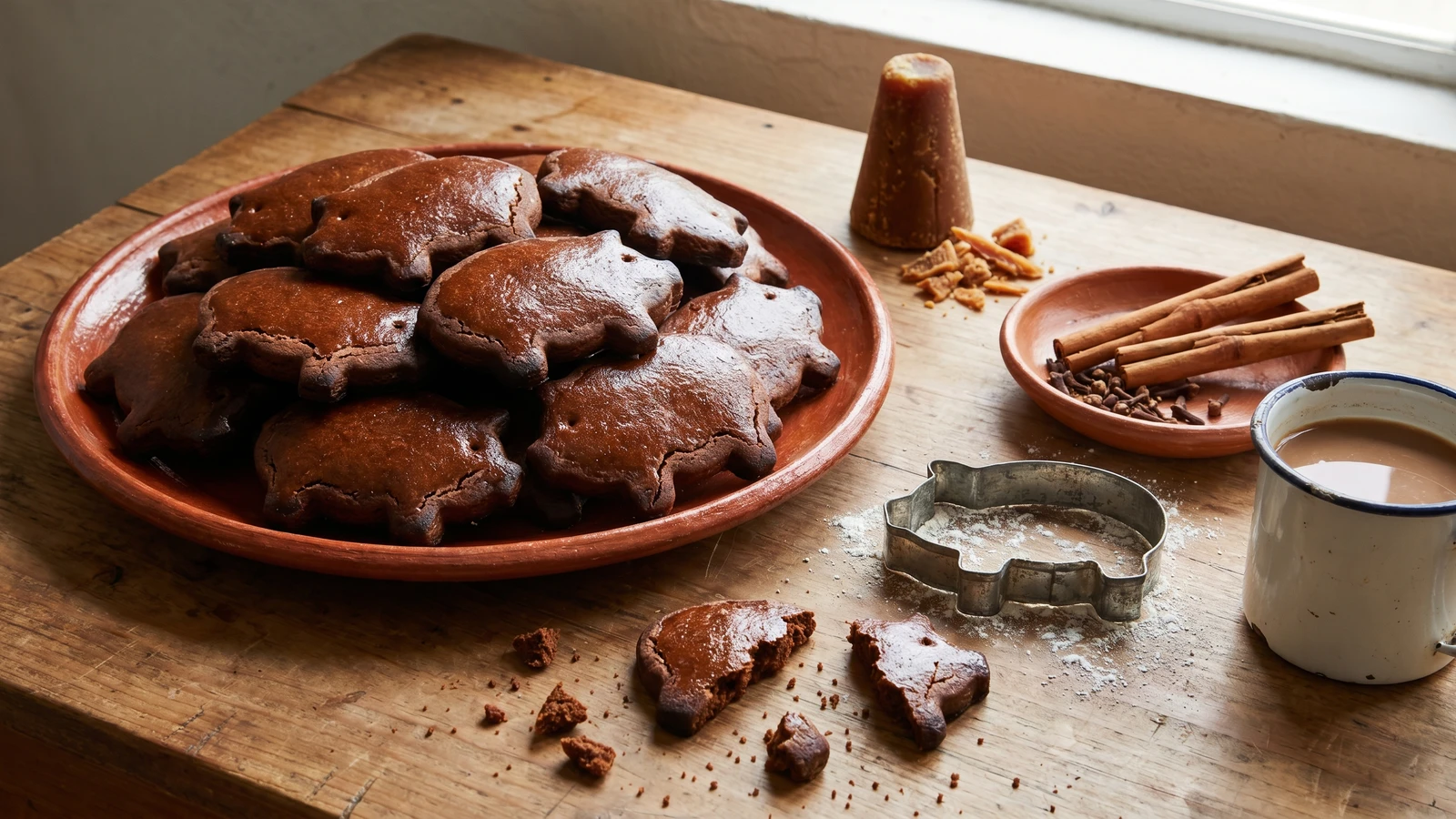
Tamaulipas's Huasteca pan dulce, pig-shaped and dark with piloncillo, canela, clavo, and manteca de cerdo, baked soft enough to dunk into café de olla without falling apart.
Tamaulipas, the Huasteca on the northern Gulf, is where these cochinitos stand first. Yes, you can find marranitos in panaderías from Tijuana to Mérida now. That does not erase the older Huasteca bread behind them, the chichimbré, carried through Tampico, Altamira, Mante, and the sugarcane towns where piloncillo was not a fancy ingredient. It was what the kitchen had.
There are no chiles here. Don't look for them. Not all Mexican food is built on heat. This one is built on piloncillo, wheat flour, canela, clavo, anís, and manteca de cerdo. The syrup gives the color. The lard gives the tenderness. The egg wash gives that brown panadería shine children recognize before they can read the sign on the bakery case.
I learned the feel from Huasteca panaderas who do not measure softness by a timer. They press the dough with two fingers. If it cracks, it needs a little milk. If it sticks like paste, it needs flour and rest. If the cochinito bakes hard, you overworked it or dried it out. My mother wrote one line in her notebook after buying them at La Merced: puerquitos, no los seques. Do not dry them out. She was right.
These are not ginger snaps. They should be thick, soft, dark, and sturdy enough to dip into café de olla or hot chocolate. Cada estado, su propia cocina, and the Huasteca gives you the lesson: cane, spice, fat, patience. Saber cocinar es saber vivir.
Cochinitos de piloncillo descend from chichimbré, a Huasteca sweet bread whose name is a regional deformation of the English word 'gingerbread,' linked to English presence around the Pánuco oil region in the early 20th century. Regional bakers replaced the gingerbread profile with local piloncillo, canela, clavo, anís, and lard, then shaped the dough into pigs as it spread through panaderías. The Huasteca crosses Tamaulipas, Veracruz, San Luis Potosí, Hidalgo, Querétaro, and northern Puebla, which is why this bread has many local names: cochinitos, puerquitos, marranitos, and chichimbrés.
Quantity
10 ounces
chopped into small pieces
Quantity
3/4 cup
Quantity
1
Quantity
3
Quantity
1 teaspoon
Quantity
3 3/4 cups
plus more for rolling
Quantity
1 teaspoon
Quantity
1 teaspoon
Quantity
1 teaspoon
Quantity
1/2 teaspoon
Quantity
1/2 cup
soft but not melted
Quantity
1
Quantity
1
Quantity
1 teaspoon
preferably Papantla vanilla
Quantity
1 to 2 tablespoons
only if the dough is dry
Quantity
1 egg plus 1 teaspoon water
for egg wash
| Ingredient | Quantity |
|---|---|
| piloncillochopped into small pieces | 10 ounces |
| water | 3/4 cup |
| Mexican canela stick | 1 |
| whole cloves | 3 |
| anise seed | 1 teaspoon |
| all-purpose wheat flourplus more for rolling | 3 3/4 cups |
| baking powder | 1 teaspoon |
| baking soda | 1 teaspoon |
| ground Mexican canela | 1 teaspoon |
| fine sea salt | 1/2 teaspoon |
| manteca de cerdosoft but not melted | 1/2 cup |
| large egg | 1 |
| large egg yolk | 1 |
| Mexican vanilla extractpreferably Papantla vanilla | 1 teaspoon |
| whole milk (optional)only if the dough is dry | 1 to 2 tablespoons |
| large egg beaten with waterfor egg wash | 1 egg plus 1 teaspoon water |
Put the piloncillo, water, canela stick, cloves, and anise seed in a small saucepan. Set it over medium-low heat and stir until the piloncillo dissolves completely. Simmer gently until the syrup smells dark and the spoon leaves a thin trail across the surface, about 8 to 10 minutes. Strain it and measure 3/4 cup. If you have more, simmer it a little longer. If you have less, add a spoonful of water. Cool completely before using. Hot syrup melts the lard and gives you a greasy dough. No me vengas con atajos.
Whisk the flour, baking powder, baking soda, ground canela, and salt in a wide bowl. Use your fingers to break up any lumps. Baking soda gives these cochinitos their soft lift and helps the piloncillo brown properly. Too much and they taste soapy. Measure like a grown cook.
Add the soft manteca de cerdo to the flour mixture. Rub it in with your fingertips until the flour looks sandy and holds together when you squeeze a handful. La manteca es el sabor. Butter makes a different cookie. Vegetable shortening makes a cheaper one. This dough wants lard.
Beat the egg, egg yolk, and vanilla in a small bowl. Add them to the flour mixture, then pour in the cooled piloncillo syrup. Mix with a wooden spoon until a dark, soft dough forms. Turn it onto the counter and knead only 6 to 8 times, just enough to bring it together. If the dough cracks at the edges, add milk one teaspoon at a time. If it smears on the counter, dust with a little flour. The dough should feel like soft clay, not wet batter.
Pat the dough into a thick disk, wrap it, and refrigerate for 45 minutes to 1 hour. This rest lets the piloncillo settle into the flour and makes the dough easier to roll. Skip the rest and the pig shapes will spread into something sad and shapeless.
Heat the oven to 350F. Line two baking sheets with parchment. Roll the dough on a lightly floured surface to 3/8 inch thick. Cut with a 4 to 5 inch pig-shaped cutter. Press straight down and lift straight up so the legs stay clean. If you do not own the cutter, trace a pig shape with a small knife from a cardboard template. The shape matters. A cochinito should look like a cochinito, así se hace y punto.
Set the cookies 1 inch apart on the prepared sheets. Brush the tops lightly with the egg wash, including the ears, snout, and legs. Bake one sheet at a time for 12 to 14 minutes, until the tops are glossy brown, the edges are set, and the centers still feel slightly soft when touched. Do not wait for them to become firm in the oven. They finish setting as they cool.
Let the cochinitos rest on the baking sheet for 5 minutes, then move them to a rack. Eat one warm if you have no discipline, but know this: they are better after several hours, and best the next day. The piloncillo softens the crumb overnight. Store in a covered tin or airtight container with a piece of parchment between layers.
1 serving (about 55g)
Culinary guides, cultural storytelling, and the editorial depth that makes cooking meaningful.
Discover Culinary ExplorerChef Lupita
Puebla's convent almond cookies, made from blanched almonds, sugar syrup, egg yolks, canela, and patient hands, the kind of sweet that belongs beside coffee in talavera, not in a plastic bakery box.

Chef Lupita
Ciudad de Mexico's panaderia banderillas are long sticks of hojaldre pressed with sugar, baked until amber, and finished with a hard glaze for coffee at the kitchen table.

Chef Lupita
Mérida's pale egg-yolk-and-vanilla kisses, tiny cookies built on eight yolks and a perfume of orange blossom, sandwiched with guava paste and dusted heavy with powdered sugar.

Chef Lupita
Hidalgo's bisquet de nata carries Pachuca's mining history into the breakfast table: a Cornish-style bread softened by Mexican nata, split warm and eaten with café de olla.