
Chef Graziella
Crostini di Fegatini alla Toscana
The spread that begins every proper Tuscan meal, where humble chicken livers transform into something silky and profound through sage, vin santo, and the patience to cook them correctly.
A cooking platform built around craft, culture, and the stories behind what we eat.

Created by
Golden puffs of fried dough from Florence, served warm with creamy stracchino cheese and thin slices of Tuscan prosciutto. The kind of antipasto that disappears before you can set down the platter.
Every region of Italy has its fried bread, and every region believes its version is superior. Emilia-Romagna has gnocco fritto. Naples has pizza fritta. Florence has coccoli, which means little darlings, and the name is accurate. These small, irregular puffs of yeasted dough fry into something golden outside, hollow and steaming inside, impossibly light despite being cooked in fat.
The genius is in the accompaniments. Stracchino is a soft, spreadable cheese from Lombardy, mild and creamy with a slight tang. You tear open a hot coccolo, smear it with cheese, and the heat melts the stracchino just enough that it becomes almost liquid. Add a fold of prosciutto toscano, which is saltier and more assertive than prosciutto di Parma, and you have a perfect bite: crisp, soft, rich, salty, and fleeting.
Florentine trattorias serve these before dinner with glasses of young Chianti. They are meant to be eaten standing up, crowded around a wooden board, reaching past each other for the last one. This is not elegant food. This is the food that makes you feel welcome.
Coccoli emerged from the Florentine tradition of frying bread dough in rendered pork fat, a practice common among rural families who butchered their own pigs each winter. The pairing with stracchino and prosciutto became standard in Florentine wine bars and trattorias during the mid-20th century, transforming humble fried dough into a beloved antipasto.
Quantity
500g
Quantity
7g (1 packet)
Quantity
300ml
about 110°F
Quantity
10g
Quantity
2 tablespoons
Quantity
about 1 liter
for frying
Quantity
250g
at room temperature
Quantity
150g
sliced thin
| Ingredient | Quantity |
|---|---|
| bread flour | 500g |
| active dry yeast | 7g (1 packet) |
| warm waterabout 110°F | 300ml |
| fine sea salt | 10g |
| extra virgin olive oil | 2 tablespoons |
| vegetable oil or lardfor frying | about 1 liter |
| stracchino cheeseat room temperature | 250g |
| prosciutto toscanosliced thin | 150g |
Dissolve the yeast in warm water. The water should feel like a warm bath, not hot. Hot water kills yeast. Let it sit five minutes until foamy. If it does not foam, your yeast is dead and you must start again with fresh yeast.
Place the flour in a large bowl and make a well in the center. Add the salt to the flour, not directly to the yeast water. Pour in the yeast mixture and olive oil. Stir with a wooden spoon until a shaggy dough forms, then turn it onto a work surface and knead for 8 to 10 minutes. The dough should become smooth, elastic, and slightly tacky but not sticky. It will feel alive under your hands.
Shape the dough into a ball and place it in a lightly oiled bowl. Cover with a clean kitchen towel or plastic wrap. Let it rise in a warm place until doubled in size, about one hour. The dough is ready when you press it with a finger and the indent remains.
Turn the risen dough onto a lightly floured surface. Do not punch it down aggressively. Gently flatten it into a rectangle about one inch thick. Using a bench scraper or sharp knife, cut the dough into rough pieces about the size of a walnut, approximately one inch across. The shapes should be irregular. This is rustic food, not pastry.
Pour the oil into a deep, heavy pot to a depth of at least three inches. Heat to 350°F. Use a thermometer. Guessing the temperature of frying oil leads to greasy, heavy results. The oil should shimmer but not smoke. Test with a small piece of dough: it should sink, then immediately rise to the surface surrounded by vigorous bubbles.
Working in batches of six or seven, carefully lower the dough pieces into the hot oil. Do not crowd the pot. The coccoli will puff dramatically and turn golden, about two minutes per batch. Turn them once with a slotted spoon to ensure even coloring. They should be deep gold on all sides, hollow inside.
Transfer the fried coccoli to a plate lined with paper towels. Season immediately with a light sprinkle of fine salt while still hot. The salt adheres to the oil on the surface. Continue frying in batches, maintaining the oil temperature between each.
Arrange the warm coccoli on a serving board or platter. Place the stracchino in a small bowl alongside, and drape the prosciutto in loose folds nearby. Guests tear open the coccoli and spread them with the soft cheese, then wrap a slice of prosciutto around or eat it in alternating bites. This is food for eating with your hands while standing around the kitchen, talking and waiting for dinner.
1 serving (about 210g)
Culinary guides, cultural storytelling, and the editorial depth that makes cooking meaningful.
Discover Culinary ExplorerChef Graziella
The spread that begins every proper Tuscan meal, where humble chicken livers transform into something silky and profound through sage, vin santo, and the patience to cook them correctly.

Chef Graziella
The Tuscan ritual of November, when farmers bring bread to the frantoio and baptize it with oil still cloudy from the press. Four ingredients. No room to hide.
Chef Graziella
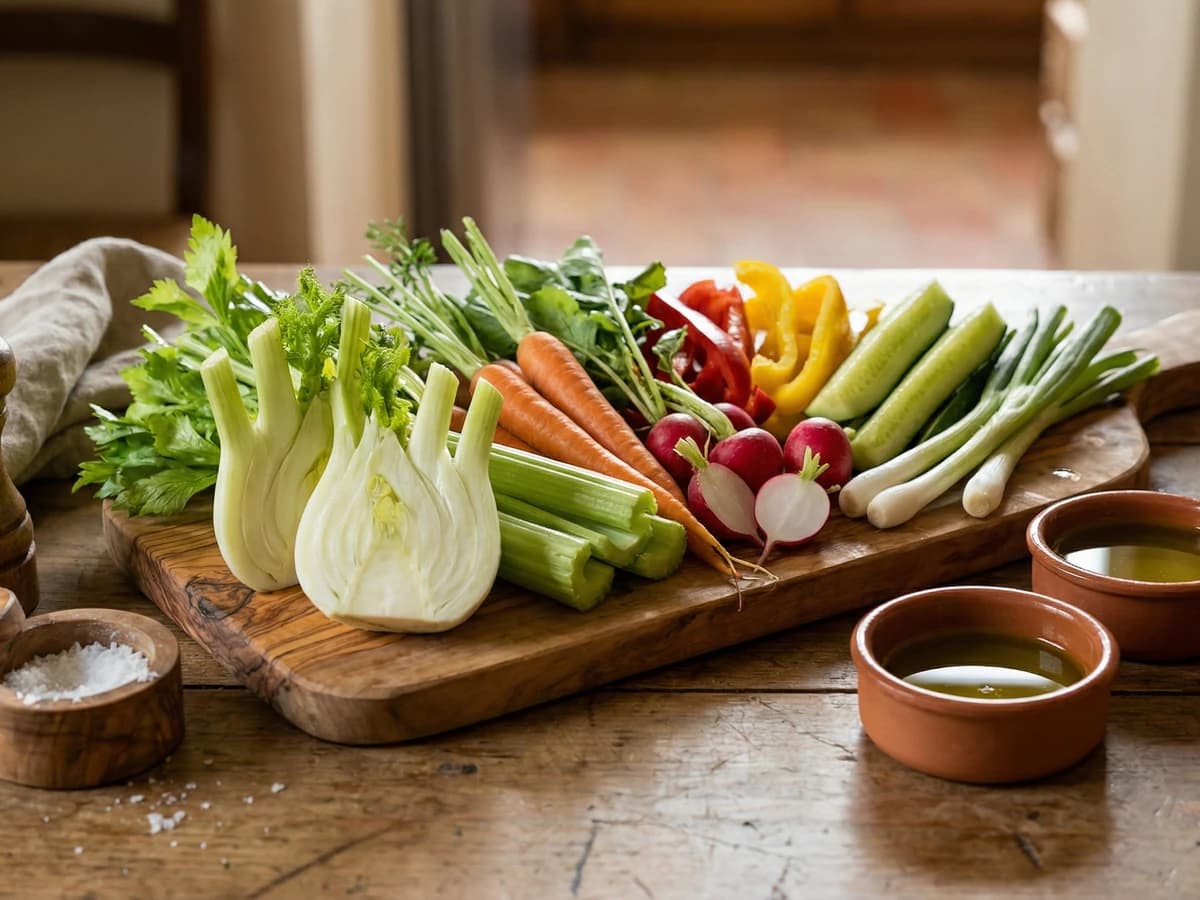
Tuscany's simplest and most honest antipasto: raw vegetables dipped in pools of excellent olive oil, seasoned with salt and pepper. A celebration of what restraint can achieve.

Chef Juliette
Tiny éperlans, lightly floured and fried until their tails stand crisp, arrive in a generous heap on a napkin with fried parsley and grooved lemon, a weeknight lesson in heat and restraint.