
Chef Lupita
Acitrón de Cidra Conventual
Puebla's convent-style acitrón, made from cidra peel instead of endangered biznaga, built through repeated syrup soakings until the cubes turn firm, translucent, and ready for rosca or chiles en nogada.
A cooking platform built around craft, culture, and the stories behind what we eat.
Created by
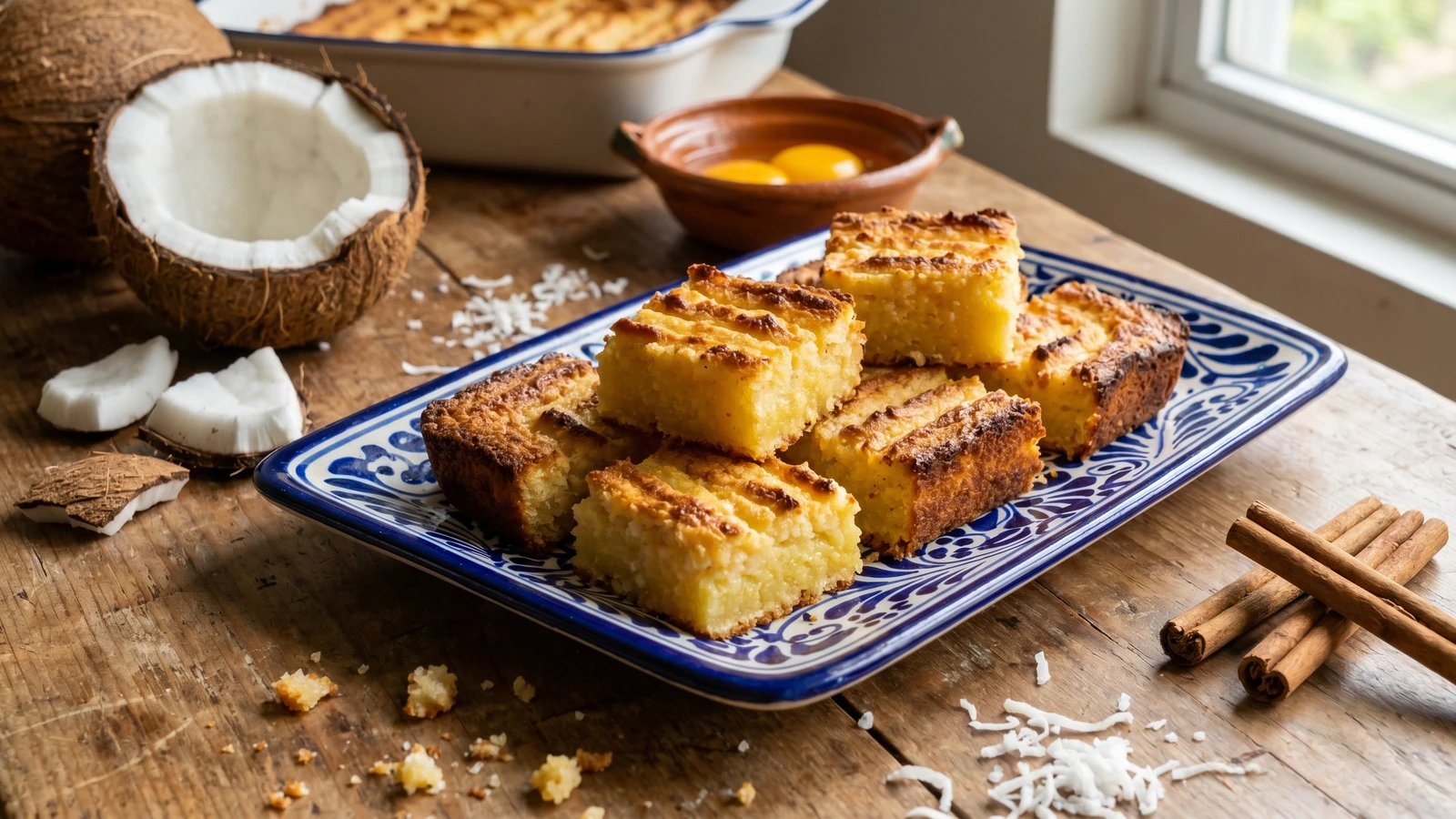
Puebla's convent-style baked coconut candy, cooked with milk, sugar, canela, and egg yolks before the oven gives it golden edges and a crisp top.
Puebla de los Angeles owns this cocada de horno through its convent kitchens, its talavera dishes, and its sweet shops tucked between churches and markets in the old city. This is inland Puebla, not the coast, so the coconut already tells you a story: it had to travel before a poblana cook turned it into candy.
The defining ingredient is fresh coconut, grated fine, then cooked with sugar, milk, canela, and egg yolks until the mixture thickens like a serious filling. The oven finishes the work. That is what separates cocada poblana de horno from the softer coconut sweets sold by the spoon. The top browns. The edges chew. The center stays tender. Crunchy where it should be, rich where it matters.
I learned a version of this from a woman near the Mercado de la Acocota who sold convent sweets wrapped in paper, each square cut with the same knife her mother had used. She told me, 'No la seques, Guadalupe. Cocada seca es castigo.' Do not dry it out. She was right. Sugar needs discipline, egg yolk needs patience, and coconut needs enough moisture to stay generous.
This is not a chile-and-lime caricature of Mexican food. This is Puebla: convent ovens, cane sugar, egg yolks left from clarifying wine and sweets, imported coconut made local by women who understood economy. Cada estado, su propia cocina.
Coconut reached central Mexico through Pacific trade routes tied to the Manila galleon, which connected Manila and Acapulco from 1565 to 1815 and moved Asian goods, plants, and techniques into New Spain. Puebla's convent kitchens became famous in the 17th and 18th centuries for sweets that combined sugar, egg yolks, dairy, nuts, and imported ingredients, turning elite trade goods into regional recipes. Cocada poblana de horno belongs to that convent-sweet tradition, distinct from coastal cocadas because it is enriched with yolk and baked until the surface browns.
Quantity
4 cups
packed
Quantity
1 1/2 cups
Quantity
1 cup
Quantity
1/2 cup
Quantity
1 stick
Quantity
1/4 teaspoon
Quantity
6
Quantity
2 tablespoons, plus more for the dish
softened
Quantity
1 teaspoon
Quantity
1 tablespoon
for dusting the baking dish
| Ingredient | Quantity |
|---|---|
| freshly grated coconutpacked | 4 cups |
| granulated sugar | 1 1/2 cups |
| whole milk | 1 cup |
| water | 1/2 cup |
| Mexican canela | 1 stick |
| fine sea salt | 1/4 teaspoon |
| large egg yolks | 6 |
| unsalted buttersoftened | 2 tablespoons, plus more for the dish |
| pure vanilla extract | 1 teaspoon |
| all-purpose flourfor dusting the baking dish | 1 tablespoon |
Heat the oven to 350F. Butter an 8-inch square baking dish, then dust it lightly with flour and tap out the excess. Use ceramic if you have it. Puebla serves sweets in talavera for a reason: it holds the heat evenly and looks like home, not like a hotel buffet.
In a heavy saucepan, combine the sugar, water, milk, canela, and salt. Bring to a steady simmer over medium heat, stirring until the sugar dissolves. Cook for 8 to 10 minutes, until the liquid looks glossy and slightly thickened. Do not walk away. Sugar behaves until it doesn't.
Stir in the grated coconut. Lower the heat to medium-low and cook for 12 to 15 minutes, stirring often, until the coconut absorbs most of the syrup and the mixture pulls away from the sides of the pan in heavy, wet clumps. This is where the candy gets its body. If it is soupy, keep cooking. No me vengas con atajos.
Remove the pan from the heat and discard the canela stick. Beat the egg yolks in a bowl until smooth. Spoon in a little hot coconut mixture while whisking, then repeat twice more. Now stir the warmed yolks back into the saucepan. If you dump cold yolks straight into the pot, they scramble. The nuns in Puebla knew better.
Return the pan to low heat. Stir in the butter and vanilla. Cook for 3 to 4 minutes, just until the mixture thickens again and looks rich, yellow, and heavy. Keep the heat low. Egg yolk gives cocada poblana its color and tenderness, but it punishes impatience.
Scrape the coconut mixture into the prepared dish and smooth the top with a wet spatula. Bake for 22 to 28 minutes, until the surface is golden in patches, the edges are deeper brown, and the center no longer jiggles when you nudge the dish. The top should be crisp under a knife, with a chewy center underneath.
Let the cocada cool completely in the dish. Completely means completely. Cut it warm and it collapses into sweet coconut paste. Cut it cool and you get clean squares with browned edges and a tender middle. Serve in small pieces. This is candy, not cake. Así se hace y punto.
1 serving (about 55g)
Culinary guides, cultural storytelling, and the editorial depth that makes cooking meaningful.
Discover Culinary ExplorerChef Lupita
Puebla's convent-style acitrón, made from cidra peel instead of endangered biznaga, built through repeated syrup soakings until the cubes turn firm, translucent, and ready for rosca or chiles en nogada.

Chef Lupita
Ciudad de México's Tulyehualco alegría is popped huautli folded into piloncillo honey, pressed with peanuts, pepitas, and raisins, then cut into the rectangular bars that built a pueblo's identity.

Chef Lupita
Oaxaca's pre-Columbian amaranth bar, popped on a hot comal and bound with piloncillo, honey, and the sacred Zapotec grain that the Spanish tried, and failed, to outlaw.

Chef Lupita
Querétaro's mercado candy of popped amaranto pressed with dark piloncillo syrup, pepitas, pecans, and cacahuate, a Bajío sweet that respects the seed before it decorates the table.