
Chef Lupita
Acitrón de Cidra Conventual
Puebla's convent-style acitrón, made from cidra peel instead of endangered biznaga, built through repeated syrup soakings until the cubes turn firm, translucent, and ready for rosca or chiles en nogada.
A cooking platform built around craft, culture, and the stories behind what we eat.
Created by
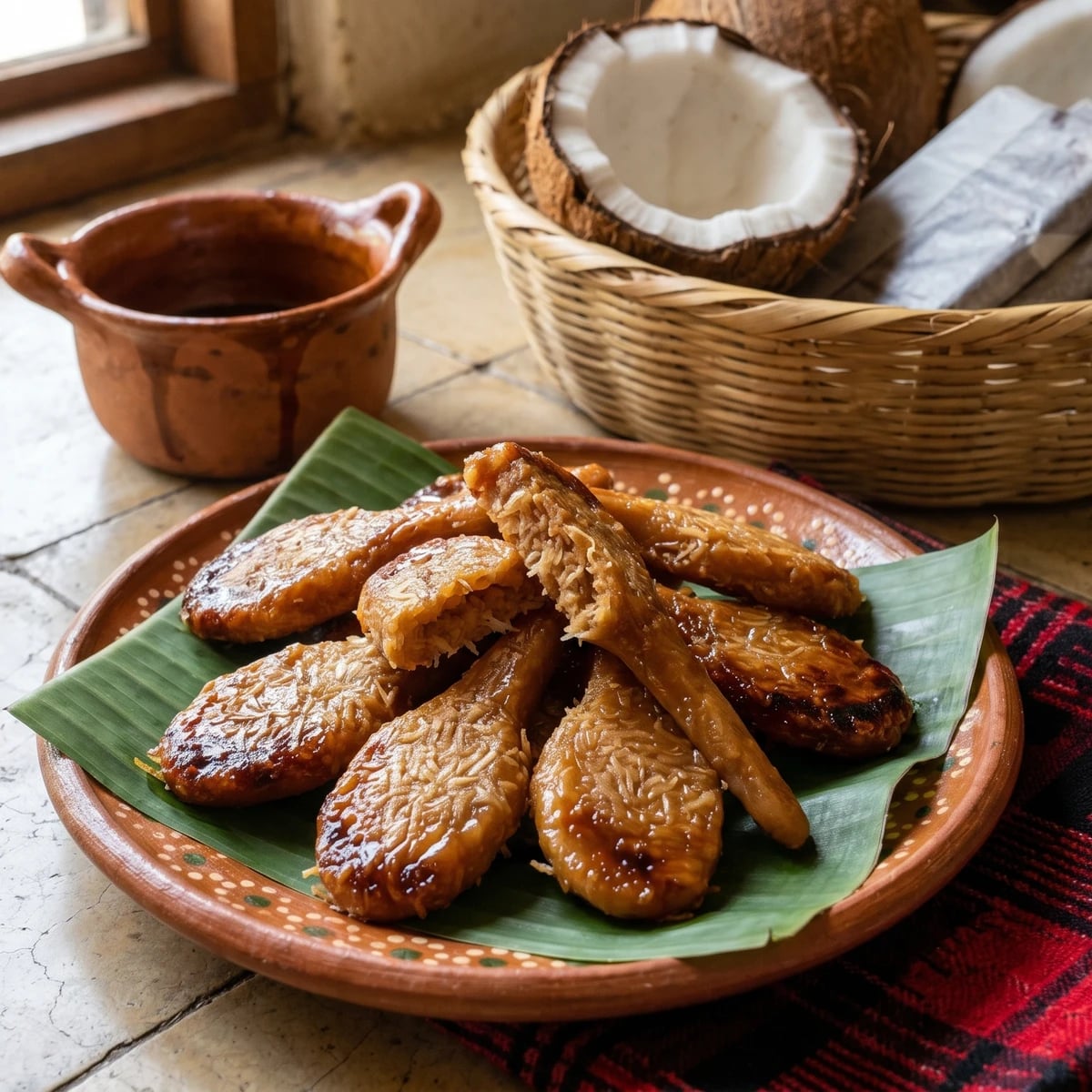
Chiapas's coastal coconut candy, cooked slowly with milk, piloncillo, sugar, and canela until the fresh coconut turns chewy, glossy, and honey-brown.
Chiapas owns this cocada from the coast up into the market dulcerias of Chiapa de Corzo and San Cristobal de las Casas. The coconut belongs first to the humid south, to Tonala, Arriaga, Pijijiapan, the road toward the Soconusco, where coco fresco is not a perfume in a bottle. It is a fruit you crack, peel, grate, and cook until it behaves.
This is candy, not cake. No fondant. No piped frosting. No fine-pastry nonsense. Cocada chiapaneca is shredded fresh coconut cooked low and slow with leche entera, sugar, piloncillo, and canela until the milk reduces and the coconut takes on that honey-brown color. The work is in the stirring. If you leave it alone, it scorches. If you rush it, it stays wet. La cocina no es decoracion, es trabajo.
I learned this version from a señora in the market at Chiapa de Corzo during Fiesta Grande. She shaped each mound with two spoons while the mixture was still hot enough to shine, and she did not measure with anything but her hand and her eye. I measure for you because students need a road. But your nose and your spoon will tell you when the cocada is ready. Saber cocinar es saber vivir.
Coconut entered Mexico through colonial trade routes that connected the Pacific coast to Asia by way of the Manila galleons, then spread through the tropical coasts of Guerrero, Oaxaca, Chiapas, Tabasco, and Veracruz. In Chiapas and neighboring Tabasco, coconut sweets became part of the dulceria tradition alongside preserved fruits, marquesote, turuletes, and cacao-based drinks tied to the Maya south. Cocada varies across Mexico: some states bake it with egg yolk, while Chiapas versions often stay stovetop, milk-rich, and shaped by spoon into soft chewy mounds.
Quantity
2
cracked, peeled, and finely shredded, about 5 cups packed
Quantity
3 cups
Quantity
1 cup
Quantity
1/2 cup
Quantity
1 stick, about 3 inches
Quantity
1/4 teaspoon
Quantity
2
lightly beaten
Quantity
1 teaspoon
Quantity
for greasing the tray
| Ingredient | Quantity |
|---|---|
| mature fresh coconutscracked, peeled, and finely shredded, about 5 cups packed | 2 |
| whole milk | 3 cups |
| granulated sugar | 1 cup |
| grated piloncillo | 1/2 cup |
| Mexican cinnamon stick (canela) | 1 stick, about 3 inches |
| fine sea salt | 1/4 teaspoon |
| large egg yolkslightly beaten | 2 |
| vanilla extract | 1 teaspoon |
| unsalted butter | for greasing the tray |
Crack the coconuts and drain the water. Pry out the white meat, peel away the thin brown skin with a small knife or vegetable peeler, and shred the coconut finely on a box grater or in a food processor. Do not turn it into paste. You want fine shreds that still have texture under the teeth.
Set a wide heavy cazuela or Dutch oven over medium-low heat. Add the whole milk, granulated sugar, piloncillo, canela, and salt. Stir until the sugars dissolve and the milk turns the color of weak coffee. Piloncillo gives the cocada its deep flavor. White sugar alone makes a flat candy.
Add the shredded coconut and stir well. Lower the heat so the mixture bubbles gently. Cook for 45 to 55 minutes, stirring often at first and almost constantly once the mixture thickens. Scrape the bottom and corners of the pot every time. The coconut should drink up the milk, turn glossy, and darken from white to pale honey.
Keep cooking until a spoon dragged across the bottom leaves a clean path for two seconds before the coconut closes back in. The mixture should mound instead of run. If it smells scorched, your heat is too high. Candy punishes impatience. No me vengas con atajos.
Remove the pot from the heat. Scoop 1/2 cup of the hot coconut mixture into the beaten egg yolks and whisk quickly. Stir the warmed yolks back into the pot. Return to low heat and cook for 3 to 5 minutes, stirring constantly, until the mixture looks glossy and holds together. The yolks give body and color. They should not scramble.
Remove the canela stick and stir in the vanilla. Taste carefully. It should be sweet, rich with milk, and unmistakably coconut, not just sugar. If the mixture still looks loose, cook it a few minutes more. A good cocada holds its shape without becoming dry.
Lightly grease a tray with unsalted butter. While the mixture is warm, use two spoons to shape rough mounds, about 2 tablespoons each, and set them on the tray. Do not make them perfect. Market cocadas have the hand of the cook in them. Let them cool until firm on the outside and tender inside.
1 serving (about 40g)
Culinary guides, cultural storytelling, and the editorial depth that makes cooking meaningful.
Discover Culinary Explorer
Chef Lupita
Puebla's convent-style acitrón, made from cidra peel instead of endangered biznaga, built through repeated syrup soakings until the cubes turn firm, translucent, and ready for rosca or chiles en nogada.

Chef Lupita
Ciudad de México's Tulyehualco alegría is popped huautli folded into piloncillo honey, pressed with peanuts, pepitas, and raisins, then cut into the rectangular bars that built a pueblo's identity.

Chef Lupita
Oaxaca's pre-Columbian amaranth bar, popped on a hot comal and bound with piloncillo, honey, and the sacred Zapotec grain that the Spanish tried, and failed, to outlaw.

Chef Lupita
Querétaro's mercado candy of popped amaranto pressed with dark piloncillo syrup, pepitas, pecans, and cacahuate, a Bajío sweet that respects the seed before it decorates the table.