Culinary Explorer

A cooking platform built around craft, culture, and the stories behind what we eat.
Discover Culinary Explorer
Classic Deviled Eggs

Classic Deviled Eggs

Created by

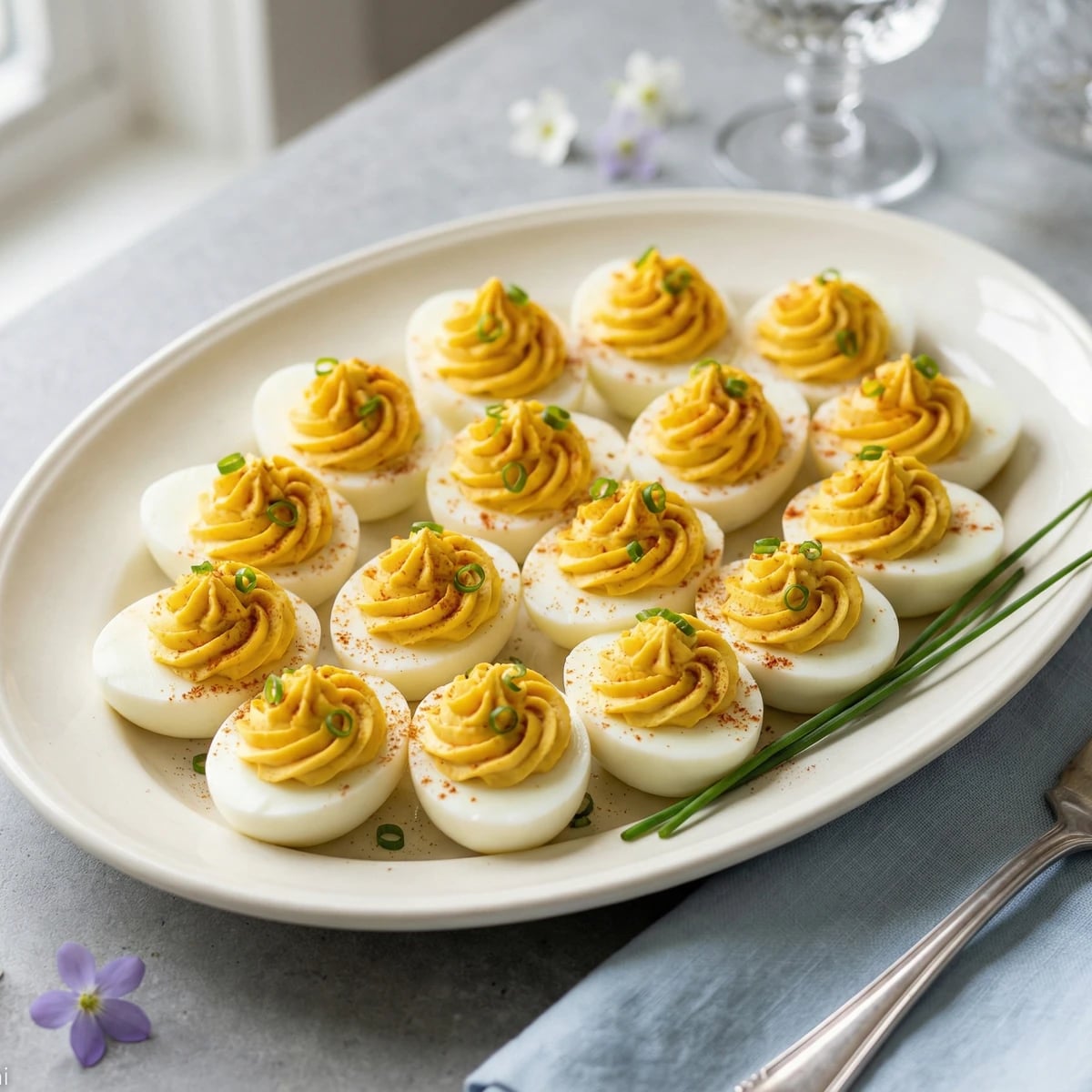
Silky yolk filling piped into flawless whites, dusted with smoky paprika. This is the dish that vanishes first from every Easter table, and for good reason.

Appetizers & Snacks
American
Easter
30 min
Active Time
15 min cook45 min total
Yield24 deviled egg halves

The deviled egg is American entertaining distilled to its essence. A single bite of protein, fat, and tang, designed to be eaten standing up while holding a drink in the other hand. Every church potluck, every holiday table, every summer picnic in this country has seen platters of these little wonders disappear before the host can set down the serving dish.

The technique predates our nation by centuries. Roman cooks stuffed eggs with spiced pastes. Medieval Europeans dressed them with mustard. But it was American home cooks who perfected the form we know today: smooth yolk filling made impossibly creamy with mayonnaise, brightened with mustard and vinegar, piped back into gleaming white vessels, and crowned with paprika. This is honest food. Unpretentious. Universally beloved.

The secret to exceptional deviled eggs lives in two places: the cooking of the eggs themselves, and the texture of your filling. I've watched countless cooks produce gray-green rings around chalky yolks, then mask the damage with too much mayonnaise. That won't happen here. You'll learn to cook eggs that peel cleanly and reveal golden centers every time. The filling should be smooth enough to pipe but substantial enough to hold its shape. Get these right and you'll become the person everyone asks to bring the deviled eggs.

For Easter gatherings, this is your anchor dish. Make them the day before, keep them covered and cold, and watch them vanish within minutes of hitting the table. Three dozen is never too many. I've never seen leftovers.

The technique, the tradition, and the story behind every dish.

Discover Culinary Explorer

Ingredients

large eggs

Quantity

12

mayonnaise

Quantity

1/3 cup

Dijon mustard

Quantity

1 tablespoon

yellow mustard

Quantity

1 teaspoon

white wine vinegar or cider vinegar

Quantity

1 tablespoon

fine sea salt

Quantity

1/4 teaspoon

plus more to taste

white pepper

Quantity

1/8 teaspoon

cayenne pepper

Quantity

pinch

smoked paprika

Quantity

for garnish

fresh chives (optional)

Quantity

for garnish

Equipment Needed

  • Large saucepan
  • Large bowl for ice bath
  • Slotted spoon
  • Piping bag with large star tip (or zip-top bag)
  • Fine-mesh sieve (optional, for silkiest filling)
  • Deviled egg platter or serving plate

Instructions

  1. 1

    Prepare the ice bath

    Fill a large bowl with ice and cold water. Set it near the stove. This bath stops the cooking instantly and makes the difference between golden yolks and that unappetizing green-gray ring. Don't skip this step.

    Use more ice than you think necessary. The eggs will warm the water quickly, and you need it to stay cold.
  2. 2

    Cook the eggs

    Place eggs in a single layer in a large saucepan and cover with cold water by one inch. Set over high heat and bring to a full rolling boil. The moment you see large bubbles breaking the surface aggressively, cover the pot, remove it from heat entirely, and let it stand for exactly 10 minutes. Not 8. Not 12. Ten minutes produces yolks that are fully set but still golden and creamy, never chalky.

    Eggs that are 7-10 days old peel more easily than fresh eggs. The membrane separates from the shell as eggs age. Plan accordingly.
  3. 3

    Shock and chill

    Using a slotted spoon, transfer eggs immediately to the ice bath. Let them chill for at least 5 minutes, longer if you have time. This rapid cooling stops residual heat from continuing to cook the yolks and contracts the egg slightly away from the shell, making peeling far easier.

  4. 4

    Peel the eggs

    Gently tap each egg on the counter to crack the shell all over, creating a network of small fractures. Roll it gently under your palm to loosen the shell completely. Start peeling at the wide end where the air pocket lives. Peel under cool running water if the shells resist. Work slowly. A single torn white ruins the presentation. Rinse each peeled egg to remove any shell fragments and place on a clean kitchen towel to dry.

  5. 5

    Halve and extract yolks

    Using a sharp knife, slice each egg in half lengthwise. Wipe the blade clean between cuts for neat edges. Gently pop the yolks into a medium bowl, setting the whites cavity-side up on your serving platter or a sheet pan lined with paper towels. Examine the whites: any with tears or damage should have their yolks added to the filling while the whites get chopped into egg salad for tomorrow's lunch.

  6. 6

    Make the filling

    Mash the yolks thoroughly with a fork until no large lumps remain. Add the mayonnaise, Dijon mustard, yellow mustard, vinegar, salt, white pepper, and cayenne. Mix vigorously until completely smooth and creamy. The mixture should be thick enough to hold soft peaks but loose enough to pipe easily. Taste it. Adjust the salt and vinegar until the filling tastes bright and balanced, not flat. The filling should make your mouth water slightly.

    For the silkiest filling, press the yolk mixture through a fine-mesh sieve before adding the wet ingredients. This extra step eliminates any graininess.
  7. 7

    Fill the whites

    Transfer the yolk mixture to a piping bag fitted with a large star tip, or use a zip-top bag with one corner snipped off. Pipe generous swirls into each egg white cavity, building height in the center. Fill them proudly. Stingy deviled eggs are an insult to your guests. Each half should hold roughly a tablespoon of filling, mounded attractively above the rim of the white.

  8. 8

    Garnish and serve

    Dust each egg with smoked paprika using a light hand. The color should be visible but not overwhelming. Snip fresh chives into tiny rings and scatter a few over each egg. Serve immediately, or cover loosely with plastic wrap (tented so it doesn't touch the filling) and refrigerate until ready to serve. Bring to the table on your best platter. Watch them disappear.

Chef Tips

  • Start with eggs at room temperature if possible. Cold eggs are more likely to crack when they hit hot water. If yours are straight from the refrigerator, let the water come up to temperature with the eggs in the pot rather than adding them to already-hot water.
  • White pepper keeps the filling pristine and pale. Black pepper works fine but leaves visible specks. Use what you have, but know the difference.
  • For large gatherings, make a double or triple batch of filling and pipe it into the whites assembly-line style. The task goes faster with a partner: one person pipes, one person garnishes.
  • Duke's mayonnaise is the Southern standard for a reason. Its extra tang and lack of sugar produce a filling with brighter flavor. Hellmann's or Best Foods work beautifully as well. Avoid anything labeled 'light' or 'reduced fat.'
  • Transport deviled eggs in their carton if you're headed to someone else's house. Cut the top off an egg carton, nestle the filled halves into the cups, and cover with foil. They'll arrive intact.

Advance Preparation

  • Hard-boiled eggs can be cooked up to 5 days ahead. Store unpeeled in the refrigerator.
  • Peeled eggs can be stored submerged in cold water in a covered container for up to 2 days. Change the water daily.
  • Filled deviled eggs keep well for up to 24 hours when covered and refrigerated. The filling may weep slightly but the flavor remains excellent.
  • For best results, pipe the filling no more than 4-6 hours before serving. Garnish with paprika and chives just before serving for the brightest presentation.
  • The yolk filling can be made 2 days ahead and stored in a covered container or piping bag in the refrigerator. Let it come to room temperature for 15 minutes before piping for easier flow.

Frequently Asked Questions

Nutrition Information

1 serving (about 35g)

Calories
64 calories
Total Fat
5.3 g
Saturated Fat
1.2 g
Trans Fat
0 g
Unsaturated Fat
3.6 g
Cholesterol
186 mg
Sodium
42 mg
Total Carbohydrates
0.6 g
Dietary Fiber
0 g
Sugars
0 g
Protein
6.7 g

Note: Chef personas and recipes are created with AI assistance. Cook with care: follow safe food-handling practices, check doneness with a thermometer when needed, and adapt for allergies and your kitchen.

Where cooking meets culture.

Culinary guides, cultural storytelling, and the editorial depth that makes cooking meaningful.

Discover Culinary Explorer

More from Holiday Meals

Browse the full collection