
Chef Takumi
Aji Fry (アジフライ, panko-fried horse mackerel)
Aji fry is weeknight fish with no mystery: fresh horse mackerel opened cleanly, breaded lightly, and fried until the panko crackles while the flesh stays sweet.
A cooking platform built around craft, culture, and the stories behind what we eat.
Created by
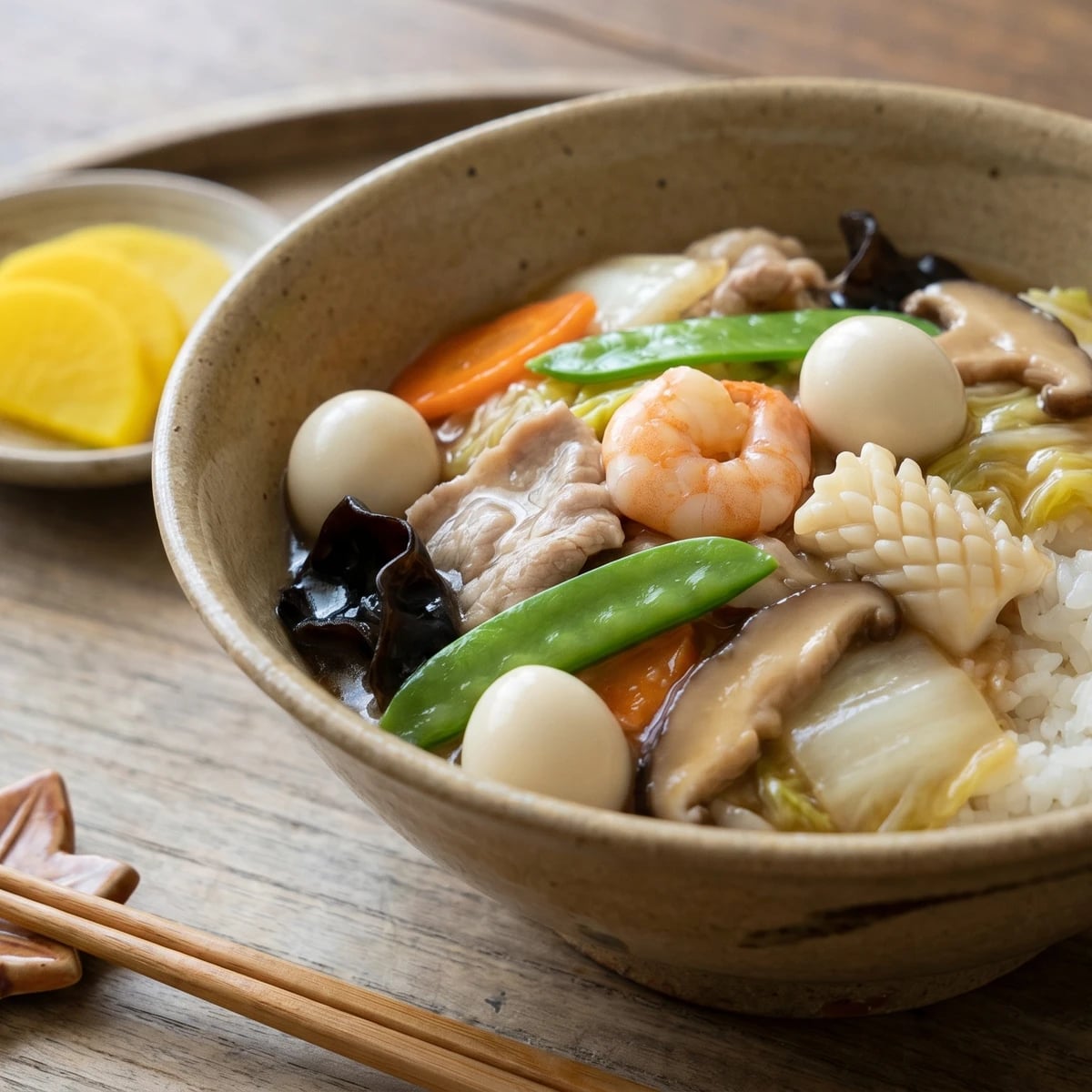
Chūkadon looks crowded, but its lesson is simple: cut everything first, cook it in order, then let a clear dashi sauce turn glossy around pork, seafood, and vegetables.
Chūkadon looks like someone put the whole market over rice. Pork, shrimp, squid, hakusai, mushrooms, quail eggs, carrot, all caught in glossy ankake, a starch-thickened sauce. That abundance makes it look like restaurant work. It isn't. The dish asks for order before heat, which is a merciful kind of discipline.
The detail that decides it is not speed, but sequence. Firm vegetables go first, tender leaves later, seafood comes out before it tightens, and the potato starch enters only when the broth is moving. Do that and the sauce turns clear and shiny, clinging to the rice without becoming glue. Skip it and the pan gets crowded, and a crowded pan has its own unhappy flavor.
This is chūka ryōri, Japanese Chinese-style cooking, with the same household instinct that made yōshoku comfortable: take outside cooking, make it local, and set it with rice. At home we build the sauce on dashi, soy, sake, and a little mirin, with sesame oil only at the end so it scents the bowl instead of bullying it. The vegetables can follow shun: sweet hakusai in winter, cabbage in spring, mushrooms when they look glistening fresh.
Serve it as soon as the ankake shines. Let a little white rice show at the edge and keep the bowl below the rim, because even comfort food needs ma, the quiet space that lets the eye rest. Leave it room. This is honmono in its everyday clothes.
Chūkadon means Chinese-style bowl in Japanese, and the dish is generally understood as happōsai, the Japanese-Chinese stir-fry of assorted ingredients, served over donburi rice. Chūka ryōri spread through Japanese cities from the late Meiji and Taishō periods, then became ordinary Shōwa lunch-counter food in ramen shops, department-store restaurants, and home kitchens. The name is Japanese rather than a Chinese regional dish name, which tells the story plainly: outside cooking entered the rice-bowl grammar and became local.
Quantity
3 cups
Quantity
1 piece (about 8g)
Quantity
15g
Quantity
4 bowls (about 800g cooked)
Quantity
150g
cut into 2-inch pieces
Quantity
8
peeled and deveined
Quantity
100g
scored and cut into bite-size rectangles
Quantity
4 large leaves
stems and leaves separated, cut bite-size
Quantity
1 small
cut into thin half-moons
Quantity
1/2
cut into thin wedges
Quantity
4
stems removed and caps sliced
Quantity
6
soaked, trimmed, and torn
Quantity
1/2 cup
sliced and rinsed
Quantity
8
strings removed
Quantity
8
peeled
Quantity
2 tablespoons
divided
Quantity
1 teaspoon
finely grated
Quantity
2 tablespoons
Quantity
1 tablespoon
Quantity
1 tablespoon
Quantity
1 teaspoon
Quantity
1/2 teaspoon
Quantity
Pinch
Quantity
1 teaspoon
Quantity
2 tablespoons
Quantity
3 tablespoons
Quantity
1 teaspoon
Quantity
For serving
| Ingredient | Quantity |
|---|---|
| cold water | 3 cups |
| konbu (dried kelp) | 1 piece (about 8g) |
| katsuobushi (bonito flakes) | 15g |
| hot cooked Japanese short-grain rice | 4 bowls (about 800g cooked) |
| thinly sliced pork belly or pork shouldercut into 2-inch pieces | 150g |
| large shrimppeeled and deveined | 8 |
| cleaned squidscored and cut into bite-size rectangles | 100g |
| hakusai (napa cabbage)stems and leaves separated, cut bite-size | 4 large leaves |
| carrotcut into thin half-moons | 1 small |
| onioncut into thin wedges | 1/2 |
| fresh shiitake mushroomsstems removed and caps sliced | 4 |
| dried wood ear mushrooms (kikurage)soaked, trimmed, and torn | 6 |
| boiled bamboo shoot (takenoko)sliced and rinsed | 1/2 cup |
| snow peasstrings removed | 8 |
| cooked quail eggs (optional)peeled | 8 |
| neutral oildivided | 2 tablespoons |
| gingerfinely grated | 1 teaspoon |
| soy sauce | 2 tablespoons |
| sake | 1 tablespoon |
| mirin | 1 tablespoon |
| sugar | 1 teaspoon |
| sea salt | 1/2 teaspoon |
| white pepper | Pinch |
| oyster sauce (optional) | 1 teaspoon |
| potato starch (katakuriko) | 2 tablespoons |
| cold water for starch slurry | 3 tablespoons |
| toasted sesame oil | 1 teaspoon |
| Japanese rice vinegar (optional) | For serving |
Put the konbu and 3 cups cold water in a small pot and set it over low heat. Let it come up slowly, about 10 minutes, then pull the konbu when small bubbles climb the sides and the surface trembles. Do not let the kelp boil. Boiling draws out bitterness and a slick texture, and this sauce needs clean depth, not heaviness. Bring the water briefly to a gentle boil, add the katsuobushi all at once, take the pot off the heat, and leave it alone for 2 minutes. Strain through a cloth and let it drip; don't squeeze, because squeezing presses strong, oily flavors into a stock you want clear.
Measure 2 cups of the dashi into a cup. Stir in the soy sauce, sake, mirin, sugar, salt, white pepper, and oyster sauce if using. A teaspoon of oyster sauce gives the darker neighborhood-shop note, but more would bury the dashi, and dashi is why the sauce tastes alive instead of merely salty. In a separate small bowl, stir the potato starch with 3 tablespoons cold water. Keep it separate until the end and stir it again before adding; potato starch sinks quickly, and settled starch makes lumps.
Have the rice cooked and hot before the pan starts. If the wood ear mushrooms are still dry, cover them with warm water for 15 minutes, then trim any hard knots and tear them into pieces. Pat the shrimp and squid dry, score the inner face of the squid lightly in a crosshatch, then cut it into bite-size rectangles. Keep the ingredients in separate piles: pork, seafood, firm vegetables, leaves, snow peas, and quail eggs. This is not fussiness. A stir-fry gives you no pause once it begins, and order is how you keep each ingredient tasting like itself.
Set a wok or wide heavy skillet over medium-high heat until a drop of water skips. Add 1 tablespoon oil and the ginger, then add the pork and spread it out. Cook until the pork has almost lost its raw pink color, about 1 minute. Add the shrimp and squid and toss 30 to 45 seconds, just until the shrimp edges turn pink and the squid begins to curl, then lift the pork and seafood to a plate. They will finish later in the sauce; leaving them in while the vegetables cook is how seafood becomes tight.
Add the remaining 1 tablespoon oil if the pan looks dry. Add the carrot, onion, hakusai stems, bamboo shoots, shiitake, and wood ear mushrooms. Toss for 2 to 3 minutes, until the carrot brightens, the cabbage stems turn slightly translucent at the edges, and the mushrooms shine. Firm vegetables start first because they need heat through their centers; tender leaves would collapse before the carrot was ready.
Add the hakusai leaves and toss until just wilted. Return the pork, shrimp, and squid with any juices, add the quail eggs if using, and pour in the seasoned dashi. Bring it to a lively simmer and cook for 1 to 2 minutes, just until the shrimp are opaque, the squid is curled, and the pork is cooked through. Add the snow peas for the last 30 seconds so their green stays clear and crisp.
Stir the starch slurry again, then drizzle it into the bubbling pan while moving the ingredients gently. Simmer 45 to 60 seconds, until the cloudy sauce turns clear and glossy and coats a spoon in a thin layer. Potato starch needs heat to set and lose its raw chalkiness; pour it into a quiet pan and it sits in streaks. If the ankake is too thick, loosen it with a spoonful of dashi or water. Turn off the heat and stir in the sesame oil at the end, because its job is aroma, not frying.
Divide the hot rice among deep donburi bowls. Spoon the topping and sauce over the rice, keeping the rim clean and letting a little white rice show at one edge. That empty edge is not stinginess; it gives the bowl shape and keeps the sauce from turning the rice into porridge before you reach the table. Serve at once, with rice vinegar at the table if you like a sharper finish.
1 serving (about 435g)
Culinary guides, cultural storytelling, and the editorial depth that makes cooking meaningful.
Discover Culinary Explorer
Chef Takumi
Aji fry is weeknight fish with no mystery: fresh horse mackerel opened cleanly, breaded lightly, and fried until the panko crackles while the flesh stays sweet.

Chef Takumi
Summer horse mackerel, chopped just enough to catch ginger and scallion, becomes a cool, clean main dish with rice. The secret is fresh fish and a knife that does not bruise it.

Chef Takumi
Akashi-yaki is not sauced takoyaki. It is egg-rich batter, tender octopus, and clear dashi, cooked pale and soft so each ball can be dipped like a small custard dumpling.

Chef Takumi
A whole anago looks like a test of nerve. It is mostly good sourcing, a dry skin, cold batter, and oil hot enough to leave the eel sweet under its lace.