
Chef Lupita
Agua de Alfalfa
Ciudad de México's highland market agua fresca, fresh alfalfa blended with pineapple and lime until bright green, strained clean, and poured cold from the vitrolero.
A cooking platform built around craft, culture, and the stories behind what we eat.
Created by
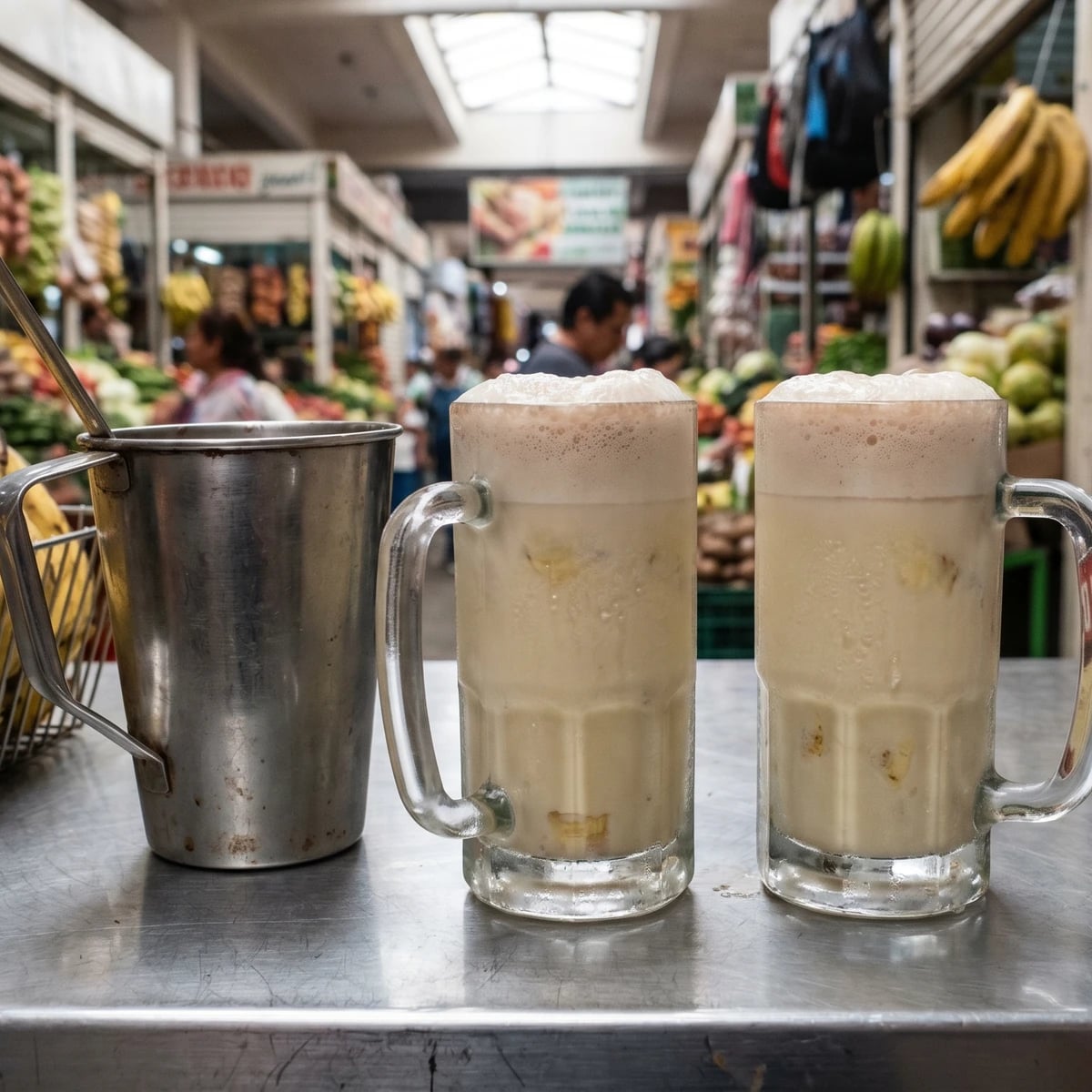
Ciudad de México's mercado chocomil is cold milk, banana, chocolate powder, and air, whipped in a chocomilera until the foam rises above the glass.
Ciudad de México owns this version at the mercado counter: La Merced, Jamaica, Medellín, Sonora, anywhere a juguería has a steel chocomilera humming before eight in the morning. This is not a dessert. It is a quick meal for a student, a cargador, a mother with two errands left and no patience for a plate.
The ingredient that defines it is not a chile, for once. It is air. The chocomilera whips cold milk and banana until the drink rises pale and frothy above the glass. A blender can help, yes, but the spindle mixer gives the texture that people recognize from the markets of the capital. No me vengas con atajos when the machine is sitting right there.
Use whole milk. Use a ripe banana from Tabasco or Chiapas if your market has them. Use Mexican chocolate milk powder, the kind generations of children know by the spoonful. My mother did not write chocomil in her Jalisco notebook because everyone in the city already knew how to ask for one. But she did write this in the margin of a breakfast page: cold milk first, banana second, foam last. She was right. Saber cocinar es saber vivir.
Chocomil is a 20th-century urban Mexican drink tied to the rise of licuaderías and juguerías in Mexico City markets, where electric spindle mixers made fast, foamy milk drinks practical for breakfast counters. The commercial chocolate milk powder Choco Milk became so common in Mexican households and markets that its brand name turned into a generic word for the drink itself. Unlike older cacao drinks such as pozol, tejate, or champurrado, chocomil belongs to the modern city: refrigerated milk, packaged powder, banana, and market labor moving quickly.
Quantity
2 cups
Quantity
1
peeled and sliced
Quantity
3 tablespoons
such as Choco Milk or Abuelita Granulado
Quantity
1 teaspoon
Quantity
1 teaspoon
only if the banana is not very ripe
Quantity
1 cup
optional, if your milk is not cold enough
| Ingredient | Quantity |
|---|---|
| very cold whole milk | 2 cups |
| ripe Tabasco banana or small Chiapas bananapeeled and sliced | 1 |
| Mexican chocolate milk powdersuch as Choco Milk or Abuelita Granulado | 3 tablespoons |
| Mexican vanilla extract | 1 teaspoon |
| sugar (optional)only if the banana is not very ripe | 1 teaspoon |
| ice (optional)optional, if your milk is not cold enough | 1 cup |
Put two tall glasses in the freezer for five minutes while you measure everything. Chocomil is a cold market drink. The glass should sweat a little when the drink hits it. That is how you know you did not serve warm milk with ambition.
Add the cold milk, banana, chocolate powder, vanilla, and sugar if using to a blender. Blend on high for 20 seconds, just until the banana disappears and the milk turns evenly chocolate-colored. Do not make it thick like an American milkshake. This is a chocomil, light enough to drink fast at a mercado counter.
Pour the blended milk into a chocomilera or spindle drink mixer and whip for 45 to 60 seconds, until the liquid climbs, turns pale at the top, and forms a soft foam that sits above the rim. That vertical whipping is the point. A blender mixes. A chocomilera gives you the mercado foam.
Pour into the chilled glasses and serve at once, before the foam falls. No whipped cream. No syrup on the glass. No decoration circus. A proper chocomil is cold milk, banana, chocolate, air, and speed. Así se hace y punto.
1 serving (about 310g)
Culinary guides, cultural storytelling, and the editorial depth that makes cooking meaningful.
Discover Culinary Explorer
Chef Lupita
Ciudad de México's highland market agua fresca, fresh alfalfa blended with pineapple and lime until bright green, strained clean, and poured cold from the vitrolero.

Chef Lupita
Aguascalientes' Lenten agua fresca, jewel-red from cooked beet and full of apple, banana, orange, lettuce, and ground peanuts, served cold when Holy Week meets the Feria de San Marcos.

Chef Lupita
Sonora and Sinaloa's creamy malted barley water, built on toasted cebada perla, Mexican canela, vanilla from Papantla, and evaporated milk. Pink-beige, rich, and served cold over heavy ice in a heavy glass tumbler. Liquid cookie comfort the northwest way.

Chef Lupita
Yucatán's everyday tonic of boiled chaya leaves blended with lima agria, sugar, and ice. The bright green jarra that sits on every Peninsula table from Mérida to Valladolid.