Chef Lupita
Aceite de Chiltepin Bajacaliforniano
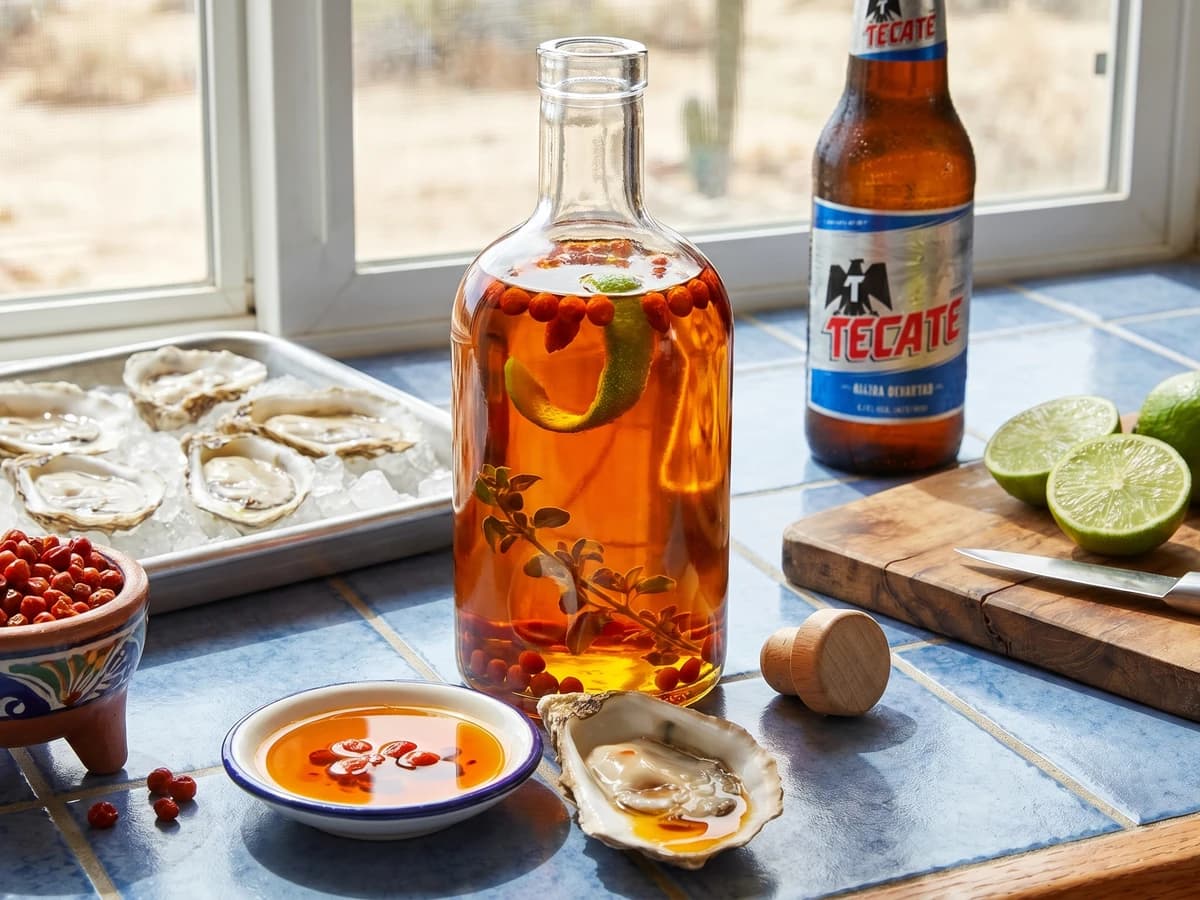
Baja California's wild chiltepin steeped in olive oil with garlic, orejon, and lime peel, until the oil turns ruby-amber and carries the slow, sneaky burn of the desert coast.
A cooking platform built around craft, culture, and the stories behind what we eat.
Created by
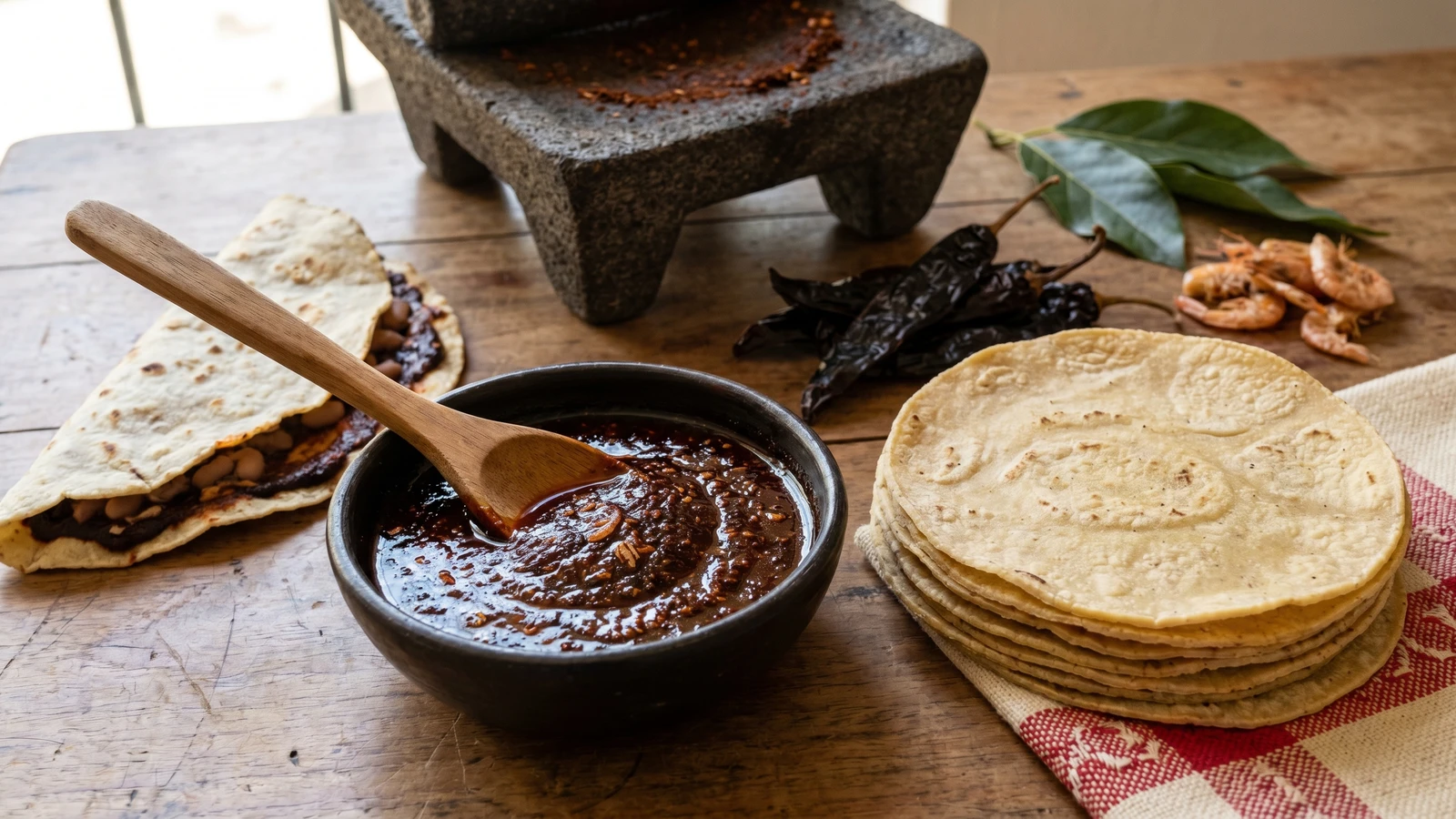
The smoke-dried chile paste of the Sierra Mixe, ground on the metate with camarón seco, toasted garlic, and avocado leaf, then bound with manteca. Travel food that turns a tlayuda into supper.
Chintextle is from the Sierra Mixe and Sierra Norte of Oaxaca. The Mixe people, the Ayuujk, called themselves the people who were never conquered, and their food carries the same stubbornness. Chintextle is the chile paste they made to travel: dense, smoky, salty, shelf-stable, a meal in a spoonful when there was nothing else.
The whole dish hinges on one ingredient: chile pasilla oaxaqueño, also called pasilla mixe. Do not confuse it with the pasilla you find in most US markets. That chile is the dried form of the chilaca, grown in central Mexico, sweet and dark and not smoked. The pasilla oaxaqueño is something else entirely, a chile that grows in the cloud forests of the Sierra Norte and is dried slowly over wood fires until the skin wrinkles and the smoke goes all the way to the seed. If your vendor does not know the difference, find another vendor. Si no conoces el mercado, no conoces la cocina.
The rest of the paste is what the Sierra had on hand: camarón seco traded up from the Pacific coast, garlic, sea salt, and the leaves of the criollo avocado tree, which give chintextle its quiet anise undertone. All of it ground on the metate, all of it bound with manteca de cerdo, all of it stored in a clay pot where it kept for weeks while the trader walked the mountains.
My mother did not make chintextle. She was from Jalisco. I learned it from a senora named Doña Eufrosina at the Sunday tianguis in Tlahuitoltepec, who watched me grind the first batch and shook her head and took the metate away from me. "Más despacio, más fuerte." Slower, harder. She regraded the whole batch. When I tasted it I understood that the metate is not a tool, it is a teacher. Saber cocinar es saber vivir.
Chintextle is a survival food of the Mixe (Ayuujk) and Zapotec peoples of Oaxaca's northern sierras, where altitude and isolation made shelf-stable, calorie-dense provisions essential for travel and trade between mountain villages and the coastal lowlands. The chile pasilla oaxaqueño itself is a regional landrace cultivar, smoke-dried over local oak in the same wooden structures used for centuries; it is genetically and agriculturally distinct from the central Mexican pasilla (the dried chilaca) despite sharing the name, and outside Oaxaca it is rarely understood as a separate chile. The use of dried avocado leaf as a flavoring agent, common to a band of Oaxacan and Pueblan cooking, predates the Spanish conquest and reflects the pre-Columbian Mesoamerican habit of treating leaves of the criollo avocado (Persea americana var. drymifolia) as a primary aromatic, in the role that bay leaf occupies in European cuisines.
Quantity
8 ounces
stemmed and seeded
Quantity
1/2 cup
heads and shells on, small variety
Quantity
8
unpeeled
Quantity
6
Quantity
2 tablespoons, plus more if needed
Quantity
1 1/2 teaspoons, plus more to taste
Quantity
2 to 4 tablespoons, only if needed
| Ingredient | Quantity |
|---|---|
| chile pasilla oaxaqueño (pasilla mixe)stemmed and seeded | 8 ounces |
| dried shrimp (camarón seco)heads and shells on, small variety | 1/2 cup |
| garlic clovesunpeeled | 8 |
| dried avocado leaves (hoja de aguacate criollo) | 6 |
| manteca de cerdo (pork lard) | 2 tablespoons, plus more if needed |
| sea salt | 1 1/2 teaspoons, plus more to taste |
| reserved chile soaking water (optional) | 2 to 4 tablespoons, only if needed |
The chile pasilla oaxaqueño is not the chile pasilla you find in most US markets. It is grown and smoke-dried over wood in the Sierra Mixe and Sierra Norte of Oaxaca. The skin is wrinkled, the color is deep mahogany with red highlights, and when you smell it, you should smell wood smoke before you smell anything else. If your chile smells like a regular dried chile, you have the wrong one. Find a Oaxacan vendor or a serious importer. No me vengas con atajos.
Heat a dry comal over medium-low. Open the chiles flat with your hands. Toast them in batches, pressing each one down with a spatula for about ten seconds per side. You are warming them, not toasting them dark. They are already smoked. If you toast them hard, the smoke turns to soot and the chintextle goes bitter. The chile should soften and release its smoke perfume. That is enough.
Place the warmed chiles in a bowl and cover with hot tap water, not boiling. Let them soften for ten to twelve minutes, no longer. Chintextle is a paste, not a salsa. Too much water and you have something else. Drain the chiles and reserve a few tablespoons of the soaking water. Press the chiles between your hands to squeeze out as much water as you can.
Return the comal to medium heat. Toast the unpeeled garlic cloves, turning often, until the skins blister and the cloves soften, about six minutes. Set aside and peel once cool enough to handle. Toast the dried shrimp in a single layer for two minutes, shaking the pan, until the shells go orange-pink and the kitchen smells like the coast. Last, pass the avocado leaves over the comal for ten seconds per side, until the oils release and you can smell the anise. Watch them. They go from fragrant to ash in seconds.
If you have a metate, this is the moment it earns its keep. Grind the avocado leaves first to a coarse green dust. Add the dried shrimp and grind until they break down into a fibrous powder, shells and all. Add the toasted garlic and the salt and work them in. Finally, add the drained chiles a handful at a time, grinding each batch into the paste before adding the next. The metate gives you a chintextle with texture, with grit, with the fingerprint of the cook. This is how the senoras of the Sierra Mixe have made it for generations.
Scrape the paste into a bowl. Warm the manteca in a small pan until just melted, then stir it into the paste a tablespoon at a time until you have a thick, spreadable consistency, like a dense miso. La manteca es el sabor and the manteca is also the preservative. The fat coats the chile and the shrimp and is what lets chintextle keep for weeks. If the paste is too tight, add a teaspoon of the reserved chile soaking water. No more. Taste for salt now. The shrimp and the chile both bring salt of their own. The salt you add should sharpen, not dominate.
Pack the chintextle into a clean glass jar, pressing it down to remove air pockets. Smooth the surface and pour a thin layer of melted manteca over the top to seal it. Cover and let it sit at room temperature for at least four hours before using. The flavors marry overnight. Refrigerated and properly sealed under fat, chintextle keeps for a month or longer. This is travel food. Sierra Mixe shepherds and traders have carried it on the road for centuries because it does not spoil and a single spoonful turns a tortilla into a meal. Asi se hace y punto.
1 serving (about 26g)
Culinary guides, cultural storytelling, and the editorial depth that makes cooking meaningful.
Discover Culinary ExplorerChef Lupita
Baja California's wild chiltepin steeped in olive oil with garlic, orejon, and lime peel, until the oil turns ruby-amber and carries the slow, sneaky burn of the desert coast.

Chef Lupita
Puebla's Lenten convent adobo, a brick-red vinegar chile paste of ancho, guajillo, garlic, oregano, and comino made to dress fish for the meatless calendar.
Chef Lupita
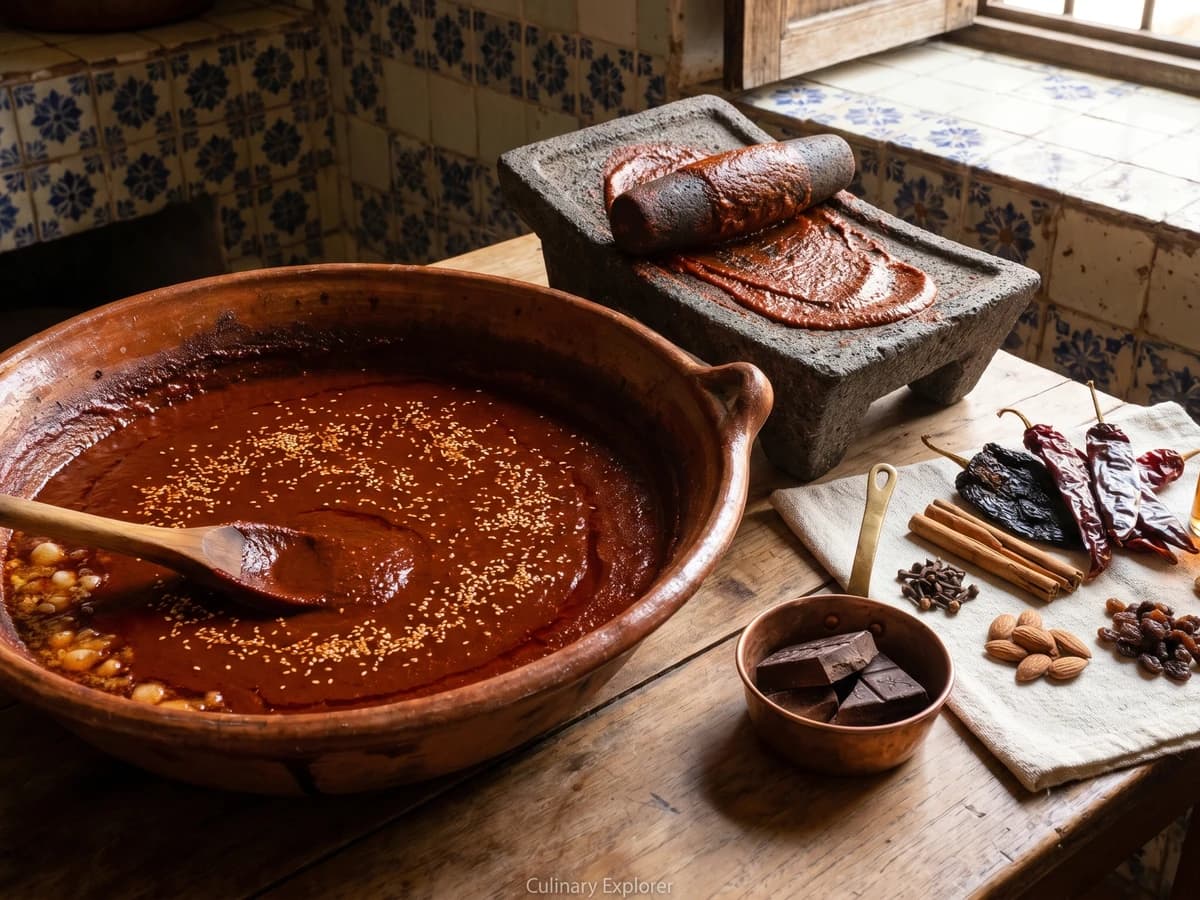
Zacatecas' wedding-table adobo, built from toasted guajillo and ancho, piloncillo, sour orange, chocolate, canela, clavo, almonds, sesame, and lard.

Chef Lupita
Puebla's convent kitchens built this adobo with ancho, guajillo, jerez, almonds, raisins, clove, and lard, a baroque marinade that stains pork loin and finishes as the sauce.