Chef Lupita
Aceite de Chiltepin Bajacaliforniano
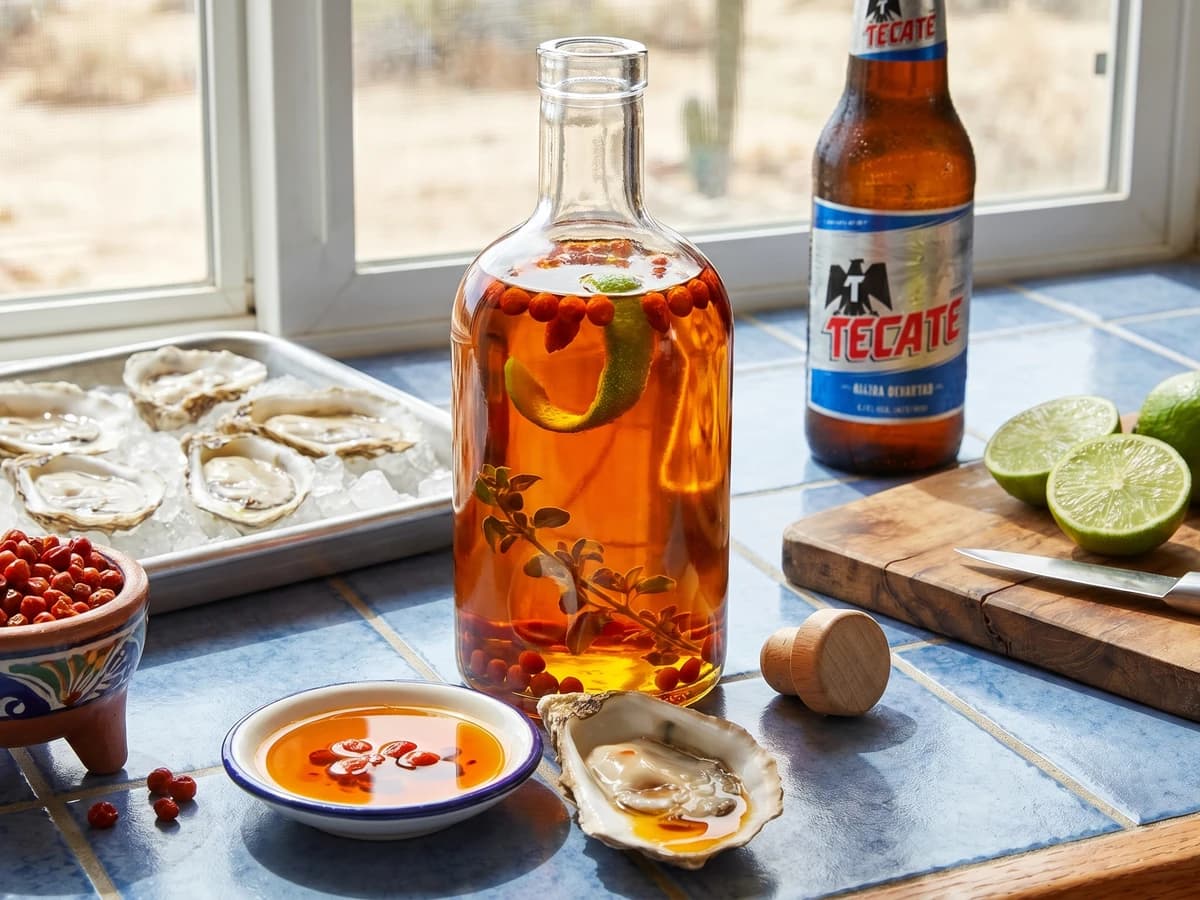
Baja California's wild chiltepin steeped in olive oil with garlic, orejon, and lime peel, until the oil turns ruby-amber and carries the slow, sneaky burn of the desert coast.
A cooking platform built around craft, culture, and the stories behind what we eat.

Created by
Oaxaca's market jar of jalapeños, carrots, cauliflower, nopales, and onion seared in lard and packed in white vinegar with bay, Oaxacan oregano, and piloncillo. Three months in the refrigerator and they only get better.
This is the jar that sits on the table at almost every comida in Oaxaca. Not the corner-store can with the yellow label. The homemade one, in a recycled mayonnaise jar, that the cook of the house pulled out of the refrigerator without ceremony to set next to the tlayudas, the memelas, the bowl of frijoles negros con hoja de aguacate. Every Oaxacan household has a version. The proportions shift. The presence of nopales does not.
The nopales are what tell you this jar is Oaxacan and not poblano or jalisciense. Diced small, blanched until the baba cooks out, packed in with the carrots and the cauliflower so they soak up the chile-scented vinegar. Without them, you have made a fine encurtido. With them, you have made the encurtido that the senora at the Mercado 20 de Noviembre would recognize as her own.
The other thing that separates the home jar from the commercial one is the lard. You sear the aromatics in manteca de cerdo before the brine ever hits the pan. La manteca es el sabor. Oil-only versions taste thin. The lard rounds the brine and gives the vegetables a depth that vinegar alone cannot deliver. My mother kept a jar of these in the refrigerator at all times, restocked every few weeks, and she used to say that a kitchen without an open jar of chiles en vinagre is a kitchen that is not ready to feed anyone. Saber cocinar es saber vivir.
Three months in the refrigerator. That is the working life of a good jar. Past that, the vegetables soften and the chiles lose their bite. Make a smaller batch more often. That is how the senoras do it.
Pickling vegetables in vinegar (encurtido or escabeche) entered Mexican cooking through the Spanish, who themselves inherited the technique from earlier Mediterranean and Arab traditions of preserving in acid; the word 'escabeche' derives from the Arabic 'sikbaj.' Pre-Columbian Mexico preserved chiles primarily through drying and smoking, so the colonial fusion of native chiles and nopales with Iberian vinegar-pickling produced a distinctly mestizo condiment that became standard on Mexican tables by the 18th century. Oaxaca's version distinguishes itself from the central-Mexican standard through the inclusion of nopales and the use of the state's own Oaxacan oregano (Lippia graveolens), a wild oregano with a more resinous, citric profile than the Mediterranean variety used elsewhere.
Quantity
12
stems trimmed, sliced into thick rounds or left whole with a slit down the side
Quantity
3 medium
peeled and sliced on the bias 1/4 inch thick
Quantity
1 small head (about 3 cups florets)
broken into small florets
Quantity
2 medium
spines removed, diced into 1/2-inch squares
Quantity
1 large
sliced into 1/4-inch half-moons
Quantity
1
cloves separated and peeled
Quantity
3 tablespoons
or good olive oil
Quantity
3 cups
Quantity
1 cup
Quantity
2 tablespoons
Quantity
1 tablespoon
grated, or 1 tablespoon brown sugar
Quantity
4
Quantity
1 tablespoon
Quantity
1 teaspoon
Quantity
1 teaspoon
Quantity
6
Quantity
2 sprigs
Quantity
2 sprigs
| Ingredient | Quantity |
|---|---|
| fresh chile jalapeñostems trimmed, sliced into thick rounds or left whole with a slit down the side | 12 |
| carrotspeeled and sliced on the bias 1/4 inch thick | 3 medium |
| cauliflowerbroken into small florets | 1 small head (about 3 cups florets) |
| nopales (cactus paddles)spines removed, diced into 1/2-inch squares | 2 medium |
| white onionsliced into 1/4-inch half-moons | 1 large |
| head of garliccloves separated and peeled | 1 |
| manteca de cerdo (pork lard)or good olive oil | 3 tablespoons |
| white distilled vinegar (5% acidity) | 3 cups |
| water | 1 cup |
| kosher salt | 2 tablespoons |
| piloncillograted, or 1 tablespoon brown sugar | 1 tablespoon |
| bay leaves (laurel) | 4 |
| dried Oaxacan oregano | 1 tablespoon |
| whole black peppercorns | 1 teaspoon |
| whole cumin seeds | 1 teaspoon |
| whole cloves | 6 |
| fresh thyme | 2 sprigs |
| fresh marjoram (mejorana) (optional) | 2 sprigs |
Hold each nopal flat on a cutting board and shave the spines off with a sharp paring knife, working from the base toward the tip. Trim the thick edge and the base. Dice into half-inch squares. Rinse them under cold water and set aside. The nopales are what make this jar Oaxacan. Most market jars in other states skip them. Do not skip them.
Bring a small pot of salted water to a boil. Add the diced nopales and cook for five to seven minutes, until they turn from bright green to dull olive and most of the baba has cooked out. Drain and rinse under cold water. Pat dry. Skip this step and the brine will turn slick and unpleasant by the second day.
Trim and slice the jalapeños. If you want a hotter jar, slice into thick rounds with the seeds. If you want milder heat, leave them whole and cut a single slit down the side so the brine penetrates. Peel and slice the carrots on the bias. Break the cauliflower into bite-sized florets. Slice the onion. Peel the garlic cloves and leave them whole. The vegetables should be roughly the same size so they pickle at the same rate.
Heat the manteca in a wide stainless or enameled cast iron pan over medium-high heat until it shimmers. Add the garlic cloves and the onion. Cook, stirring, for two minutes, until the edges of the onion start to brown and the garlic turns golden. Add the carrots and the jalapeños. Cook for three more minutes, stirring, just enough to wake up the chiles and soften the carrots at the edges. La manteca es el sabor. Oil-only versions taste flat next to this one.
Add the cauliflower florets and the blanched nopales to the pan. Stir for one minute to coat them in the lard and the chile-scented oil. The vegetables should be hot to the touch but still firm. Pickled vegetables that go into the brine cooked through will turn to mush within a week.
Pour in the vinegar and water. Add the salt, the grated piloncillo, the bay leaves, the Oaxacan oregano crumbled between your palms, the peppercorns, the cumin, the cloves, and the thyme and marjoram sprigs. Bring to a boil, then immediately drop the heat to a low simmer. Cook for five minutes, no more. The brine should taste sharp, salty, and herbaceous. The piloncillo is not there to make the jar sweet. It is there to round the edge of the vinegar so it does not scrape your tongue.
While the brine simmers, sterilize two clean 1-quart glass jars with boiling water and dry them. Use a slotted spoon to pack the vegetables into the jars, distributing the chiles, carrots, cauliflower, nopales, onion, and garlic evenly. Tuck a bay leaf and a sprig of herbs into each jar so they sit visible against the glass. Pour the hot brine over the vegetables until they are completely submerged. Tap the jars on the counter to release air bubbles. Top off if needed.
Let the jars cool on the counter, uncovered, for thirty minutes. Then seal with their lids and refrigerate. The chiles need at least 48 hours in the brine before the flavor settles. They are at their best between one week and three months. Asi se hace y punto.
1 serving (about 120g)
Culinary guides, cultural storytelling, and the editorial depth that makes cooking meaningful.
Discover Culinary ExplorerChef Lupita
Baja California's wild chiltepin steeped in olive oil with garlic, orejon, and lime peel, until the oil turns ruby-amber and carries the slow, sneaky burn of the desert coast.

Chef Lupita
Puebla's Lenten convent adobo, a brick-red vinegar chile paste of ancho, guajillo, garlic, oregano, and comino made to dress fish for the meatless calendar.
Chef Lupita
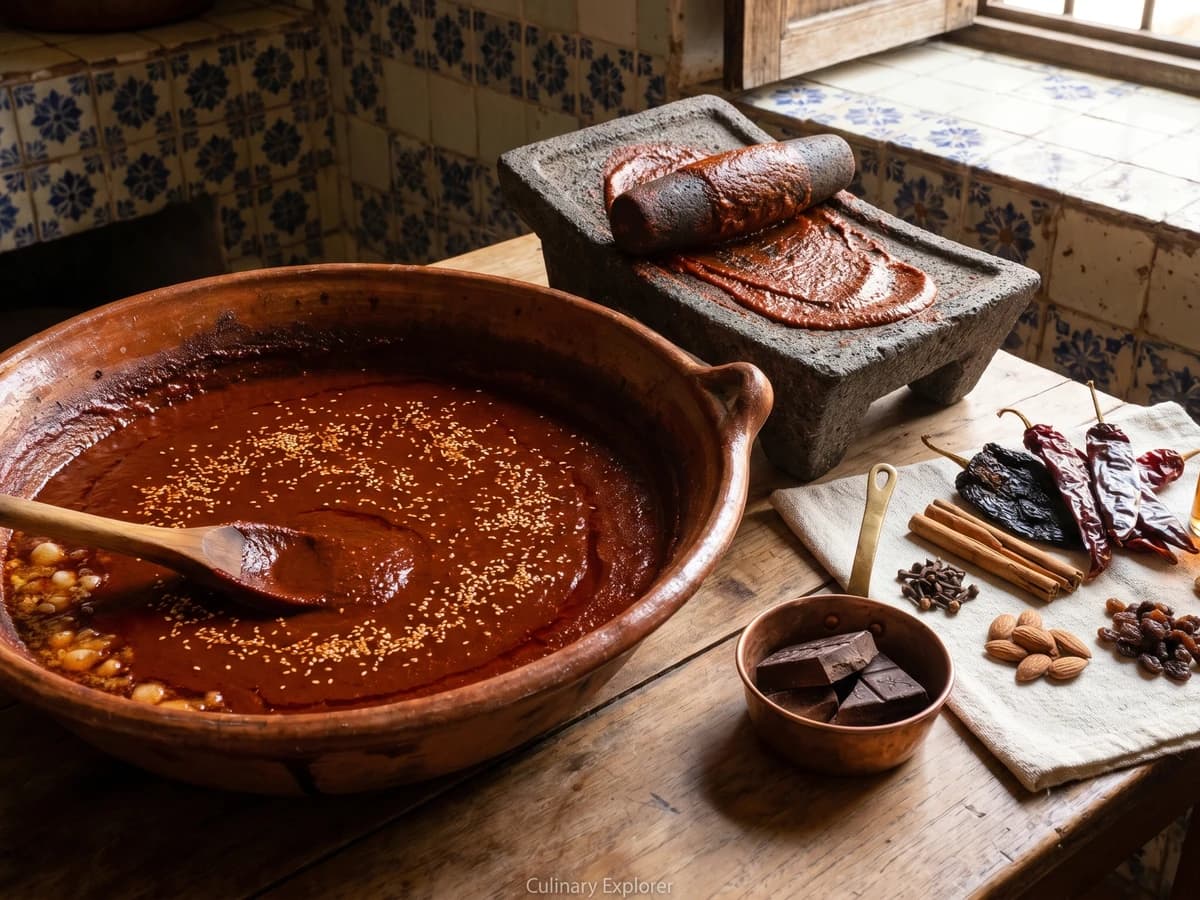
Zacatecas' wedding-table adobo, built from toasted guajillo and ancho, piloncillo, sour orange, chocolate, canela, clavo, almonds, sesame, and lard.

Chef Lupita
Puebla's convent kitchens built this adobo with ancho, guajillo, jerez, almonds, raisins, clove, and lard, a baroque marinade that stains pork loin and finishes as the sauce.