Chef Lupita
Aceite de Chiltepin Bajacaliforniano
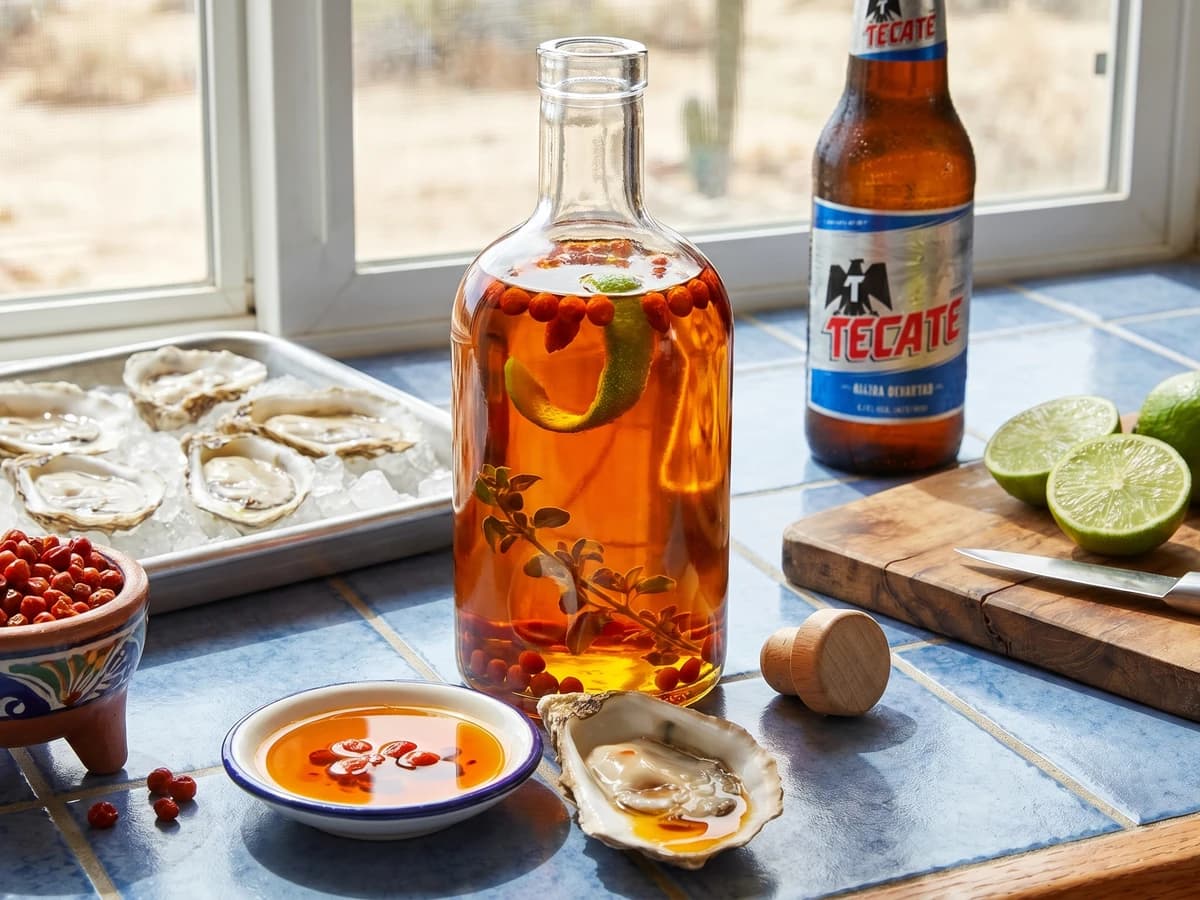
Baja California's wild chiltepin steeped in olive oil with garlic, orejon, and lime peel, until the oil turns ruby-amber and carries the slow, sneaky burn of the desert coast.
A cooking platform built around craft, culture, and the stories behind what we eat.
Created by
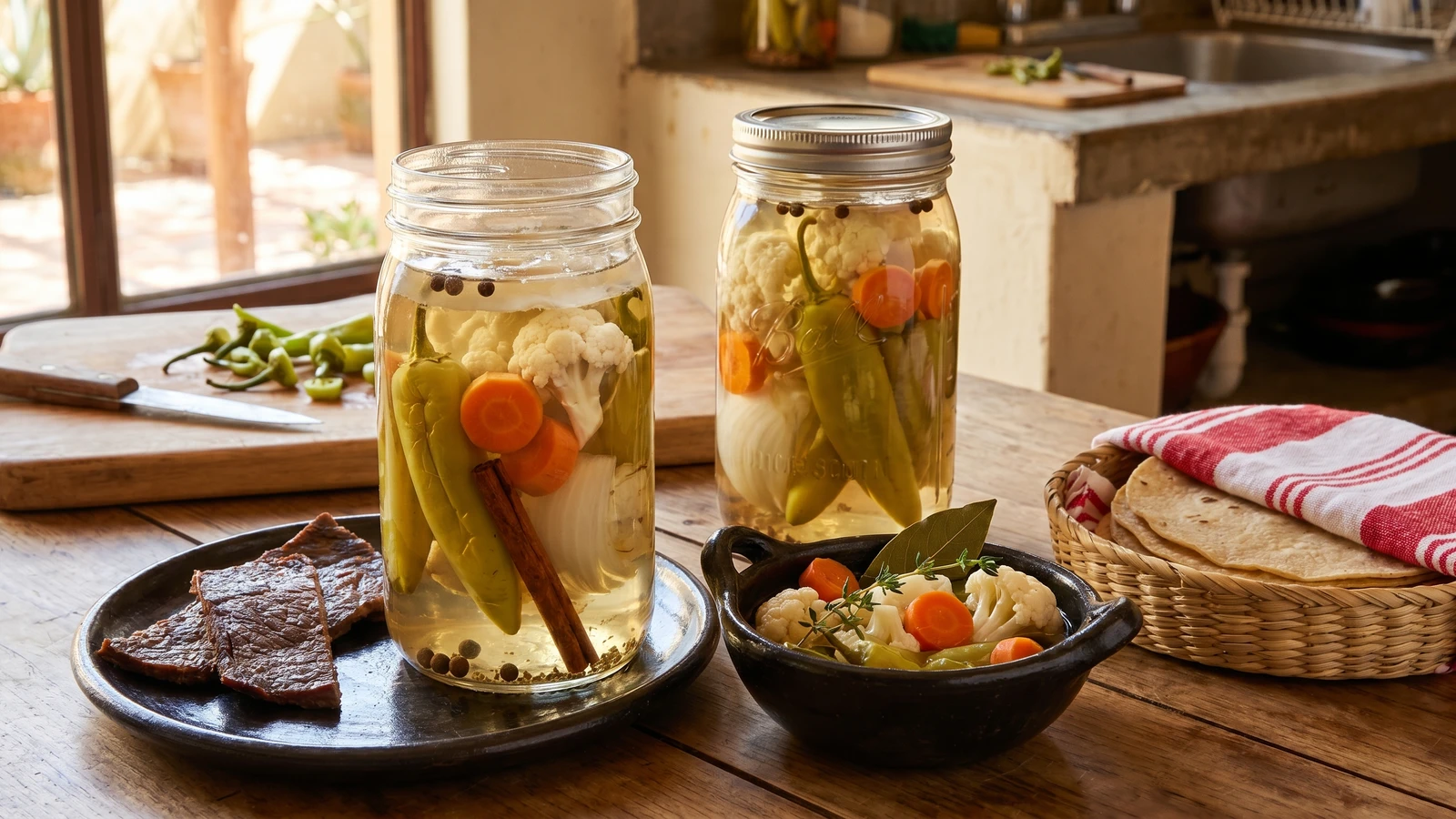
The chile de agua of Oaxaca's Valles Centrales pickled whole with cauliflower, carrots, and onion in vinagre de piña, set with lard and oregano de Oaxaca. The jar that sits next to the cecina and the tasajo.
This is from Oaxaca. Specifically from the Valles Centrales, the central valleys around the city of Oaxaca where the chile de agua is grown and where you cannot eat a plate of cecina enchilada or tasajo without a small dish of these escabechados on the table.
The chile de agua is the point. It is an Oaxacan chile, almost exclusively. Conical, light green, thin-skinned, with heat that varies from one chile to the next on the same plant. It does not travel well, which is part of why this dish stays Oaxacan. If your chile vendor in Mexico City does not have them, you wait. If you live outside Mexico, you make this when you find them, and not before. No me vengas con atajos. A poblano is not a chile de agua. A jalapeño is not a chile de agua. The whole dish depends on this chile keeping its shape, its skin, and its specific grassy heat.
The vinegar should be vinagre de piña casero, the homemade pineapple vinegar that ferments slowly in a clay olla on a kitchen counter for three weeks. It is softer than commercial white vinegar, with a faint sweetness that meets the heat of the chile and the iron of the lard. The lard is non-negotiable. The escabeches I have collected from señoras at Mercado 20 de Noviembre and Mercado de la Merced de Oaxaca all use manteca de cerdo, and the difference between an escabeche made with lard and one made with oil is the difference between something that belongs on the table and something that belongs in a glass case at a fancy store.
My mother did not make this. She was Jalisciense and she pickled jalapeños, not chiles de agua. The first time I tasted chiles de agua en escabeche I was twenty-eight years old, sitting at a comedor in Tlacolula on market day with a plate of cecina, a stack of tlayudas, and this jar between us. The owner pushed it across the table and said, comelos así, despacio. I ate them slowly. Cada estado, su propia cocina, and this one is Oaxaca's.
Escabeche as a preservation technique arrived in Mexico through the Spanish, who borrowed it from Persian sikbāj by way of Al-Andalus, where vinegar-and-spice preservation of meat and fish had been practiced for centuries before the Reconquista. In Oaxaca, the technique adapted itself to the chile de agua, an heirloom landrace cultivated in the Valles Centrales for generations and grown almost nowhere else, producing a regional escabeche that bears little resemblance to the carrot-and-jalapeño jars sold commercially across the rest of Mexico. The use of vinagre de piña, a fermented pineapple vinegar made in clay vessels, and manteca de cerdo as the fat reflects Oaxaca's specific colonial-era kitchen economy, where households fermented their own vinegars and rendered their own lard rather than buying commercial products.
Quantity
12
whole, stems intact
Quantity
1
broken into small florets
Quantity
3
peeled and sliced into thick rounds on the bias
Quantity
1
peeled and cut into thick wedges through the root
Quantity
1
cloves separated and peeled
Quantity
3 cups
or unfiltered apple cider vinegar
Quantity
1 cup
Quantity
1/3 cup
or olive oil
Quantity
2 tablespoons
Quantity
1 tablespoon
grated (or dark brown sugar)
Quantity
2 tablespoons
preferably oregano de Oaxaca
Quantity
8
Quantity
6
Quantity
4
Quantity
4
Quantity
1 stick, 2 inches long
Quantity
6 sprigs
Quantity
4 sprigs
| Ingredient | Quantity |
|---|---|
| fresh chile de aguawhole, stems intact | 12 |
| small head cauliflowerbroken into small florets | 1 |
| medium carrotspeeled and sliced into thick rounds on the bias | 3 |
| large white onionpeeled and cut into thick wedges through the root | 1 |
| head of garliccloves separated and peeled | 1 |
| vinagre de piña caseroor unfiltered apple cider vinegar | 3 cups |
| water | 1 cup |
| manteca de cerdo (pork lard)or olive oil | 1/3 cup |
| sea salt | 2 tablespoons |
| piloncillograted (or dark brown sugar) | 1 tablespoon |
| dried Mexican oreganopreferably oregano de Oaxaca | 2 tablespoons |
| whole black peppercorns | 8 |
| whole cloves | 6 |
| whole allspice berries | 4 |
| bay leaves | 4 |
| Mexican cinnamon (canela) | 1 stick, 2 inches long |
| fresh thyme | 6 sprigs |
| fresh marjoram | 4 sprigs |
Heat a dry comal over medium-high until you can feel the heat at a hand's height. Lay the chiles de agua on the comal whole, stems and all. Turn them with tongs every minute or two until the skin blisters and shows dark brown spots in patches. You are not roasting them through. You are blistering the skin so the escabeche penetrates the flesh. About six to eight minutes total. The kitchen will smell green and bright, the way a chile vendor's stall smells at Mercado de la Merced de Oaxaca on a Saturday morning.
When the chiles are cool enough to handle, make one small slit lengthwise in the side of each one with the tip of a paring knife, about an inch long. Do not cut all the way through. Do not seed them. The slit lets the escabeche enter the chile while the chile keeps its shape. Whole is the point. A halved or chopped chile is something else.
Bring a large pot of salted water to a rolling boil. Drop in the carrots first and cook for two minutes. Add the cauliflower florets and cook for two more minutes. The vegetables should still have bite. They will continue to soften in the vinegar over the next days. Drain immediately and spread on a sheet pan to stop the cooking. Soft vegetables in escabeche are a sign of a careless cook.
In a heavy stainless or enameled pot, melt the lard over medium heat. Add the onion wedges and the whole garlic cloves. Cook for four to five minutes, stirring, until the edges of the onion turn translucent and the garlic just starts to color at the edges. La manteca es el sabor. The fat in the escabeche is what carries the flavor onto the cecina at the table. Olive oil works in a pinch, but lard is the Oaxacan way.
Add the peppercorns, cloves, allspice, bay leaves, cinnamon stick, thyme, marjoram, and oregano to the pot. Stir for thirty seconds until the spices wake up. Pour in the vinagre de piña and the water. Add the salt and the piloncillo. Bring to a simmer. Taste it. It should be sharp, salty, and warm with spice, with the piloncillo just rounding the edges. Adjust salt now. Once everything goes into the jars, the seasoning is locked in.
Turn off the heat. Add the carrots, cauliflower, and the chiles de agua to the pot. Stir gently with a wooden spoon to coat everything. Let the mixture sit in the warm escabeche for ten minutes. The residual heat blanches the chiles just enough without cooking them through. The chile de agua should keep its shape and its bright color.
Sterilize two 1-quart glass jars and their lids in boiling water for ten minutes. Pack the chiles de agua, vegetables, and aromatics into the jars, distributing the chiles upright with the stems showing. Pour the warm escabeche over to cover everything completely. Make sure every chile is submerged. Tap the jars on the counter to release any air pockets. Seal and let cool to room temperature on the counter.
Refrigerate for at least three days before opening. The chile de agua needs that time for the vinegar to penetrate the flesh and for the lard to set in a thin layer at the top of the jar that you stir back in when you serve. The escabeche is at its peak between the third day and the third week. Asi se hace y punto.
1 serving (about 70g)
Culinary guides, cultural storytelling, and the editorial depth that makes cooking meaningful.
Discover Culinary ExplorerChef Lupita
Baja California's wild chiltepin steeped in olive oil with garlic, orejon, and lime peel, until the oil turns ruby-amber and carries the slow, sneaky burn of the desert coast.

Chef Lupita
Puebla's Lenten convent adobo, a brick-red vinegar chile paste of ancho, guajillo, garlic, oregano, and comino made to dress fish for the meatless calendar.
Chef Lupita
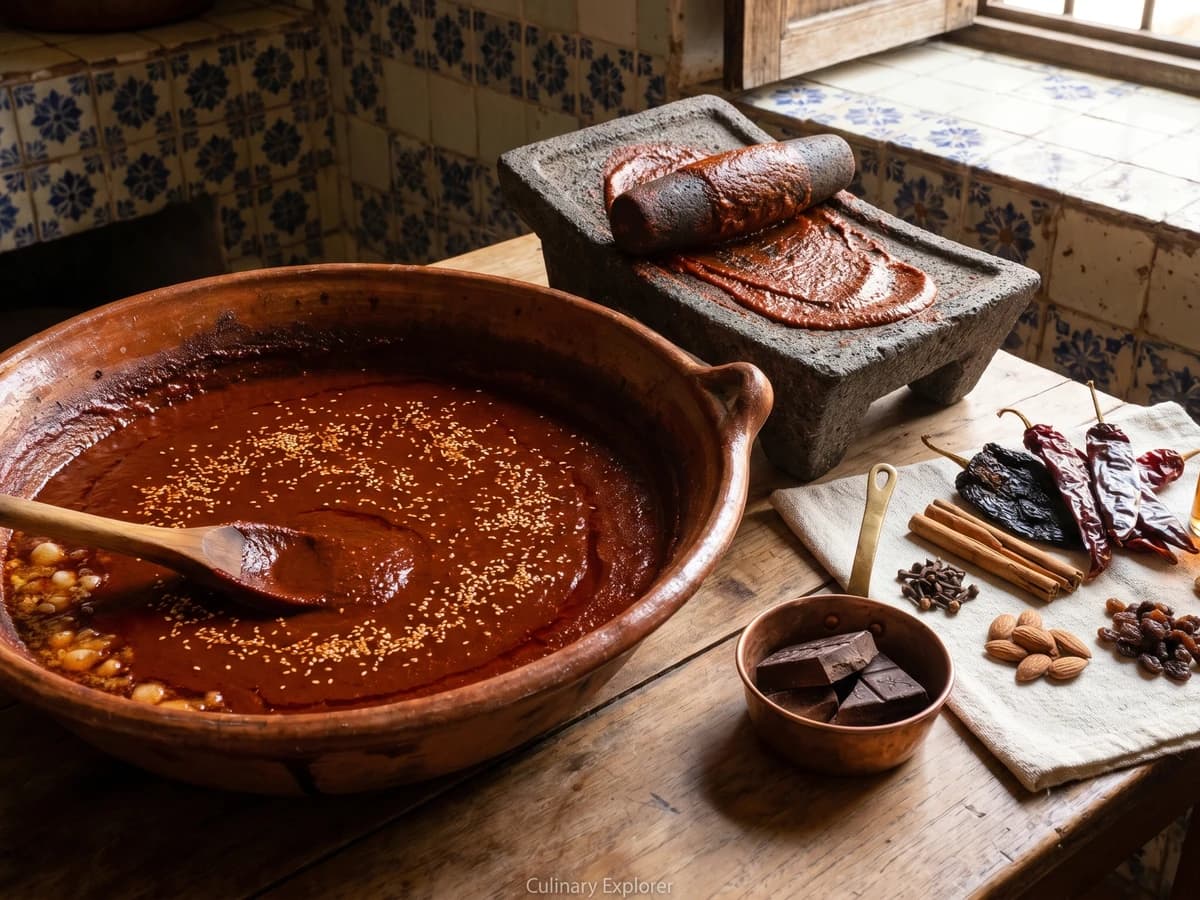
Zacatecas' wedding-table adobo, built from toasted guajillo and ancho, piloncillo, sour orange, chocolate, canela, clavo, almonds, sesame, and lard.

Chef Lupita
Puebla's convent kitchens built this adobo with ancho, guajillo, jerez, almonds, raisins, clove, and lard, a baroque marinade that stains pork loin and finishes as the sauce.