Chef Lupita
Aceite de Chiltepin Bajacaliforniano
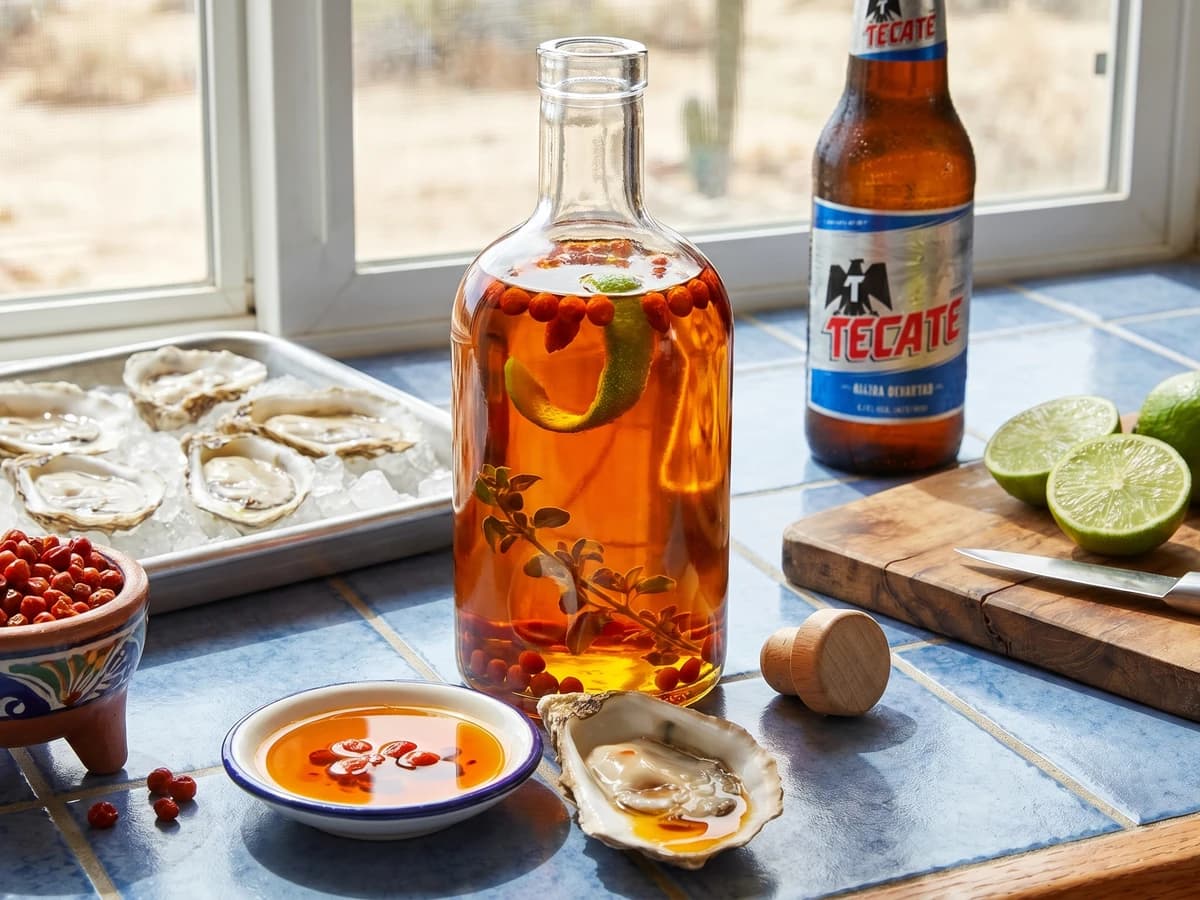
Baja California's wild chiltepin steeped in olive oil with garlic, orejon, and lime peel, until the oil turns ruby-amber and carries the slow, sneaky burn of the desert coast.
A cooking platform built around craft, culture, and the stories behind what we eat.
Created by
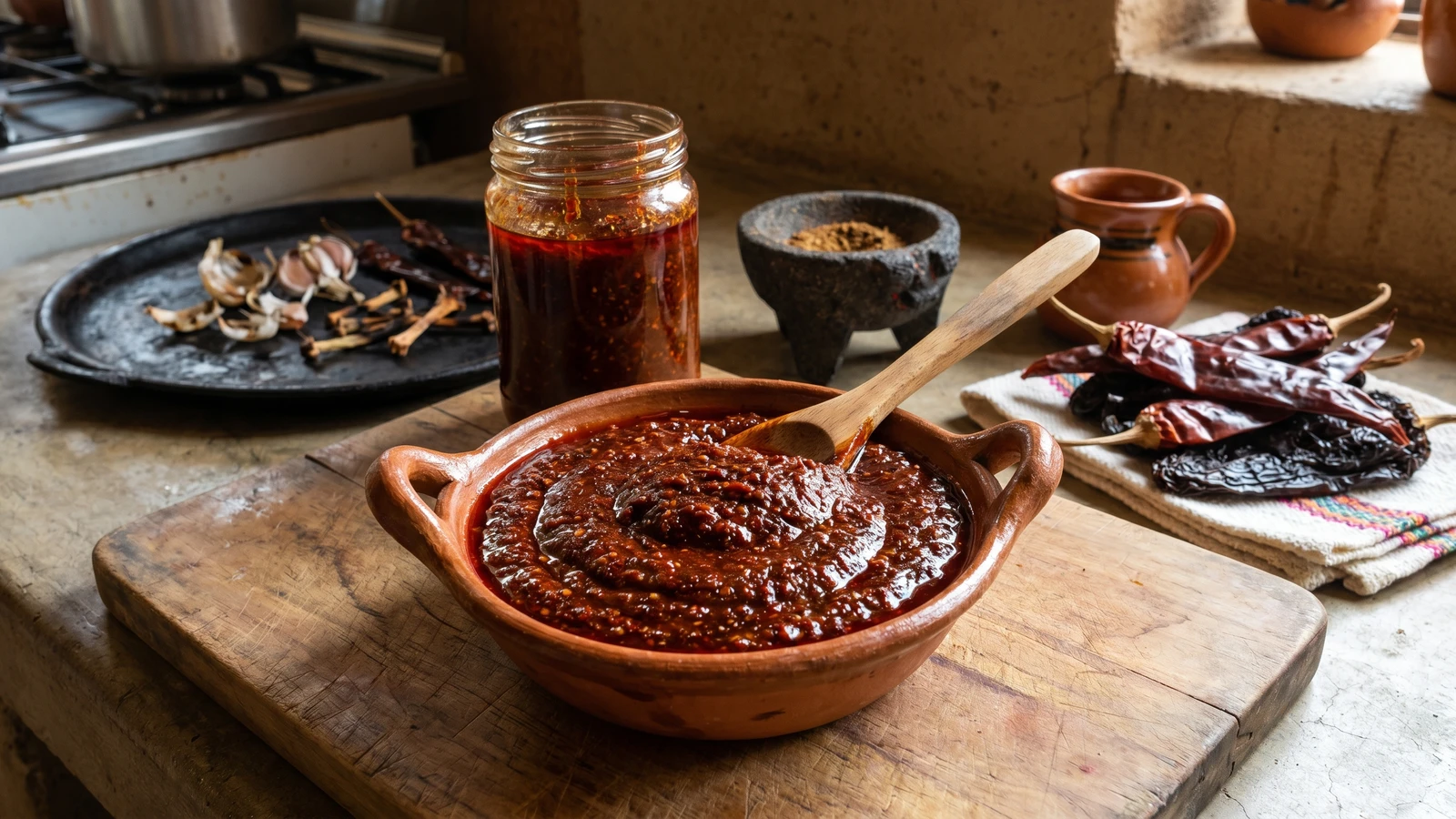
The Mixteca's foundational garlic-chile paste from Huajuapan de Leon, built on toasted guajillo and ancho, comal-charred garlic, and the spice rack of colonial Oaxaca, ground thick with vinegar to coat meats, vegetables, and tortillas for weeks.
Chileajo is from the Mixteca. Not from the Valles Centrales, not from the Sierra Norte, not from the Istmo. From the Mixteca, the dry highlands that span the western edge of Oaxaca, the southern slip of Puebla, and a corner of Guerrero. Within that region, Huajuapan de Leon is where the paste lives, where the cooks speak about it the way pueblanos speak about mole and yucatecos speak about recado.
This is not a salsa. This is a recado, a dense, vinegar-cured paste built to coat meat before it goes in the oven, to dress vegetables before they hit the comal, to thin out and pour over tortillas when there is nothing else in the house. A jar of chileajo in the back of the refrigerator means you are never more than 20 minutes from a real meal. That is the practical philosophy of the Mixteca, a region that has known scarcity and built its kitchen around making a little go a long way.
The garlic gets charred until the skins are black. That char is not an accident. It is the soul of the dish. The chiles are toasted, soaked, and blended with the charred garlic, with cumin and pepper and clove and canela carried up to the Mixteca on colonial trade routes. Vinegar binds it. Lard finishes it. Every step matters. La cocina no es decoracion, es trabajo.
My mother had no chileajo in her notebook. Jalisco is too far north. I learned this paste from Dona Rosenda, a senora who sold goat barbacoa at the Sunday tianguis in Huajuapan and who let me sit on a stool in her kitchen for three days. She told me her grandmother kept a clay olla of chileajo on the shelf year-round and that a good Mixteca cook is judged by the depth of her chileajo before anything else she puts on the table.
Chileajo, sometimes called chilajo, is the foundational adobo paste of Oaxaca's Mixteca region, distinct from the recados of Yucatan and from the moles of the Valles Centrales of Oaxaca. The dish reflects the colonial spice geography of New Spain: cumin, clove, peppercorn, and canela arrived in Oaxaca through Puebla via the Camino Real after the 16th century and were absorbed into a pre-Columbian base of native chile and garlic, the latter introduced by the Spanish but rapidly adopted into Mesoamerican cooking. The Mixteca's specific contribution was the technique of charring the garlic black on the comal, a practice tied to the region's tradition of cooking goat (chivo en chileajo is the most famous application) for which a deeper, more bitter aromatic foundation was needed to balance the strong meat. Huajuapan de Leon, the largest city in the Mixteca Baja, codified the modern version through its weekly tianguis cooks during the 19th and 20th centuries.
Quantity
10
stemmed and seeded
Quantity
6
stemmed and seeded
Quantity
2
stemmed and seeded
Quantity
1 whole
cloves separated and unpeeled
Quantity
1 tablespoon
Quantity
1 tablespoon
Quantity
6
Quantity
1 stick (about 2 inches)
broken
Quantity
2 tablespoons
Quantity
4
Quantity
1 teaspoon
Quantity
1/2 cup
Quantity
1/4 cup
Quantity
1 tablespoon
Quantity
3 tablespoons
melted
| Ingredient | Quantity |
|---|---|
| dried chile guajillostemmed and seeded | 10 |
| dried chile anchostemmed and seeded | 6 |
| dried chile costenostemmed and seeded | 2 |
| head of garliccloves separated and unpeeled | 1 whole |
| whole cumin seeds | 1 tablespoon |
| black peppercorns | 1 tablespoon |
| whole cloves | 6 |
| Mexican canelabroken | 1 stick (about 2 inches) |
| dried Mexican oregano, preferably oregano oaxaqueno | 2 tablespoons |
| fresh bay leaves | 4 |
| dried thyme | 1 teaspoon |
| apple cider vinegar or vinagre de pina casero | 1/2 cup |
| white vinegar | 1/4 cup |
| kosher salt | 1 tablespoon |
| manteca de cerdomelted | 3 tablespoons |
Heat a dry comal or heavy cast iron skillet over medium. Lay the unpeeled garlic cloves on it and turn them every minute or so for about 10 minutes, until the skins are blackened in patches and the cloves inside are soft when you press on them. The black skin is not failure. It is flavor. In Huajuapan, the senoras char the garlic until it almost frightens you. That bitter edge is what makes the paste taste like chileajo and not like garlic puree. Peel the cloves once they are cool enough to handle.
On the same comal, toast the guajillo, ancho, and costeno separately, about 20 to 30 seconds per side. Press them flat with a spatula. They should puff slightly, the skin should blister, and the kitchen should smell like the chile vendors at the Huajuapan market. The costeno is the smallest and burns the fastest. Watch it. The ancho is thick and tolerates more heat. Pull each one off the moment it is fragrant. Burned chile is bitter chile and there is no fixing a bitter chileajo.
Place the toasted chiles in a heatproof bowl and cover with hot tap water. Hot, not boiling. Boiling water cooks the skins and pulls bitterness out of the seeds you missed. Weigh the chiles down with a small plate so they stay submerged. Let them soften for 20 minutes until they are pliable and the water has turned a deep red. Discard the soaking water. It carries the bitterness you do not want in the paste.
Lower the comal to medium-low. Add the cumin, peppercorns, cloves, and broken canela. Toast them for 2 to 3 minutes, shaking the pan, until the cumin darkens by a shade and the air sharpens. Tip them onto a plate to cool. Spices keep cooking on a hot comal even off the heat. The Mixteca is a dry, mountainous region and the spice trade reached it through Puebla and Oaxaca centuries ago. These four spices are the colonial signature of the dish.
Grind the toasted spices with the dried oregano and thyme to a fine powder. A molcajete and tejolote will do the work in about five minutes of patient grinding. A spice grinder works in 30 seconds. Both are honest. The metate the abuelas in Huajuapan use will give you a paste with a different texture than a blender, but for a chileajo destined for the cazuela, an electric grinder is not a betrayal. No me vengas con atajos when it comes to toasting. The grinding is negotiable.
Drain the soaked chiles and shake off excess water. Place them in a blender with the charred garlic, the ground spice mixture, both vinegars, and the salt. Blend on high for at least three full minutes. The paste should be thick, glossy, and the color of dried blood. If the blender struggles, add vinegar a tablespoon at a time, never water. Water dilutes the keeping power of the paste. Vinegar preserves it. This is a paste built to live in a jar in the kitchen for weeks.
Press the paste through a fine-mesh sieve into a bowl, working it through with a wooden spoon. Discard the bits of skin and seed left behind. In a heavy skillet, melt the manteca over medium heat. When it shimmers, add the strained paste. It will sputter. Stand back. Cook for 6 to 8 minutes, stirring constantly, until the paste darkens by two shades and the fat starts to bead at the edges. La manteca es el sabor and this final fry is what turns a raw chile puree into a chileajo. Skip it and the paste tastes flat and aggressive. Fry it and the chile flavor blooms.
Let the chileajo cool to room temperature. Pack it into a clean glass jar and press the surface flat. Pour a thin film of melted manteca over the top to seal it. Refrigerate. The paste keeps for three weeks in the refrigerator and the flavor deepens after the first 48 hours. Use it to coat pork, chicken, goat, or vegetables before roasting. Thin it with a little broth to dress tortillas or stewed beans. Recetas probadas y garantizadas.
1 serving (about 36g)
Culinary guides, cultural storytelling, and the editorial depth that makes cooking meaningful.
Discover Culinary ExplorerChef Lupita
Baja California's wild chiltepin steeped in olive oil with garlic, orejon, and lime peel, until the oil turns ruby-amber and carries the slow, sneaky burn of the desert coast.

Chef Lupita
Puebla's Lenten convent adobo, a brick-red vinegar chile paste of ancho, guajillo, garlic, oregano, and comino made to dress fish for the meatless calendar.
Chef Lupita
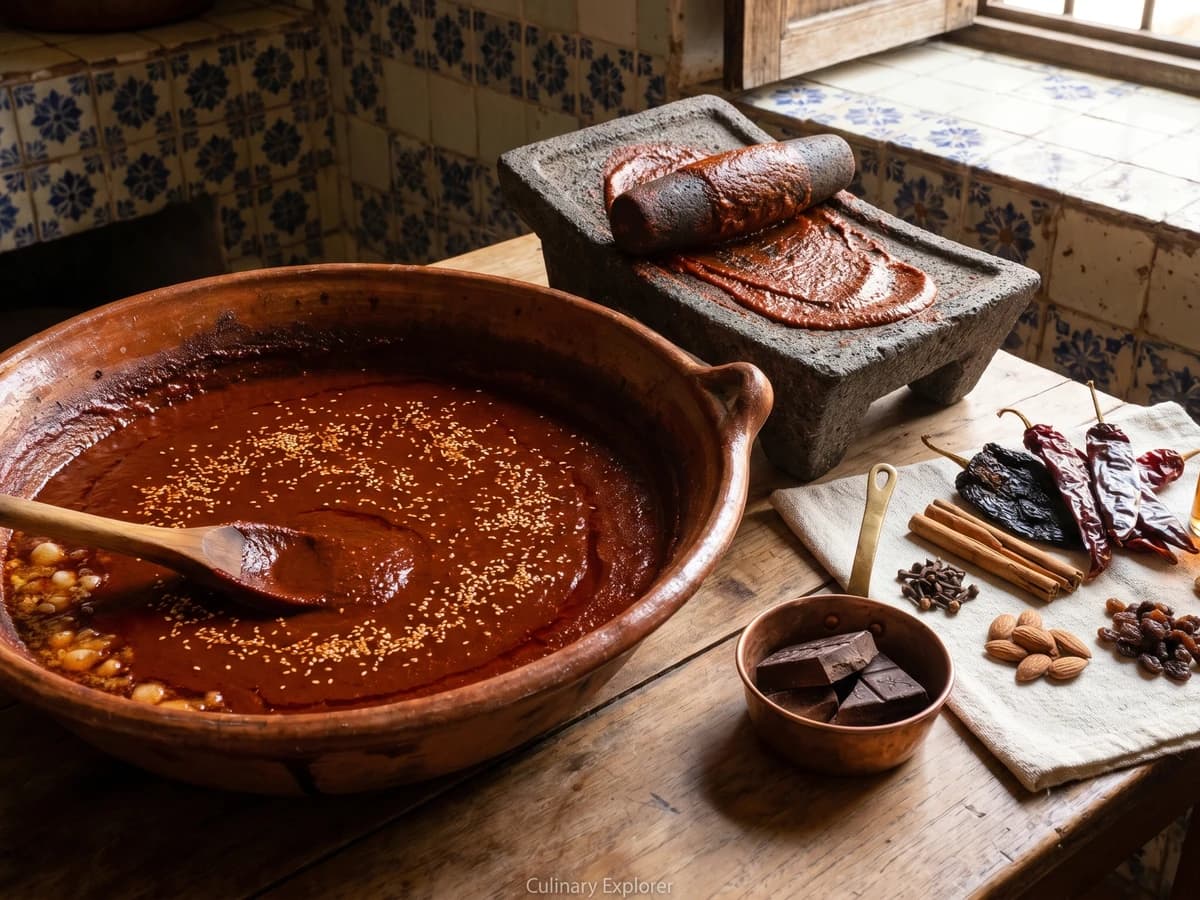
Zacatecas' wedding-table adobo, built from toasted guajillo and ancho, piloncillo, sour orange, chocolate, canela, clavo, almonds, sesame, and lard.

Chef Lupita
Puebla's convent kitchens built this adobo with ancho, guajillo, jerez, almonds, raisins, clove, and lard, a baroque marinade that stains pork loin and finishes as the sauce.