Chef Lupita
Aceite de Chiltepin Bajacaliforniano
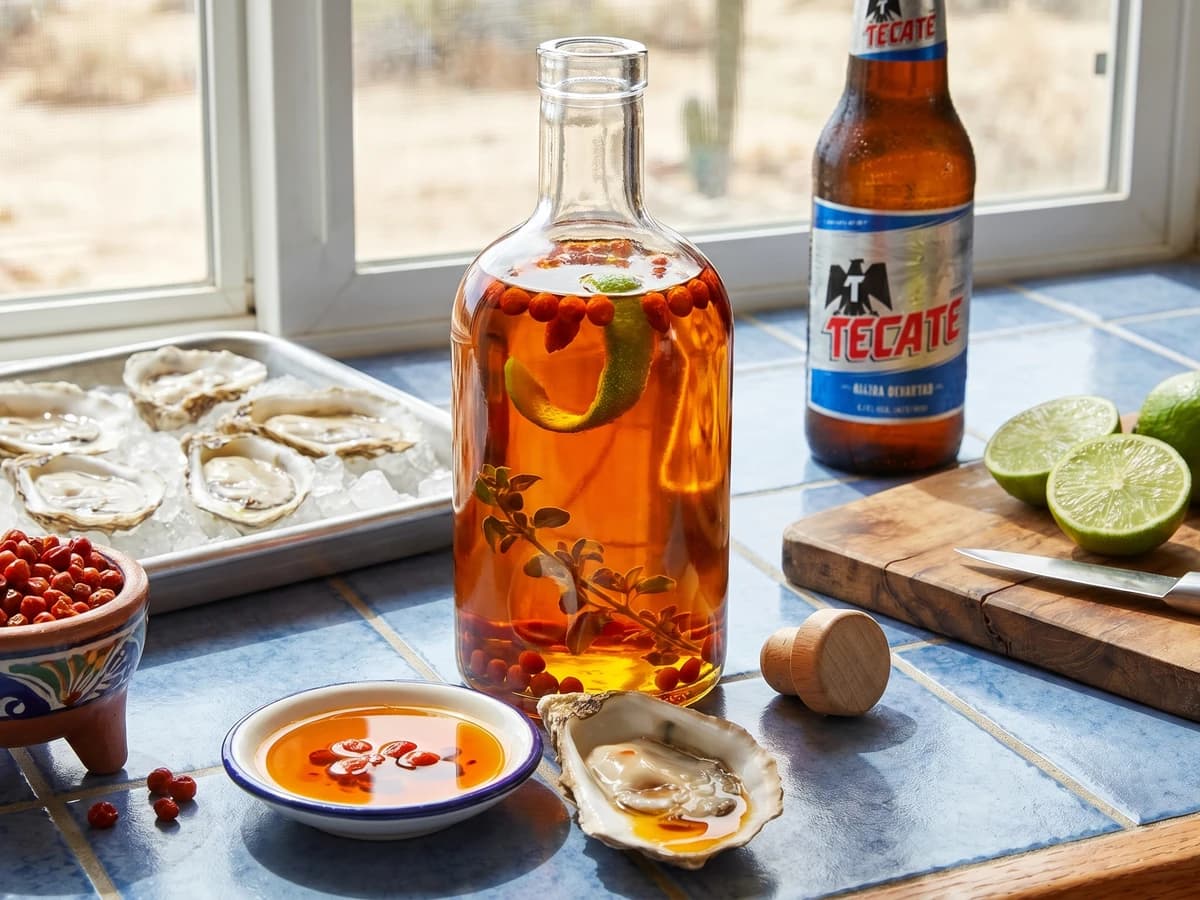
Baja California's wild chiltepin steeped in olive oil with garlic, orejon, and lime peel, until the oil turns ruby-amber and carries the slow, sneaky burn of the desert coast.
A cooking platform built around craft, culture, and the stories behind what we eat.

Created by
Yucatan's pure heat condiment: habaneros charred whole on the comal, then mashed in a molcajete with sea salt and the juice of naranja agria. Served alongside, never poured over.
This is from Yucatan. Not from Mexico in the abstract. From the Peninsula, where the chile habanero is grown in the red soil around Mérida and Valladolid and shows up on every table from breakfast to dinner. Chile tamulado is the condiment that sits next to your cochinita pibil, your panuchos, your salbutes, your sopa de lima. It is not a sauce. It is heat in a dish, and the diner adds it themselves, a spoonful at a time, exactly the way they want it.
The word tamulado comes from the Maya verb tamul, to mash or crush with a stone. That is the entire technique. You char the habanero whole on a dry comal until the skin blisters and goes black in patches. You stem it but you do not seed it. You drop it into the molcajete with coarse sea salt and you press it apart with the tejolote, slowly, until the flesh breaks open and the juice runs. Then you loosen it with naranja agria. Not lime. Naranja agria. The sour orange of the Peninsula, with its perfumed, slightly bitter edge that no other citrus replicates. If you cannot find it, I will give you the substitute below, but you should know what you are missing.
My mother was from Jalisco and she did not make chile tamulado. I learned it from a señora named Doña Lupe in the Mercado Lucas de Galvez in Mérida, who let me sit on a stool behind her stand for three afternoons while she showed me how the comal had to be hot but not screaming, how the molcajete had to be clean and dry, how the habanero had to be charred until it whimpered. She told me that her grandmother used to do this in a wooden mortar with a stone tejolote, the old Maya way, and that the molcajete was a concession to time. Even concessions in Yucatan carry the grammar of the place.
A word of warning. Habanero is hot, real hot, not Pinterest-hot. Eight habaneros in a half cup of paste is a working batch for a Yucatecan table, where people grow up eating it. If you are not used to this kind of heat, start with one spoon and build from there. La cocina no es decoración, es trabajo.
The chile habanero arrived in the Yucatan Peninsula through pre-Columbian trade routes from the Amazon basin, where the species Capsicum chinense originated, and the Yucatan has been recognized since 2010 with a Denomination of Origin (DOC) that protects the regional cultivation of the chile habanero from the Peninsula's red soils. The technique of mashing chiles in stone, recorded in Maya as tamul, predates Spanish contact by many centuries and was practiced in wooden and stone mortars long before the volcanic molcajete became standard in central Mexico. Naranja agria, Citrus aurantium, was introduced by the Spanish in the 16th century and was so thoroughly adopted by Maya cooks that it became the defining acid of Peninsular cuisine, displacing pre-Columbian sour fruits and now standing as the marker that separates Yucatecan cooking from the cuisines of the rest of the country.
Quantity
8
stems left on
Quantity
1 teaspoon, plus more to taste
Quantity
3 tablespoons
or use the substitute below
Quantity
1
peeled
Quantity
1 tablespoon each citrus, a splash of vinegar
| Ingredient | Quantity |
|---|---|
| fresh chile habanerostems left on | 8 |
| coarse sea salt | 1 teaspoon, plus more to taste |
| fresh naranja agria juice (sour orange)or use the substitute below | 3 tablespoons |
| small garlic clove (optional)peeled | 1 |
| naranja agria substitute: lime juice + orange juice + grapefruit juice + a few drops of white vinegar (optional) | 1 tablespoon each citrus, a splash of vinegar |
Set a cast iron comal or heavy skillet over medium heat. No oil, no fat, nothing. The chile goes onto a dry, hot surface. This is how a comal is used in Yucatan, and it is the only way to get the right char on the habanero without burning the flesh through to bitterness.
Place the habaneros on the comal, stems and all. Let them sit for two minutes without touching them, then turn with tongs. Continue turning every minute or two until the skin is blistered black in patches and the flesh has gone soft and orange under the char, about six to eight minutes total. You want char, not ash. The chile should still hold its shape, just collapsed slightly, with juice beginning to weep from the cracks in the skin.
Move the chiles to a plate and let them cool for two minutes, just enough to handle. Pull off the stems. Do not peel the chiles. The char is the flavor. Do not seed them either. This is chile tamulado, not a mild salsa. The heat is the point. Wear gloves if your hands are sensitive, or wash them three times with soap and never touch your eyes the rest of the day. I am not joking.
Put the salt and the garlic, if you are using it, in the bottom of a clean molcajete. Grind into a rough paste, ten to twelve turns of the tejolote. Add the charred habaneros one at a time and mash them down with the stone, pressing and turning until the chiles break apart and start releasing their juice. Do not pulverize. Tamulado means mashed, crushed, broken open, not pureed. The texture should be coarse, with visible flecks of black char and pale chile flesh. A blender turns this into something else. No me vengas con atajos.
Pour in the naranja agria juice, one tablespoon at a time, working it into the mashed chile with the tejolote. The paste will loosen into a rough, brick-orange slurry, thick enough to coat the back of a spoon, loose enough to spoon onto a bite of cochinita. Taste it on the back of a wooden spoon, just a touch. Adjust salt. If the heat hits you flat, add a few drops more juice to brighten it. The acid is what carries the heat forward on the tongue.
Transfer to a small talavera or slipware dish. Set it on the table next to the cochinita pibil, the panuchos, the salbutes, the pavo en relleno negro, whatever it is that called for the chile in the first place. This condiment is served alongside, never poured over. The diner takes a small spoonful, sets it on the edge of the bite, and decides how much heat they want. That decision belongs to them. Así se hace y punto.
1 serving (about 15g)
Culinary guides, cultural storytelling, and the editorial depth that makes cooking meaningful.
Discover Culinary ExplorerChef Lupita
Baja California's wild chiltepin steeped in olive oil with garlic, orejon, and lime peel, until the oil turns ruby-amber and carries the slow, sneaky burn of the desert coast.

Chef Lupita
Puebla's Lenten convent adobo, a brick-red vinegar chile paste of ancho, guajillo, garlic, oregano, and comino made to dress fish for the meatless calendar.
Chef Lupita
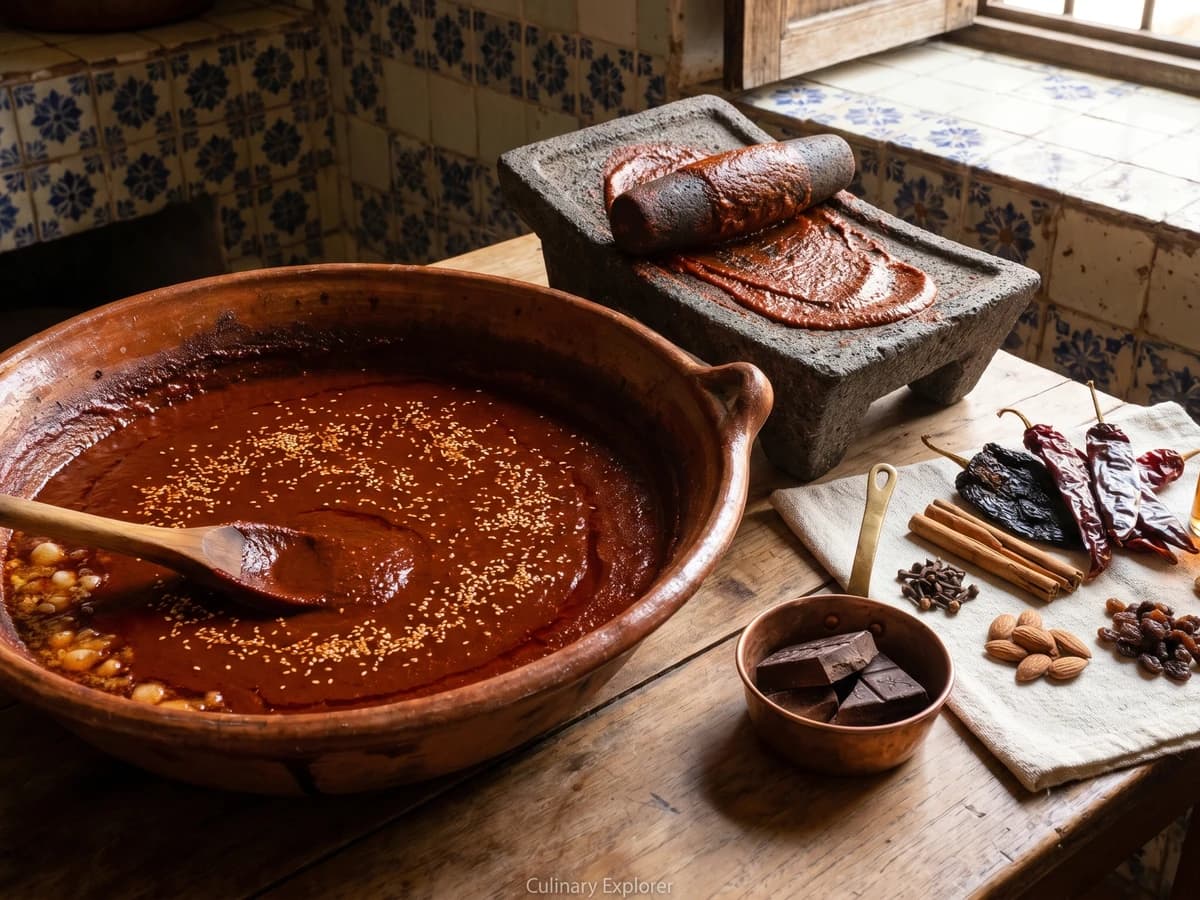
Zacatecas' wedding-table adobo, built from toasted guajillo and ancho, piloncillo, sour orange, chocolate, canela, clavo, almonds, sesame, and lard.

Chef Lupita
Puebla's convent kitchens built this adobo with ancho, guajillo, jerez, almonds, raisins, clove, and lard, a baroque marinade that stains pork loin and finishes as the sauce.