
Chef Lupita
Agua de Alfalfa
Ciudad de México's highland market agua fresca, fresh alfalfa blended with pineapple and lime until bright green, strained clean, and poured cold from the vitrolero.
A cooking platform built around craft, culture, and the stories behind what we eat.
Created by
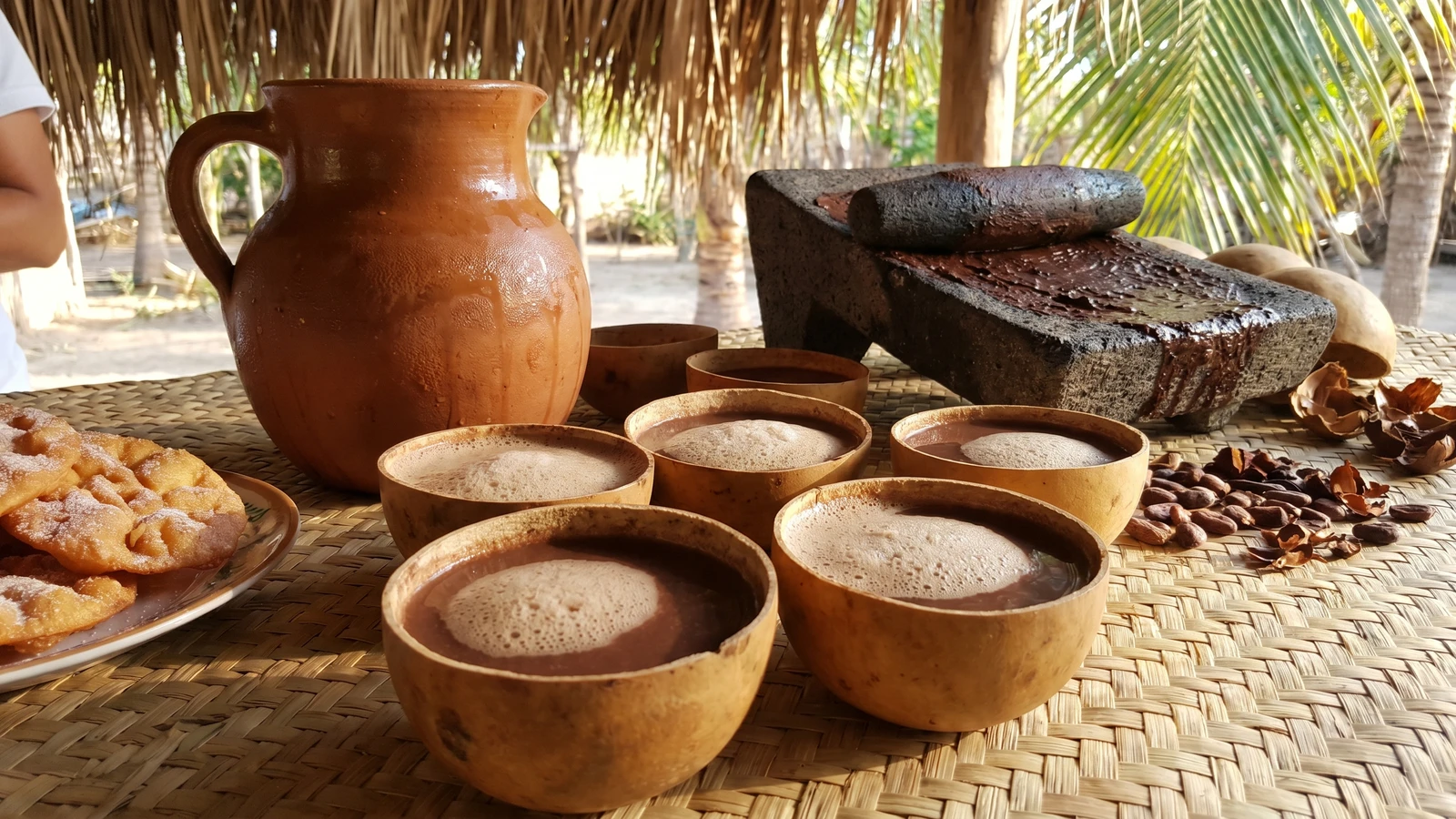
From the Afro-Mexican towns of Guerrero's Costa Chica, this is the ceremonial drink of Cuajinicuilapa and Ometepec: toasted cacao and rice ground on the metate, beaten into a thick foam, and served ice-cold beside a plate of buñuelos.
This is from the Costa Chica, the stretch of coast where Guerrero meets Oaxaca, and it belongs to the Afro-Mexican towns strung along it: Cuajinicuilapa, Ometepec, Ayutla, San Marcos. Chilate is theirs. Not Mexico's idea of a chocolate drink. Theirs.
First, what it is not. Chilate is not champurrado. Champurrado is warm and thick, built on masa, drunk from a clay jarro when the cold comes. Chilate is the opposite. It is served ice-cold, it has no masa, and it is toasted cacao, soaked rice, and canela ground together and beaten into a foam thick enough to hold a spoon. Anyone who tells you the two are the same has never sat under a palapa in Cuajinicuilapa with a jícara of chilate sweating in their hand.
The foam is the whole point. On the Costa Chica the women pour the chilate from a height, jícara into jícara, over and over, until a pale cap builds and holds. The cacao and the rice do that together. Take out the rice and you lose the foam. No me vengas con atajos. This drink is ground on the metate, and I will defend that stone until I die. I will also tell you the truth about a blender further down, because I am practical.
I wrote this recipe down in Cuajinicuilapa, sitting with a woman who has made chilate for the church festivals her whole life. She grinds her cacao on the metate her grandmother ground on. She handed it to me ice-cold in a jícara with a plate of buñuelos, the way it has been served at celebrations on this coast for four hundred years. Saber cocinar es saber vivir. On the Costa Chica, knowing how to raise that foam is knowing something the rest of the country never bothered to learn.
Chilate is a foundational drink of Mexico's Afro-descendant communities, whose ancestors were brought to the Pacific coast of Guerrero and Oaxaca as enslaved laborers beginning in the 16th century and who built the Costa Chica towns that endure today. It joins Mesoamerican cacao, which predates the conquest by millennia and once served as both currency and sacred offering, with rice and cane sugar that arrived through colonial trade, and the practice of pouring the drink from a height to raise its foam echoes West African beverage traditions. Mexico did not recognize its Afro-Mexican population in the national constitution until 2020, four centuries late, even though drinks like chilate had anchored the ceremonial and daily life of these communities the entire time.
Quantity
1 cup (about 5 ounces)
toasted on a comal and peeled
Quantity
1/2 cup
soaked at least 4 hours or overnight and drained
Quantity
2 sticks (about 6 inches total)
Quantity
8 ounces (1 large cone or 2 small), plus more to taste
Quantity
10 cups, divided
Quantity
for serving
Quantity
for serving
| Ingredient | Quantity |
|---|---|
| raw cacao beanstoasted on a comal and peeled | 1 cup (about 5 ounces) |
| white ricesoaked at least 4 hours or overnight and drained | 1/2 cup |
| Ceylon cinnamon (canela de Ceilán) | 2 sticks (about 6 inches total) |
| piloncillo | 8 ounces (1 large cone or 2 small), plus more to taste |
| water | 10 cups, divided |
| buñuelos (optional) | for serving |
| ice (optional) | for serving |
Put the rice in a bowl and cover with cool water by two inches. Soak at least 4 hours, or overnight if you can. Soft rice grinds down smooth and, more important, it is what gives chilate its body and its foam. Drain it well before grinding.
Heat a dry comal or heavy skillet over medium-low. Add the cacao beans and toast them 8 to 10 minutes, shaking the pan often. The husks will darken, loosen, and start to crackle, and the kitchen will smell deep and nutty. Do not let them blacken. Burnt cacao turns the whole drink bitter and there is no fixing it. Cool the beans, then rub them between your palms or in a clean cloth to slip off the papery husks. Discard the husks.
Break the piloncillo into chunks. In a small pot, combine it with 1 cup of the water and one of the cinnamon sticks. Simmer over medium heat until the piloncillo fully dissolves into a loose dark syrup, about 10 minutes. Melting it first means no gritty undissolved sugar later. Set it aside to cool.
This is the heart of the drink. On the metate, grind the peeled cacao, the drained rice, and the second cinnamon stick together into a smooth dark paste. Work in small loads and pass everything down the stone again and again until there is no grit between your fingers. The smoother the paste, the thicker the foam. La cocina no es decoración, es trabajo.
Scrape the paste into a large pitcher or bowl. Pour in the rest of the water (about 9 cups if you ground by hand, 7 if you used 2 cups in the blender) and the cooled piloncillo syrup, and stir hard until everything dissolves. Strain through a fine sieve or a cloth to catch any grit the grinding left behind. Taste it. Add more piloncillo syrup if you want, but keep your hand light. Chilate is refreshing, not a dessert.
Refrigerate the chilate until it is ice-cold, at least 2 hours. This part is not negotiable. Chilate is a cold drink. That is its identity, and it is the line between chilate and champurrado. Serve it warm and you have made something else.
Just before serving, build the foam. The Costa Chica way is to pour the chilate from a height, from one jícara or pitcher into another, over and over, until a thick pale cap forms and holds. A molinillo spun hard between your palms, or a stiff whisk, will also do it. Pour into jícaras or tall glasses, over a little ice if you like, and spoon the foam on top. Serve ice-cold with a plate of buñuelos. Así se hace y punto.
1 serving (about 300g)
Culinary guides, cultural storytelling, and the editorial depth that makes cooking meaningful.
Discover Culinary ExplorerChef Lupita
Ciudad de México's highland market agua fresca, fresh alfalfa blended with pineapple and lime until bright green, strained clean, and poured cold from the vitrolero.
Chef Lupita
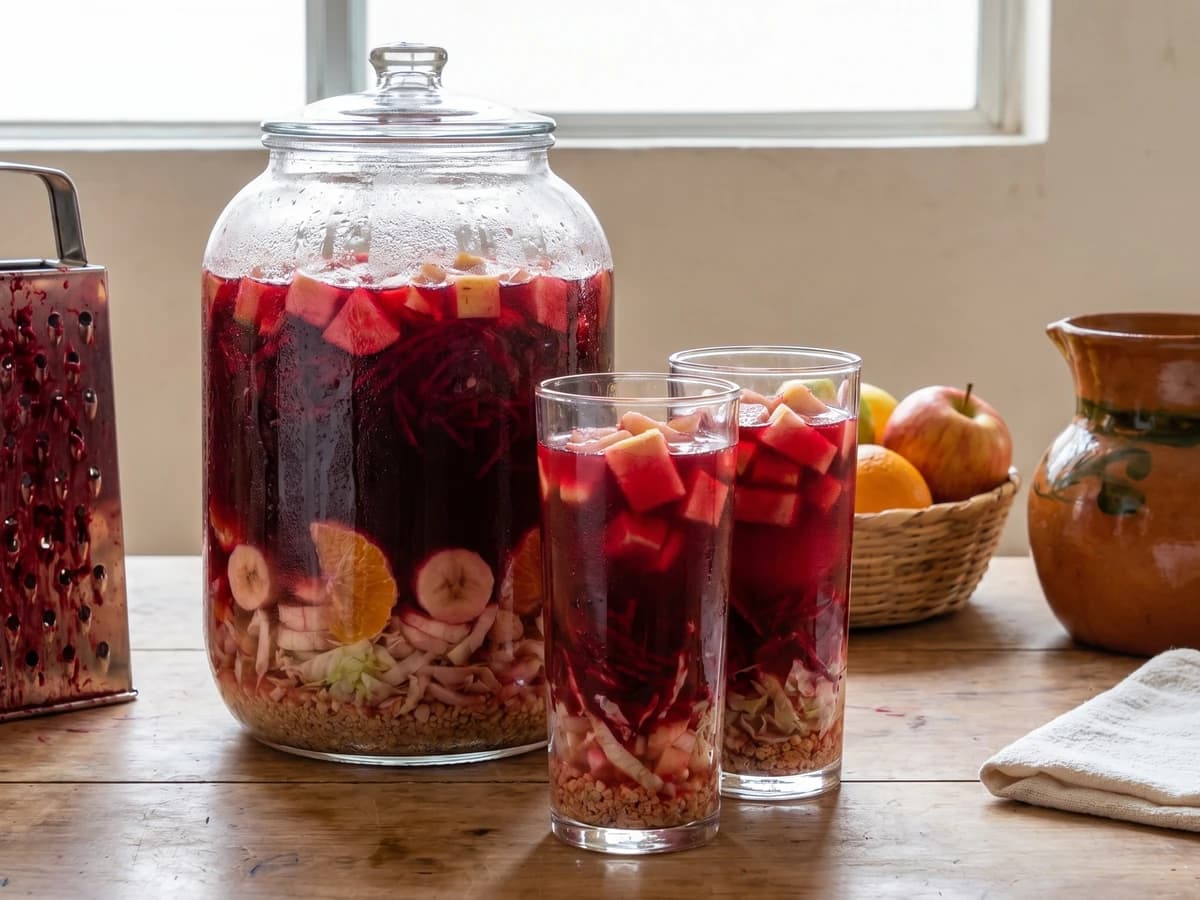
Aguascalientes' Lenten agua fresca, jewel-red from cooked beet and full of apple, banana, orange, lettuce, and ground peanuts, served cold when Holy Week meets the Feria de San Marcos.

Chef Lupita
Sonora and Sinaloa's creamy malted barley water, built on toasted cebada perla, Mexican canela, vanilla from Papantla, and evaporated milk. Pink-beige, rich, and served cold over heavy ice in a heavy glass tumbler. Liquid cookie comfort the northwest way.

Chef Lupita
Yucatán's everyday tonic of boiled chaya leaves blended with lima agria, sugar, and ice. The bright green jarra that sits on every Peninsula table from Mérida to Valladolid.