Culinary Explorer
A cooking platform built around craft, culture, and the stories behind what we eat.
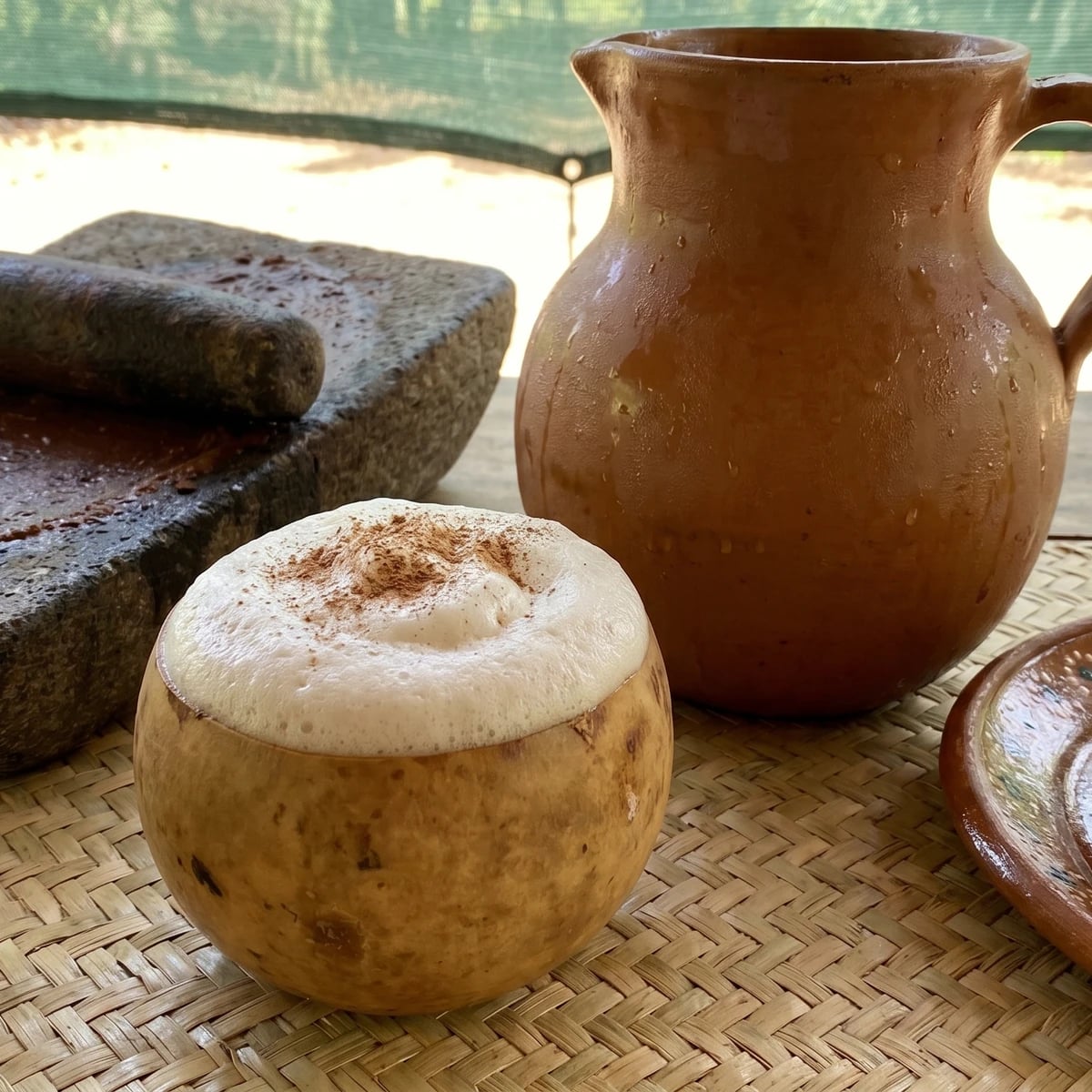
Chilate Blanco Si'va Ña Ña
Created by Chef Lupita
From the Costa Chica of Guerrero, the ceremonial cold cacao drink of Afro-Mexican and indigenous communities: white cacao, toasted rice, panela, and canela ground on the metate and beaten by hand until a thick foam crowns the jícara.
This is from the Costa Chica of Guerrero. Not the beaches the tourists know. The stretch where Ayutla, San Marcos, Ometepec, and Cuajinicuilapa sit, where Mixtec, Tlapanec, Amuzgo, and Afro-Mexican families have shared the same drink for four hundred years. Chilate. Cold, foamed cacao with rice and cinnamon, poured into a jícara. The Ark of Taste records it under its name in the local tongue, Si'va Ña Ña. Esto no es comida de un solo México.
First, what it is not. It is not champurrado. Champurrado is hot, thick with masa, and belongs to central Mexico. Chilate is cold, raised to a foam with rice, and belongs to the Costa Chica. And despite the name, chilatl, chili water, there is no chile in it. The name is older than the recipe. What you taste is toasted white cacao, dark toasted rice, panela, and canela, beaten cold until a thick foam stands on top of the cup.
The cacao is the thing. Cacao blanco, the pale-seeded criollo that grows in the Costa Chica, toasted on the comal until the shells crack. The women grind it on the metate with the rice and the cinnamon until the cacao gives up its fat and the whole thing turns to a dark paste. Then comes the part that takes a strong arm and patience: the foam. You beat it cold, you pour it from high, you work it until the espuma rises and holds. No me vengas con atajos. A blender will get you close. The metate and the hand get you there.
Chilate is not an everyday drink. It is poured at weddings, at funerals during the novenario, at the fiesta patronal, served cold in jícaras with buñuelos to break apart and dip. My mother never made it. She was from Jalisco. But there is a page in her notebook copied from a woman in Ometepec, with one line underlined twice: frío, siempre frío. Cold, always cold. Serve it warm and you have made something else. Saber cocinar es saber vivir.
Ingredients
cacao blanco (white cacao beans)
Quantity
250 grams
toasted, shelled, and ground
white rice
Quantity
1 cup
toasted dark and coarsely ground
Ceylon cinnamon (canela de Ceilán)
Quantity
2 sticks
lightly toasted
| Ingredient | Quantity |
|---|---|
| cacao blanco (white cacao beans)toasted, shelled, and ground | 250 grams |
| white ricetoasted dark and coarsely ground | 1 cup |
| Ceylon cinnamon (canela de Ceilán)lightly toasted | 2 sticks |
Where cooking meets culture.
Culinary guides, cultural storytelling, and the editorial depth that makes cooking meaningful.
Discover Culinary Explorer