
Chef Lupita
Aporreadillo Michoacano con Huevo
Michoacán's Tierra Caliente almuerzo, where salted beef is softened, pounded, fried in lard, folded with egg and chile perón salsa, then served beside morisqueta like a proper working table.
A cooking platform built around craft, culture, and the stories behind what we eat.
Created by
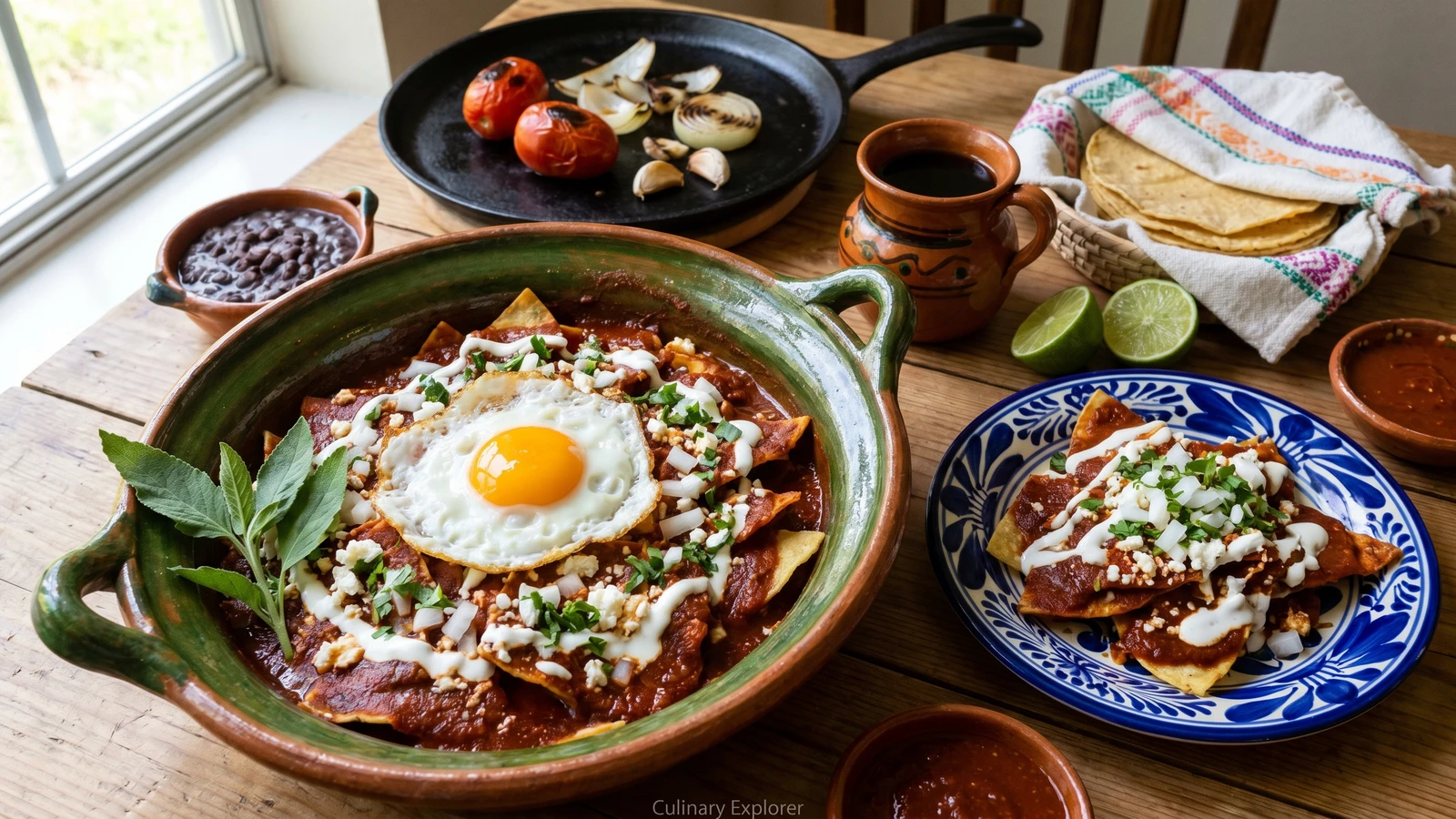
Ciudad de Mexico's red chilaquiles, day-old tortilla totopos drowned in a roasted jitomate and guajillo salsa, finished with crema, queso fresco, raw onion, and a fried egg with a liquid yolk.
Chilaquiles belong to Ciudad de Mexico. Other states make versions, Sinaloa runs them greener, Aguascalientes piles them with more cheese, but the red plate with crema and queso fresco and a huevo estrellado on top is the desayuno of the capital. La Merced, the fondas of Colonia Roma, the carts outside the metro at seven in the morning. That is where this dish lives.
The first thing to understand: chilaquiles are not nachos. They are not a snack. They are breakfast. Day-old tortillas cut into quarters and fried into totopos, then drowned in a salsa that has been roasted, toasted, blended, and fried in lard. The totopos go into the hot salsa for less than a minute. You want them softened at the edges and still holding some bite at the center. Soggy chilaquiles mean the cook lost the timing. Crunchy chilaquiles mean the cook never had it.
The salsa here is built on jitomate and chile guajillo, charred on the comal until the skins blacken. The char is not a defect. It is the dish. Add ancho for sweetness, arbol if you want heat, epazote at the end for that herbaceous green note that nothing else replaces. If you cannot find epazote, leave it out. Do not substitute oregano or cilantro into the salsa. They are different plants doing different work.
My mother made chilaquiles every Saturday morning from whatever tortillas were left from the week. That is the origin of the dish: leftovers turned into something better than the original. The huevo estrellado on top is non-negotiable in my house, the runny yolk breaks into the salsa and the totopos catch it. Saber cocinar es saber vivir.
The word chilaquiles comes from the Nahuatl 'chilaquilitl,' meaning 'chiles and greens,' and the dish appears in colonial-era Mexican cookbooks as a practical use for stale tortillas long before it was codified as a breakfast plate. The 1898 cookbook 'La Cocinera Poblana' includes a recipe close to the modern version, indicating that by the late 19th century chilaquiles had become a fixed dish of central Mexican home cooking. The regional split between rojos and verdes, and the heated debates between Mexico City and Sinaloa cooks over whether the totopos should remain crisp or fully soften, reflects a 20th-century pattern in Mexican cuisine: a single peasant economy dish, once it crossed into urban fondas and middle-class kitchens, became the subject of intense regional pride.
Quantity
12
cut into quarters
Quantity
for frying the totopos
Quantity
4
stemmed and seeded
Quantity
2
stemmed and seeded
Quantity
1
stemmed
Quantity
4 medium
Quantity
1/2 medium, plus more diced for serving
Quantity
3
unpeeled
Quantity
1 sprig
Quantity
2 tablespoons
Quantity
1 teaspoon, plus more to taste
Quantity
1 cup, plus more as needed
Quantity
4
Quantity
1/2 cup
Quantity
1/2 cup, crumbled
Quantity
1/4 cup, finely diced
Quantity
for serving
chopped
Quantity
for serving
| Ingredient | Quantity |
|---|---|
| day-old corn tortillascut into quarters | 12 |
| neutral oil or lard | for frying the totopos |
| dried chile guajillostemmed and seeded | 4 |
| dried chile anchostemmed and seeded | 2 |
| dried chile de arbol (optional)stemmed | 1 |
| ripe jitomates (Roma tomatoes) | 4 medium |
| white onion | 1/2 medium, plus more diced for serving |
| garlic clovesunpeeled | 3 |
| fresh epazote | 1 sprig |
| manteca de cerdo (pork lard) | 2 tablespoons |
| kosher salt | 1 teaspoon, plus more to taste |
| chicken broth or water | 1 cup, plus more as needed |
| large eggs | 4 |
| crema mexicana | 1/2 cup |
| queso fresco | 1/2 cup, crumbled |
| raw white onion | 1/4 cup, finely diced |
| fresh cilantro (optional)chopped | for serving |
| refried black beans (optional) | for serving |
Cut the day-old corn tortillas into quarters. They need to be a little stale. Fresh tortillas absorb too much oil and turn greasy instead of crisp. If yours are still soft, spread them on a sheet pan and leave them out for an hour, or pass them briefly through a 200F oven until they feel dry to the touch. This is the first decision in the recipe and it shapes the whole dish.
Heat about half an inch of oil or lard in a heavy skillet over medium heat. When a tortilla quarter dropped in sizzles immediately and rises to the surface, the oil is ready. Fry the tortillas in batches, turning once, until golden and crisp, about two minutes per side. Drain on a wire rack or a plate lined with newspaper. Salt them lightly while they are still hot. These are totopos, not bagged tortilla chips. The difference is everything.
Heat a dry comal or cast iron skillet over medium-high. Place the jitomates, the half onion, and the unpeeled garlic cloves directly on the hot surface. Turn them as the skins blacken and blister, about ten minutes total. The tomatoes should be soft and collapsing, the onion charred at the edges, the garlic soft inside its papery skin. Pull each piece off as it finishes. Peel the garlic. This is the foundation of a CDMX red salsa. The char is not a mistake, it is the flavor.
Lower the comal to medium. Toast the guajillo and ancho chiles separately, pressing them flat with a spatula, about 20 seconds per side. They should puff slightly and turn fragrant. If you want heat, toast the chile de arbol the same way. Transfer the toasted chiles to a heatproof bowl and cover with hot water, not boiling. Soak for 15 minutes until pliable.
Drain the chiles. Transfer them to a blender with the roasted tomatoes, charred onion, peeled garlic, salt, and the cup of chicken broth. Blend until completely smooth, at least two minutes. Mexican grandmothers used a molcajete for this. A good blender is a fair compromise for chilaquiles. Strain the salsa through a fine-mesh sieve if you want it silky, or leave it as is for more body. I leave it.
Melt the lard in a wide cazuela or deep skillet over medium heat. When it shimmers, pour in the blended salsa. It will sputter. Stand back. Cook for eight to ten minutes, stirring often, until the salsa darkens and thickens enough to coat the back of a spoon. Drop in the sprig of epazote. Taste for salt. The salsa should be assertive, almost too strong on its own. The totopos will absorb the edge.
While the salsa simmers, heat a tablespoon of lard or oil in a separate skillet over medium-high. Crack the eggs in one at a time. You want huevos estrellados: crisp lacy edges, set whites, yolk still bright and liquid. Spoon a little of the hot fat over the whites to set the tops without flipping. Salt them as they cook. Three minutes, no more.
This is the moment that decides everything. Add the totopos to the simmering salsa and fold them in gently with a wooden spoon. You want every chip coated but not collapsing. CDMX chilaquiles are eaten with the totopos still holding some bite at the center. Soggy chilaquiles are a sign the cook walked away. Forty-five seconds to a minute in the salsa, no longer. If the pan looks dry, splash in a little more broth.
Divide the chilaquiles among four warm plates. Pull the spent epazote out, you have already given the salsa its flavor. Slide a fried egg on top of each portion. Drizzle generously with crema. Scatter the crumbled queso fresco, the diced raw white onion, and a pinch of cilantro across the top. Serve immediately with refried black beans on the side if you want a fonda-style breakfast. Eat them now. Chilaquiles wait for nobody. Así se hace y punto.
1 serving (about 275g)
Culinary guides, cultural storytelling, and the editorial depth that makes cooking meaningful.
Discover Culinary ExplorerChef Lupita
Michoacán's Tierra Caliente almuerzo, where salted beef is softened, pounded, fried in lard, folded with egg and chile perón salsa, then served beside morisqueta like a proper working table.

Chef Lupita
Guerrero's Costa Grande aporreado is salted cecina pounded soft, scrambled with egg, and finished in a red guajillo and chile de árbol salsa loud with garlic and cilantro.

Chef Lupita
Los Altos de Chiapas turns two-night fermented white corn into a tart-sweet atole, cooked with canela and piloncillo, then poured hot into jícaras for desayuno.

Chef Lupita
Oaxaca's Mixteca region ferments nixtamalized masa for days until it turns tart and alive, then simmers it with piloncillo and canela into a thick, warm atole served at first light in clay.