
Chef Dean
Brown Butter Sage Sauce
Golden butter cooked until it smells of hazelnuts and autumn, studded with shatteringly crisp sage leaves and brightened with lemon. Five ingredients, ten minutes, infinite applications.
A cooking platform built around craft, culture, and the stories behind what we eat.
Created by
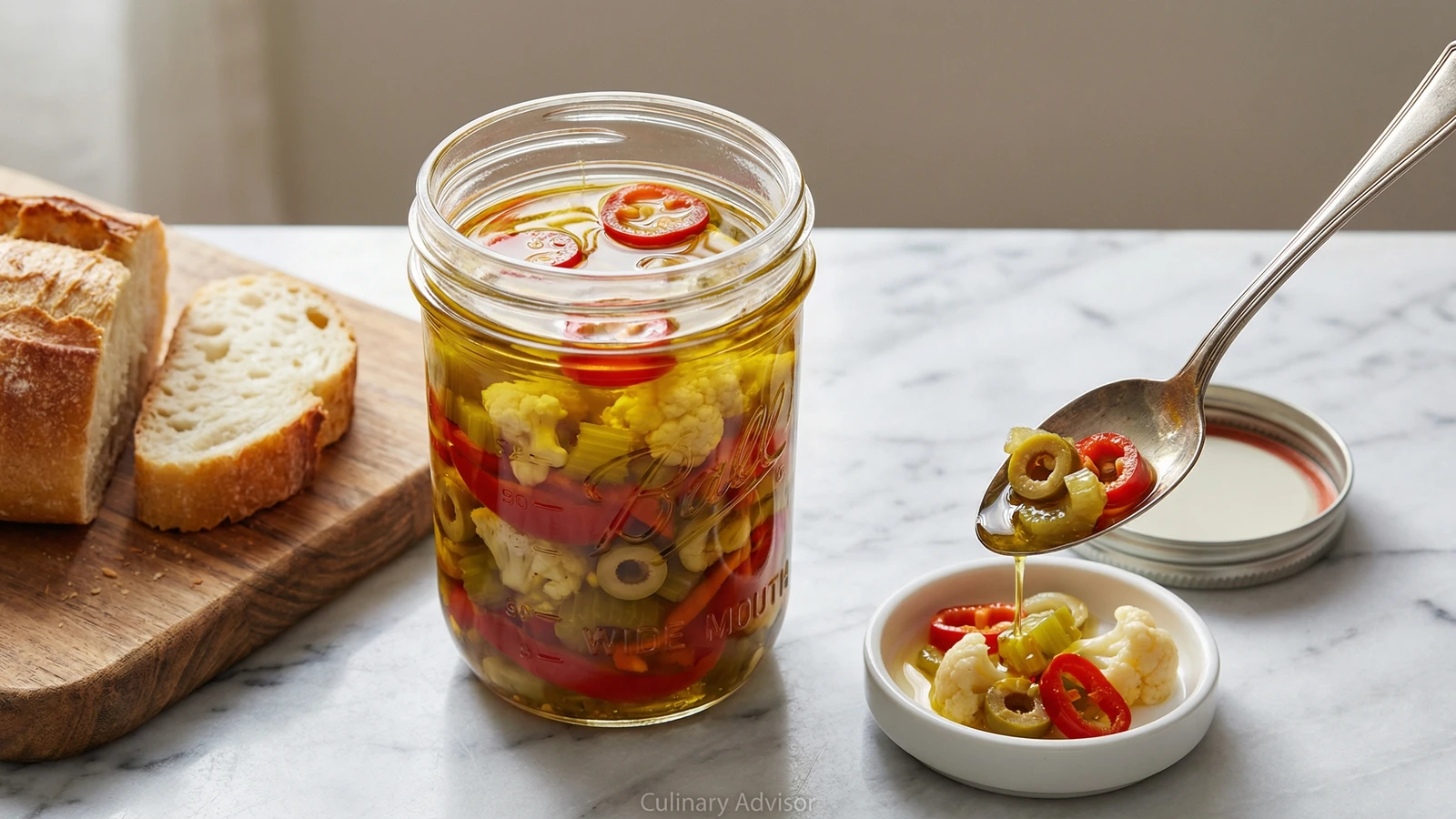
The fiery, oil-packed vegetable relish that defines Chicago's Italian beef sandwich, loaded with sport peppers, crisp celery, and cauliflower in a garlicky, oregano-laced bath of pure heat.
Walk into any beef stand on Taylor Street and you'll hear the question before you've finished ordering: hot or sweet? Hot means giardiniera. It means sport peppers and serranos swimming in seasoned oil, ready to transform a pile of thin-sliced beef into something transcendent. This is the condiment that separates Chicago's Italian-American cooking from every other city's pale imitation.
The roots trace back to Italian pickled vegetables, but Chicago made it something new. Italian immigrants on the Near West Side packed their peppers in oil rather than vinegar brine, creating a richer, more assertive mixture that could stand up to dripping beef sandwiches and char-grilled sausages. The heat builds. The vegetables stay crisp. The oil carries flavor into every bite.
Making giardiniera at home means you control the fire. More serranos for those who want to sweat. Fewer for the timid. The technique requires patience, not skill. Brine your vegetables overnight. Dry them completely. Pack them in oil with good garlic and honest oregano. Wait three days. The result will outlast anything in a jar at the grocery store, and it won't cost you seven dollars for eight ounces.
Quantity
1 cup
cut into 1/2-inch pieces
Quantity
2
sliced 1/4-inch thick on the bias
Quantity
1 medium
peeled and sliced into 1/4-inch coins
Quantity
1
cut into 1/2-inch dice
Quantity
4
sliced into thin rings
Quantity
4
sliced (or substitute pepperoncini)
Quantity
2
sliced into thin rings
Quantity
1/2 cup
roughly chopped
Quantity
1/4 cup
Quantity
for brining
Quantity
6 cloves
minced
Quantity
1 tablespoon
Quantity
1 teaspoon
Quantity
1 teaspoon
freshly ground
Quantity
1/2 teaspoon
Quantity
1 cup
Quantity
2 cups
| Ingredient | Quantity |
|---|---|
| cauliflower floretscut into 1/2-inch pieces | 1 cup |
| celery stalkssliced 1/4-inch thick on the bias | 2 |
| carrotpeeled and sliced into 1/4-inch coins | 1 medium |
| red bell peppercut into 1/2-inch dice | 1 |
| serrano pepperssliced into thin rings | 4 |
| sport pepperssliced (or substitute pepperoncini) | 4 |
| jalapeño pepperssliced into thin rings | 2 |
| green olives with pimentoroughly chopped | 1/2 cup |
| kosher salt | 1/4 cup |
| cold water | for brining |
| garlicminced | 6 cloves |
| dried oregano | 1 tablespoon |
| crushed red pepper flakes | 1 teaspoon |
| black pepperfreshly ground | 1 teaspoon |
| celery seed | 1/2 teaspoon |
| distilled white vinegar | 1 cup |
| vegetable oil or olive oil blend | 2 cups |
Combine the kosher salt with four cups of cold water in a large bowl, stirring until the salt dissolves completely. This brine will draw moisture from the vegetables, ensuring they stay crisp once submerged in oil. Proper salting is not optional. It's the foundation of texture.
Prepare your vegetables before anything touches the brine. Cut cauliflower into pieces no larger than a dime. Slice celery on a sharp bias to expose more surface area. Carrots go into thin coins. Bell pepper into modest dice. Every piece should fit comfortably on a forkful of Italian beef. Uniformity matters here. Vegetables that match in size cure at the same rate.
Slice your serranos, sport peppers, and jalapeños into thin rings, seeds and all. The seeds and membranes carry the heat. Removing them defeats the purpose of making hot giardiniera. Work with gloves if your hands are sensitive, and for heaven's sake, don't touch your face.
Add all cut vegetables except the olives to the salt brine. Press them down so everything stays submerged. Cover and refrigerate for at least eight hours, or overnight. The vegetables will release liquid and firm up. They should emerge snappy, not limp.
Pour the vegetables into a colander and rinse briefly under cold water to remove excess salt. Spread them across clean kitchen towels and pat dry. Roll them gently, pressing out moisture. Water is the enemy of your finished giardiniera. Any moisture left behind will cause spoilage and turn your oil cloudy.
Transfer dried vegetables to a large mixing bowl. Add the chopped olives, minced garlic, oregano, red pepper flakes, black pepper, and celery seed. Toss everything together with your hands, distributing the seasonings evenly. The garlic should perfume the whole mixture.
Pour the white vinegar over the vegetables and toss to coat. The vinegar brightens the flavors and adds preservation. Now add the oil in a steady stream, folding gently until every piece glistens. The ratio leans heavily toward oil. This is what makes it Chicago-style. The vegetables should swim, not merely dress.
Spoon the giardiniera into clean glass jars, pressing down to eliminate air pockets. Pour remaining oil from the bowl over the top until vegetables are completely submerged. Seal tightly. Refrigerate for at least three days before using. The flavors need time to marry, to settle into each other.
After three days, taste for heat and seasoning. The giardiniera will continue to develop flavor over the next two weeks, the vegetables softening slightly while maintaining their essential crunch. Spoon generously over Italian beef, sausage sandwiches, hot dogs, pizza, or anywhere you need something bright and assertive.
1 serving (about 300g)
Culinary guides, cultural storytelling, and the editorial depth that makes cooking meaningful.
Discover Culinary ExplorerChef Dean
Golden butter cooked until it smells of hazelnuts and autumn, studded with shatteringly crisp sage leaves and brightened with lemon. Five ingredients, ten minutes, infinite applications.

Chef Dean
A perfectly balanced Italian dressing where sweet aged balsamic and fruity olive oil unite through the magic of mustard emulsion, ready to transform any salad, grilled vegetable, or chunk of crusty bread into something worth savoring.
Chef Ally
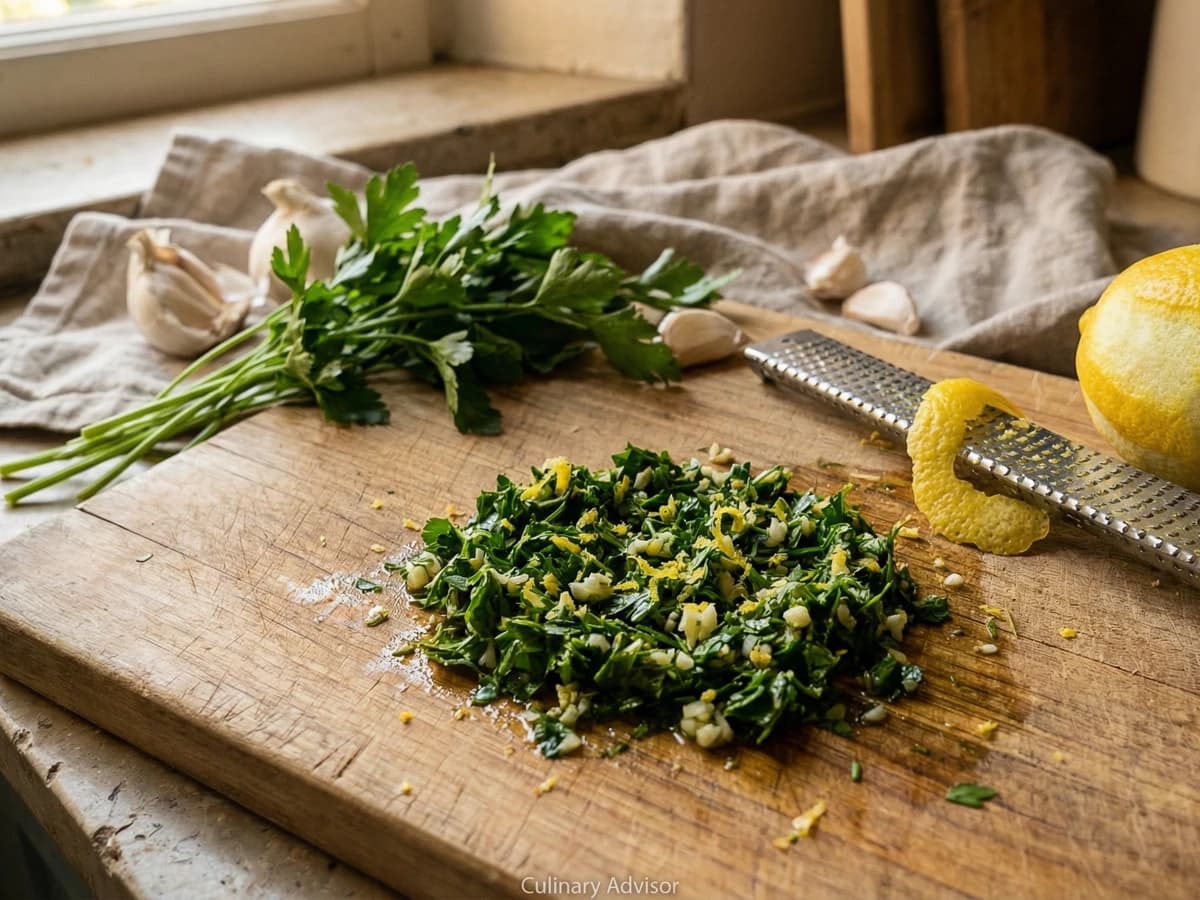
Three ingredients that prove restraint is a form of respect: bright lemon zest, pungent raw garlic, and fresh parsley chopped together to scatter over anything that needs waking up.

Chef Ally
A vibrant, bracing sauce of hand-chopped parsley, capers, and anchovy bound with good olive oil. The kind of preparation that proves perfect ingredients need almost nothing done to them.