
Chef Lupita
Agua de Alfalfa
Ciudad de México's highland market agua fresca, fresh alfalfa blended with pineapple and lime until bright green, strained clean, and poured cold from the vitrolero.
A cooking platform built around craft, culture, and the stories behind what we eat.

Created by
Michoacán's charanda from the Uruapan region, poured neat in a clay copita so the cane, piloncillo, and red volcanic soil speak without lime, ice, or noise.
Michoacán, specifically the Uruapan region at the edge of the Meseta P'urhépecha, is where charanda has its name, its soil, and its authority. This is sugarcane country below the colder highlands, where volcanic earth grows cane with a mineral backbone you can taste when nobody has drowned the spirit in soda.
Charanda sola means neat. Alone. No lime wedge, no chile salt rim, no cola, no shaker. You pour it into a small clay copita or jícara and you pay attention. The cane gives piloncillo, cooked sugar, sometimes green grass. The land gives that dry red-earth finish. If you cover all of that with syrup, you are not celebrating Michoacán. You are hiding it.
I first drank good charanda in Uruapan, after a market meal, from a little glass set beside corundas wrapped in their pointed leaves. The señora serving it did not give a speech. She just said, 'Despacio.' Slowly. That is the whole technique here. Saber cocinar es saber vivir, and knowing how to drink is also knowing when to leave something alone.
Cada estado, su propia cocina. Michoacán is not only carnitas and uchepos and atoles from the Meseta. It is also this cane distillate, protected, local, and serious enough to stand by itself.
Charanda received its Mexican denominación de origen in 2003, protecting sugarcane distillates made in a defined region of Michoacán centered around Uruapan. The name comes from Cerro de la Charanda, commonly understood from P'urhépecha as a reference to red-colored soil, the volcanic earth that marks the area. Sugarcane arrived in Michoacán during the colonial period, and local distillation grew from trapiche culture, cane mills, and the adaptation of copper stills to the warm valleys below the highlands.
Quantity
4 ounces
preferably blanco, joven, or reposado from the Uruapan region
Quantity
for the table
for rinsing the palate, not for mixing
Quantity
for the table
| Ingredient | Quantity |
|---|---|
| charanda with denominación de origen from Michoacánpreferably blanco, joven, or reposado from the Uruapan region | 4 ounces |
| cool filtered water (optional)for rinsing the palate, not for mixing | for the table |
| corundas, pan de muerto, or a small piece of piloncillo (optional) | for the table |
Look for charanda with denominación de origen from Michoacán. Uruapan is the heart, but good bottles also come from the cane country around Taretan, Ziracuaretiro, Nuevo Urecho, and nearby volcanic valleys. If the label does not say charanda and Michoacán, you may have rum. Maybe good rum. Not this drink.
For drinking sola, use blanco if you want the clean taste of fresh cane and earth. Use reposado if you want the same cane with light wood, piloncillo, and a warmer finish. Do not use flavored charanda here. Do not add cola. No me vengas con atajos. This is a spirit served alone because it has something to say.
Set two small clay copitas, jícaras, or narrow tasting glasses on the table. Room temperature is correct. If the kitchen is very hot, chill the bottle for ten minutes, but do not freeze it and do not add ice. Ice numbs the cane and turns the finish dull. Put a small glass of water beside each copita for the palate.
Pour 2 ounces charanda into each copita. Let it sit for one minute before tasting. That short rest lets the first alcohol sharpness settle so you can smell cane, piloncillo, wet stone, and sometimes a little roasted fruit. Do not bury your nose in the glass like a perfume salesman. Smell gently.
Take a small sip and hold it on the tongue for a moment before swallowing. You are looking for cooked sugarcane, piloncillo, a dry mineral edge from the volcanic soils, and, in reposado charanda, a little wood without losing the cane. Then rinse with water if you need to. The water is for your mouth, not the glass.
Serve charanda sola after dinner, beside corundas, pan de muerto in season, ate de membrillo, or a plain piece of piloncillo. Small pours. Slow drinking. This is Michoacán at the table, not a sweet party drink. Así se hace y punto.
1 serving (about 55g)
Culinary guides, cultural storytelling, and the editorial depth that makes cooking meaningful.
Discover Culinary ExplorerChef Lupita
Ciudad de México's highland market agua fresca, fresh alfalfa blended with pineapple and lime until bright green, strained clean, and poured cold from the vitrolero.
Chef Lupita
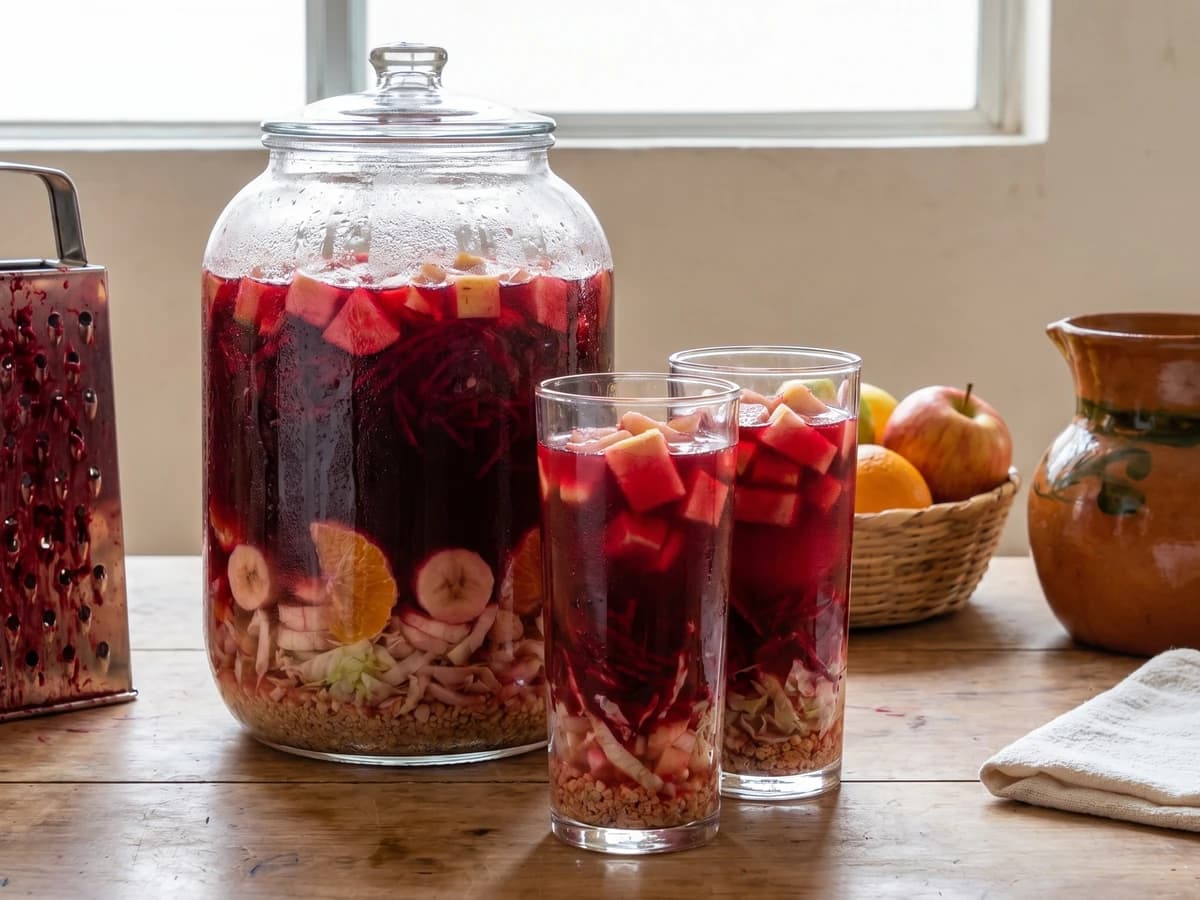
Aguascalientes' Lenten agua fresca, jewel-red from cooked beet and full of apple, banana, orange, lettuce, and ground peanuts, served cold when Holy Week meets the Feria de San Marcos.

Chef Lupita
Sonora and Sinaloa's creamy malted barley water, built on toasted cebada perla, Mexican canela, vanilla from Papantla, and evaporated milk. Pink-beige, rich, and served cold over heavy ice in a heavy glass tumbler. Liquid cookie comfort the northwest way.

Chef Lupita
Yucatán's everyday tonic of boiled chaya leaves blended with lima agria, sugar, and ice. The bright green jarra that sits on every Peninsula table from Mérida to Valladolid.