
Chef Lupita
Agua de Alfalfa
Ciudad de México's highland market agua fresca, fresh alfalfa blended with pineapple and lime until bright green, strained clean, and poured cold from the vitrolero.
A cooking platform built around craft, culture, and the stories behind what we eat.

Created by
Uruapan's cane spirit poured over hard ice with Michoacán lima and cold mineral soda, a dry highland drink for comida in the sun, not a margarita in disguise.
Michoacán is the state, Uruapan is the center, and the cane country around the western edge of the Meseta P'urhépecha is why this drink exists. Charanda is Michoacán's sugarcane spirit, born from red volcanic soil and highland cane, not a borrowed rum with a pretty label.
The fruit that matters here is lima, not limón. In the markets of Uruapan and the Domingo de Ramos tianguis, the good limas smell floral when you cut them, softer than lime, cleaner than orange. They don't shout. They let the cane speak. If your fruit has no perfume, make something else that day. Cook what the market gives you.
The technique is almost nothing, which means every error shows. Ice first, cold Charanda, lima squeezed into the glass, soda last. I watched señoras at outdoor family tables in Michoacán do it by eye, with a plate of corundas nearby and a clay jarro sweating on the manta cloth. They did not shake it, sweeten it, or dress it up for a bar menu. Saber cocinar es saber vivir, and knowing when to leave a drink alone is part of that.
Charanda received a Mexican Denominación de Origen in 2003, protecting the name for producers in a defined zone of Michoacán centered around Uruapan. The word charanda comes from P'urhépecha and refers to red-colored soil, especially associated with the Cerro de la Charanda near Uruapan. The spirit is distilled from sugarcane juice, molasses, piloncillo, or mixtures of these, and long drinks with mineral water and local citrus became a practical 20th-century cantina and home habit in hot weather.
Quantity
2 ounces
chilled
Quantity
1 small
halved and seeded
Quantity
4 to 5 ounces
Quantity
enough to fill one 10-ounce glass or clay jarro
| Ingredient | Quantity |
|---|---|
| Charanda de Uruapan blanco or reposadochilled | 2 ounces |
| fresh Mexican lima dulcehalved and seeded | 1 small |
| cold agua mineral con gas | 4 to 5 ounces |
| large ice cubes | enough to fill one 10-ounce glass or clay jarro |
Put the Charanda, the mineral soda, and the glass or lead-free glazed clay jarro in the refrigerator until cold. This drink is built, not shaken. Cold ingredients keep the soda sharp and let the cane flavor stay clean.
Roll the lima once under your palm, then cut it across the middle and flick out the seeds. Smell the cut face. It should be floral, soft, and bright, not harsh like limón. Lima is its own fruit. Do not confuse it with Persian lime and then blame Michoacán for the mistake.
Fill the cold glass or jarro with large ice cubes. Pour in the chilled Charanda. You want the spirit to hit the ice first, because the first melt softens the alcohol without watering down the whole drink.
Squeeze one lima half directly over the Charanda. Taste the second half with your tongue. If it is sweet and fragrant, squeeze that in too. If it is sharp, stop at one half. Mexican cooks taste the fruit in front of them. They don't obey a printed amount blindly.
Pour the cold agua mineral con gas down the side of the glass until the drink rises near the rim. Stir once with a long spoon, just enough to lift the Charanda through the bubbles. No sugar, no salt rim, no orange liqueur. Cane, lima, soda. Así se hace y punto.
1 serving (about 280g)
Culinary guides, cultural storytelling, and the editorial depth that makes cooking meaningful.
Discover Culinary ExplorerChef Lupita
Ciudad de México's highland market agua fresca, fresh alfalfa blended with pineapple and lime until bright green, strained clean, and poured cold from the vitrolero.
Chef Lupita
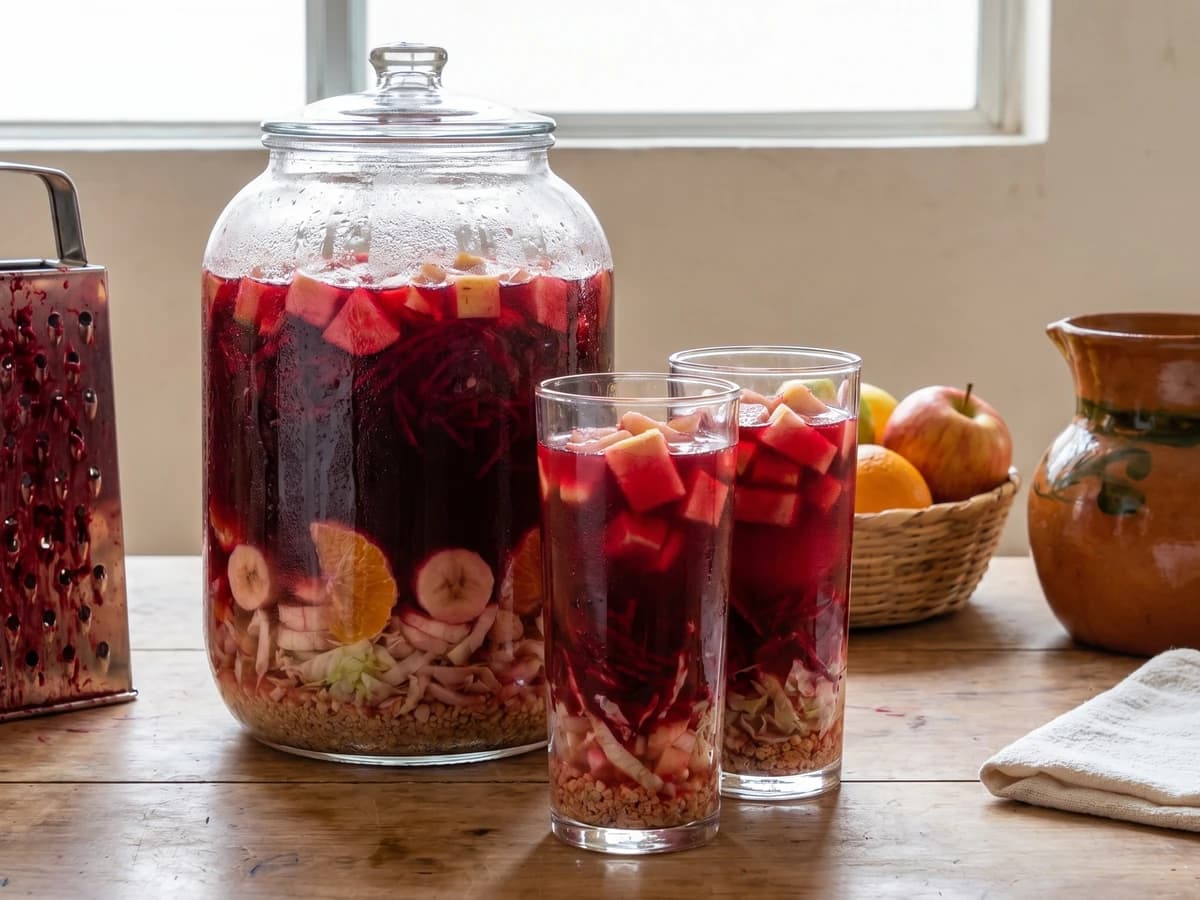
Aguascalientes' Lenten agua fresca, jewel-red from cooked beet and full of apple, banana, orange, lettuce, and ground peanuts, served cold when Holy Week meets the Feria de San Marcos.

Chef Lupita
Sonora and Sinaloa's creamy malted barley water, built on toasted cebada perla, Mexican canela, vanilla from Papantla, and evaporated milk. Pink-beige, rich, and served cold over heavy ice in a heavy glass tumbler. Liquid cookie comfort the northwest way.

Chef Lupita
Yucatán's everyday tonic of boiled chaya leaves blended with lima agria, sugar, and ice. The bright green jarra that sits on every Peninsula table from Mérida to Valladolid.