
Chef Makoa
Ahimaʻa Puaʻa (Tahitian Earth-Oven Pork)
Tahitian puaʻa cooked in the spirit of the ahimaʻa, the earth oven of maʻa Tahiti, wrapped in banana leaf and held low and slow until the meat gives in two fingers.
A cooking platform built around craft, culture, and the stories behind what we eat.
Created by
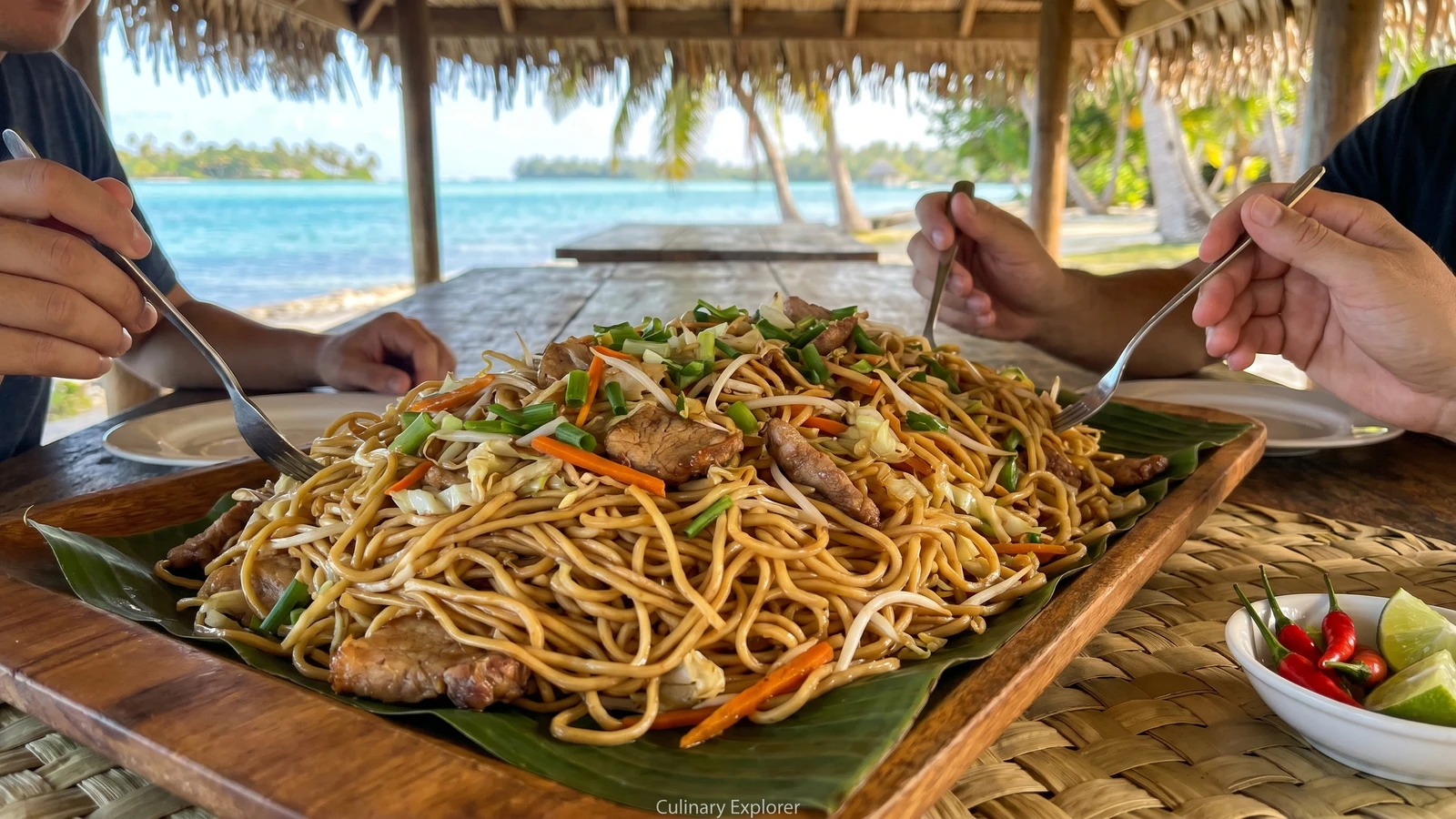
Tahiti's chao men is Hakka chow mein made fully local: glossy egg noodles, pork, cabbage, carrot, and green onion, fast from the wok and generous enough for the table.
The canoe taught us one kind of kinship, and the harbor taught Tahiti another. This chao men belongs to Tahiti, to the Chinese Tahitian families who carried Hakka cooking into Papeʻete, into little shops, roulottes, and casse-croûte counters, then fed everybody with it. Not old canoe food, no need pretend. Still real island food, because the people made a life with it there.
Back home in Hawaiʻi, we have our saimin and chow fun, Sāmoa has sapasui, Tonga has its own chop suey tables, and Tahiti has chao men. Same ocean, different arrivals, different hands. The deep foods still hold the root, taro, breadfruit, the umu by any name, but the everyday foods tell another truth too: people came, worked, married, opened stores, fed schoolkids, fed workers, fed cousins after church.
So cook it fast and unfussy. Have everything cut before the wok gets hot, because once the noodles go in, no time for hunting the cabbage. You want pork browned at the edges, vegetables still with a little bite, noodles glossy with soy and oyster sauce, not wet and heavy. Eat what you have. If the pork is chicken, use chicken. If the vegetables are what is in the crisper, no blame the pan.
Chinese migration to Tahiti began in 1865, when workers, many of them Hakka from Guangdong, were brought to the Atimaono cotton plantation; after the plantation economy shifted, many families stayed and became shopkeepers, growers, and food sellers in French Polynesia. Chao men is part of that Chinese Tahitian table, a local descendant of chow mein that became common at roulottes, snacks, and casse-croûte stands. It sits beside older Tahitian foods like ʻia ota, fāfā, ʻuru, and ahimaʻa foods, showing how the island table holds both canoe inheritance and later migration without smearing either one.
Quantity
12 ounces
or dried chow mein noodles
Quantity
12 ounces
thinly sliced
Quantity
2 tablespoons
divided
Quantity
1 tablespoon
Quantity
1 teaspoon
Quantity
2 tablespoons
divided
Quantity
3 cloves
minced
Quantity
1
thinly sliced
Quantity
2
julienned
Quantity
3 cups
thinly sliced
Quantity
1 cup
Quantity
3
cut into 2-inch lengths
Quantity
1 tablespoon
for color
Quantity
1 teaspoon
Quantity
to taste
| Ingredient | Quantity |
|---|---|
| fresh Chinese egg noodlesor dried chow mein noodles | 12 ounces |
| pork shoulder or pork lointhinly sliced | 12 ounces |
| soy saucedivided | 2 tablespoons |
| oyster sauce | 1 tablespoon |
| cornstarch | 1 teaspoon |
| neutral oildivided | 2 tablespoons |
| garlicminced | 3 cloves |
| small onionthinly sliced | 1 |
| carrotsjulienned | 2 |
| green cabbagethinly sliced | 3 cups |
| bean sprouts | 1 cup |
| green onionscut into 2-inch lengths | 3 |
| dark soy sauce (optional)for color | 1 tablespoon |
| sesame oil | 1 teaspoon |
| ground black pepper | to taste |
Toss the sliced pork with 1 tablespoon soy sauce, the oyster sauce, and the cornstarch. Let it sit while you cut the vegetables. The cornstarch gives the pork that light, glossy cling, the kind you want in chao men, not a heavy gravy.
If using fresh noodles, loosen them with your fingers. If using dried noodles, boil just until flexible, then drain and rinse briefly so they stop cooking. They should bend easy but still have bite, because the wok will finish them.
Heat a wok or wide skillet over high heat until it feels properly hot, then add 1 tablespoon oil. Spread the pork in a single layer and let it brown at the edges before you move it. Stir-fry until just cooked, then lift it to a plate.
Add the remaining oil, then the garlic and onion. Stir just until fragrant, then add the carrots and cabbage. Keep everything moving until the cabbage shines and softens but still has a little backbone. This is quick food. Don't cook the life out of it.
Add the noodles to the wok and toss hard with the vegetables. Pour in the remaining 1 tablespoon soy sauce and the dark soy sauce if using. The noodles should turn glossy and tan, with some edges catching the heat. If they stick, splash in a tablespoon of water and keep tossing.
Return the pork to the wok with the bean sprouts, green onions, sesame oil, and black pepper. Toss for one more minute, just until the sprouts stay crisp and the green onion brightens. Serve it straight away, piled high and loose, the way a roulotte plate should look: warm, generous, no fuss.
1 serving (about 260g)
Culinary guides, cultural storytelling, and the editorial depth that makes cooking meaningful.
Discover Culinary ExplorerChef Makoa
Tahitian puaʻa cooked in the spirit of the ahimaʻa, the earth oven of maʻa Tahiti, wrapped in banana leaf and held low and slow until the meat gives in two fingers.

Chef Makoa
Glossy Chinese-Tahitian roast duck from Papeʻete, lacquered with soy, honey, and five-spice, carved for the lazy Susan, then dipped into thick fresh coconut milk beside rice, ʻuru, and a crowded table.

Chef Makoa
Tahiti's fāfaru takes raw ʻahi into miti fāfaru, a pungent fermented seawater brine, then brings it back to the table with mitihue, breadfruit, and the lesson that good funk is food kept alive.

Chef Makoa
A Tahitian roulotte plate from Papeʻete nights: savory minced beef, crisp fries, and white rice piled big, French casse-croûte comfort carried into island appetite.