
Chef Jeong-sun
Aehobak-guk (애호박국, Korean Zucchini Soup)
A clean summer soup of Korean zucchini and salted shrimp, built on quick anchovy-kelp broth and finished before the half-moons lose their shape on a weeknight table.
A cooking platform built around craft, culture, and the stories behind what we eat.

Created by
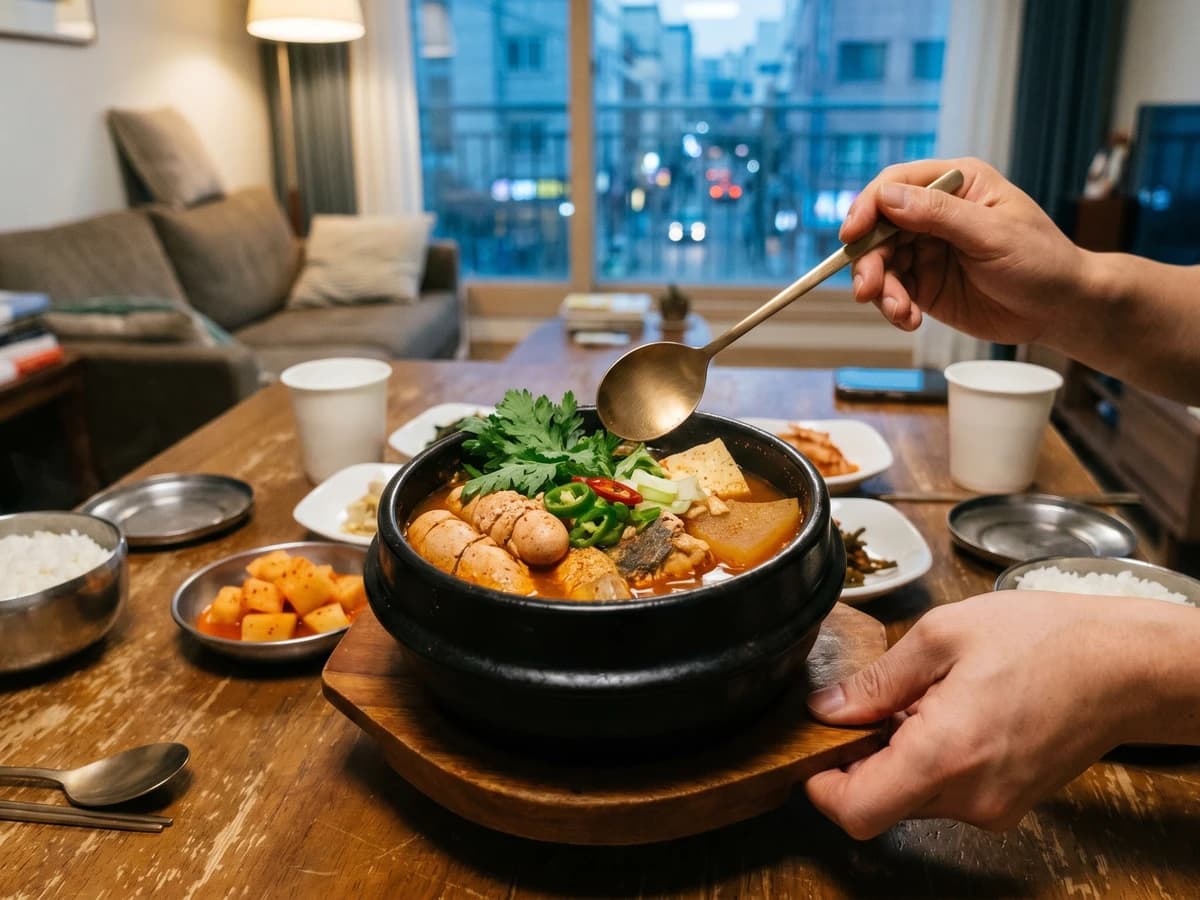
Thin brisket seared until the edges brown, then simmered with doenjang, tofu, zucchini, and chilies; a weeknight soybean paste stew made richer by beef fat, not heavier.
Chadol-doenjang-jjigae lives or dies in the first three minutes. Put the brisket straight into broth and you get boiled beef floating in soybean paste. Sear it first, let the fat run, and let the doenjang touch that fat before the liquid goes in. That browned edge is where the depth lives.
This is a modern home-table stew, the kind that appears after someone bought chadolbaegi (thin-sliced beef brisket) for grilling and saved a little for the pot. It isn't a grand dish. Good. A stew doesn't need grandeur to deserve care. It needs the right order, a measured spoon of doenjang, and vegetables cut so they finish together instead of collapsing into the bowl.
Use rice-rinsing water if you have it, or a quick anchovy-kelp broth if you planned ahead. Both are honest. What I won't shorten is the sear or the tasting at the end. Doenjang changes from crock to crock and tub to tub, so start with 3 tablespoons, taste, then add only what the pot asks for. 손맛 is real; I measure it anyway, so it can be handed on.
Serve it with plain rice and two or three banchan, nothing noisy. The beef gives richness, but the stew should still taste like doenjang, zucchini, tofu, and chili, each one readable. Let it taste like itself.
Doenjang-jjigae belongs to Korea's long home tradition of jang, fermented soybean pastes and sauces kept in onggi crocks and used daily rather than ceremonially. Chadolbaegi, thin-sliced beef brisket, became especially familiar through modern tabletop grilling, and adding a small amount to doenjang-jjigae reflects a later restaurant and home habit: using brisket fat to enrich an everyday stew without turning it into a meat dish. The result is not an old court preparation, but a practical Korean table logic, grill, rice, banchan, and stew sharing the same meal.
Quantity
180g
cut into 2-inch pieces
Quantity
3 cups
Quantity
3 tablespoons, plus 1 teaspoon more if needed
Quantity
1 teaspoon
Quantity
1/2 medium
cut into 1/2-inch wedges
Quantity
1/2 small
cut into thick half-moons
Quantity
120g
cut into 1/2-inch pieces
Quantity
120g
trimmed
Quantity
1 block (300g)
cut into bite-size cubes
Quantity
2 cloves
minced
Quantity
1
sliced on the diagonal
Quantity
1
sliced on the diagonal
Quantity
2
cut into 1-inch lengths
Quantity
1/2 teaspoon
| Ingredient | Quantity |
|---|---|
| chadolbaegi (thin-sliced beef brisket)cut into 2-inch pieces | 180g |
| rice-rinsing water or anchovy-kelp broth | 3 cups |
| doenjang (Korean fermented soybean paste) | 3 tablespoons, plus 1 teaspoon more if needed |
| gochugaru (Korean chili flakes) (optional) | 1 teaspoon |
| onioncut into 1/2-inch wedges | 1/2 medium |
| zucchini (aehobak)cut into thick half-moons | 1/2 small |
| Korean radish or potato (optional)cut into 1/2-inch pieces | 120g |
| mushroomstrimmed | 120g |
| medium-firm tofucut into bite-size cubes | 1 block (300g) |
| garlicminced | 2 cloves |
| green chilisliced on the diagonal | 1 |
| red chili (optional)sliced on the diagonal | 1 |
| scallionscut into 1-inch lengths | 2 |
| toasted sesame oil (optional) | 1/2 teaspoon |
Heat a ttukbaegi or small heavy pot over medium-high heat. Add the chadolbaegi in a loose layer and sear 2 to 3 minutes, turning once, until some edges brown and the fat coats the bottom of the pot. If the beef is very lean, add 1/2 teaspoon sesame oil. Do not stir it constantly. The pot needs quiet contact to make flavor.
Lower the heat to medium. Add the doenjang to the rendered beef fat and stir for 30 to 45 seconds, just until it darkens slightly and smells rounder. This is not frying it hard. You are waking the paste in fat so it joins the beef instead of sitting separately in the broth.
Pour in the rice-rinsing water or broth slowly, stirring to dissolve the doenjang from the bottom of the pot. Add the gochugaru if using. Bring it to a steady simmer and scrape up any browned bits. Rice-rinsing water gives body; anchovy-kelp broth gives a cleaner savory spine. Both work.
Add the onion and the radish or potato if using. Simmer 6 to 7 minutes, until the radish turns slightly translucent or the potato is almost tender. These go in before the zucchini because they need time. A good jjigae is not a pot where every vegetable dies at the same speed.
Add the zucchini and mushrooms and simmer 4 minutes. The zucchini should soften but still hold its crescent shape. If the stew looks too thick, add 2 to 3 tablespoons water. If it looks thin, leave the lid off and let it reduce for another minute.
Slide in the tofu and minced garlic. Simmer gently for 3 minutes, spooning broth over the tofu instead of stirring hard. Tofu breaks when a cook gets impatient. Taste the broth now. If it is flat, add 1 teaspoon more doenjang. If it is salty, add 2 tablespoons water and let the vegetables speak.
Scatter the green chili, red chili if using, and scallions over the top. Turn off the heat and let them soften in the residual heat for 1 minute. Carry the pot to the table with rice. This stew should be eaten right away, while the tofu is tender and the brisket still has its browned edge.
1 serving (about 400g)
Culinary guides, cultural storytelling, and the editorial depth that makes cooking meaningful.
Discover Culinary ExplorerChef Jeong-sun
A clean summer soup of Korean zucchini and salted shrimp, built on quick anchovy-kelp broth and finished before the half-moons lose their shape on a weeknight table.

Chef Jeong-sun
A Masan coast monkfish stew with firm white meat, gelatin at the bones, soybean sprouts for crunch, and a red broth seasoned to carry the fish, not bury it.
Chef Jeong-sun
A weeknight fish roe stew with radish and crown daisy in a clean spicy broth, where the whole success depends on adding the roe late enough that it sets tender, not chalky.

Chef Jeong-sun
Late-summer mallow leaves rubbed with salt until the bitter green water runs off, then simmered in a clean doenjang broth with dried shrimp, the quiet soup a Korean weeknight deserves.