
Chef Lupita
Aporreadillo Michoacano con Huevo
Michoacán's Tierra Caliente almuerzo, where salted beef is softened, pounded, fried in lard, folded with egg and chile perón salsa, then served beside morisqueta like a proper working table.
A cooking platform built around craft, culture, and the stories behind what we eat.
Created by
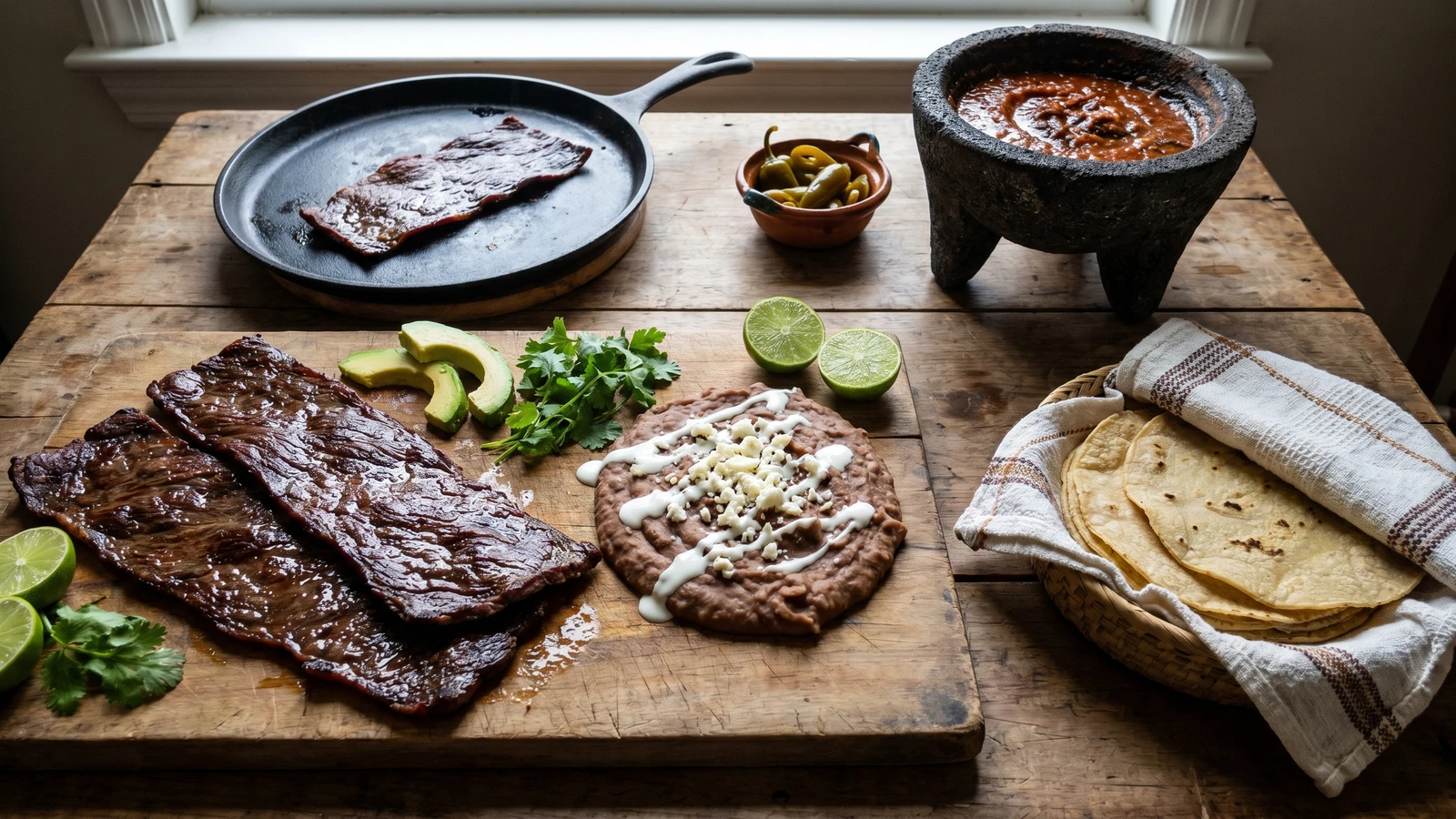
Morelos's paper-thin salt-cured beef from Yecapixtla, grilled hot and fast on the comal and served with epazote-scented bayo beans refried in lard, thick crema de rancho, crumbled queso fresco, and warm corn tortillas.
This is from Morelos. Specifically from Yecapixtla, the small town in the eastern part of the state where every block holds a cecineria and the smell of salt-cured beef sits in the air from sunrise. The cecina is the dish. Everything else on the plate is built around it.
Yecapixtla cecina is beef cut by hand into one continuous paper-thin sheet, salted, and air-dried on wooden racks in the sun. The cecineros of Yecapixtla have done this the same way for generations and they protect the technique with the seriousness of guildsmen. The cut is what makes it. A thick slice of salted beef is not cecina. It is salted beef. Cecina is the sheet, the translucence, the way it cooks in seconds on a hot comal and develops crisp edges without ever going leather. If your butcher cannot get you real Yecapixtla cecina, find a Mexican carniceria that imports it, or wait until you can. A substitute is a compromise, not an upgrade.
The rest of the plate is the Morelos breakfast and weekend table: bayo beans cooked with epazote and refried in lard, thick crema de rancho that pools and clings, crumbled queso fresco, a salsa molcajeteada of charred tomato and serrano, warm corn tortillas, sliced avocado. Nothing fancy. Nothing precious. This is the food that fonderas and home cooks in Cuautla and Yecapixtla and Tepoztlán have served every day of their working lives. Saber cocinar es saber vivir. Cada estado, su propia cocina, and this one belongs to Morelos.
Cecina arrived in Mexico through Spanish colonial cooks, who brought the Iberian tradition of salt-curing thin sheets of beef as a preservation method that predates refrigeration by centuries; the word 'cecina' itself comes from the Latin 'siccus,' meaning dry. Yecapixtla, founded by the Xochimilca people before the conquest and absorbed into the Augustinian evangelization route in the 16th century, became the cecina capital of Mexico because of its dry climate, its proximity to cattle-grazing lands in the slopes of the Popocatépetl volcano, and the cutting technique developed by local carniceros that produces a single continuous sheet from a single cut of beef. The town now hosts an annual Feria de la Cecina each March, and the product has been formally recognized as part of Morelos's cultural patrimony.
Quantity
1.5 pounds
paper-thin salt-cured beef sheets
Quantity
2 tablespoons
Quantity
1 medium
finely diced, for refritos
Quantity
3
finely minced, for refritos
Quantity
1 pound
picked over and rinsed
Quantity
1
halved, for the beans
Quantity
4
smashed, for the beans
Quantity
2 sprigs
Quantity
1 tablespoon, plus more to taste
Quantity
1 cup
Mexican thick cream, unsweetened
Quantity
8 ounces
crumbled
Quantity
4
Quantity
2
stemmed
Quantity
1/4 medium
for the salsa
Quantity
1
for the salsa
Quantity
1/4 cup
chopped
Quantity
juice of 1
Quantity
18
warmed
Quantity
2
sliced
Quantity
for serving
| Ingredient | Quantity |
|---|---|
| cecina de Yecapixtlapaper-thin salt-cured beef sheets | 1.5 pounds |
| manteca de cerdo (pork lard) | 2 tablespoons |
| white onionfinely diced, for refritos | 1 medium |
| garlic clovesfinely minced, for refritos | 3 |
| dried bayo or pinto beanspicked over and rinsed | 1 pound |
| white onionhalved, for the beans | 1 |
| garlic clovessmashed, for the beans | 4 |
| fresh epazote | 2 sprigs |
| kosher salt | 1 tablespoon, plus more to taste |
| crema de ranchoMexican thick cream, unsweetened | 1 cup |
| queso frescocrumbled | 8 ounces |
| ripe Roma tomatoes | 4 |
| fresh chile serranostemmed | 2 |
| white onionfor the salsa | 1/4 medium |
| garlic clovefor the salsa | 1 |
| fresh cilantrochopped | 1/4 cup |
| lime | juice of 1 |
| hand-pressed corn tortillaswarmed | 18 |
| ripe Hass avocados (optional)sliced | 2 |
| chiles jalapeños en escabeche (optional) | for serving |
Place the picked-over beans in a heavy pot. Cover with cold water by three inches. Add the halved onion, smashed garlic, and one sprig of epazote. Do not salt yet. Bring to a gentle simmer over medium heat and skim the foam that rises in the first ten minutes. Lower the heat until the surface barely moves. Cook partially covered for an hour and a half to two hours, until the beans are completely tender and the broth turns deep brown. Add the salt only in the last fifteen minutes. Salt added too early toughens the skin.
Heat the lard in a wide cast iron skillet over medium heat. Add the finely diced onion and cook until translucent, about four minutes. Add the minced garlic and cook one minute more. Ladle in the cooked beans with a generous amount of their broth. Mash with a wooden bean masher or the back of a heavy spoon as they cook. Add the second sprig of epazote. Cook for twelve to fifteen minutes, stirring constantly, until the beans pull away from the sides of the pan and form a glossy, loose paste. La manteca es el sabor. If they get too thick, add a splash of the bean broth. Taste for salt.
Heat a dry comal over medium-high. Char the Roma tomatoes, serranos, the quarter onion, and the garlic clove directly on the surface. Turn them as they blacken in patches. The tomatoes are ready when the skin loosens and the flesh collapses. The chiles when they blister and turn olive-brown. About eight to ten minutes total. Transfer everything to a volcanic stone molcajete. Grind the garlic and salt first to a paste, then add the chiles, then the onion, then the tomatoes. Work in a circular motion. You want texture, not a smooth puree. Finish with the chopped cilantro and lime juice. Salt to taste.
Take the cecina out of its packaging twenty minutes before you grill it. Real Yecapixtla cecina is cut so thin you can read through it and is already seasoned with salt from the curing. It needs almost nothing from you. If the sheets are folded, unfold them gently. They tear easily. If they are stuck together, peel them apart with patience. No me vengas con atajos.
Heat a cast iron comal or heavy skillet over medium-high until very hot. You want it hot enough that a drop of water dances and disappears. Lay the cecina sheets flat on the dry comal in a single layer. Do not crowd them. They cook in thirty to forty-five seconds per side. Maximum. The edges will darken, the surface will turn a deep mahogany, and the fat will glisten. As each sheet finishes, lift it off and stack on a warm plate. Repeat until all the cecina is grilled. Overcooked cecina turns to leather and there is no rescuing it. Watch the clock.
Wipe the comal clean with a folded cloth. Warm the corn tortillas on it, about twenty seconds per side, flipping them twice. The good ones will puff in the middle. Stack them inside a folded cloth servilleta as you go. Warm tortillas are not optional. Cold tortillas are an insult to the cecina.
Spread the refried beans across one side of a large wooden tabla or platter. Tear the grilled cecina into rough pieces and lay it next to the beans. Spoon the crema de rancho generously over the beans and drizzle a little on the cecina. Scatter the crumbled queso fresco over the top. Set the salsa molcajeteada, sliced avocado, pickled jalapeños, and the basket of warm tortillas around the platter. Each diner builds their own taco at the table. That is how it is done in the Yecapixtla cecinerias. Así se hace y punto.
1 serving (about 660g)
Culinary guides, cultural storytelling, and the editorial depth that makes cooking meaningful.
Discover Culinary ExplorerChef Lupita
Michoacán's Tierra Caliente almuerzo, where salted beef is softened, pounded, fried in lard, folded with egg and chile perón salsa, then served beside morisqueta like a proper working table.

Chef Lupita
Guerrero's Costa Grande aporreado is salted cecina pounded soft, scrambled with egg, and finished in a red guajillo and chile de árbol salsa loud with garlic and cilantro.

Chef Lupita
Los Altos de Chiapas turns two-night fermented white corn into a tart-sweet atole, cooked with canela and piloncillo, then poured hot into jícaras for desayuno.

Chef Lupita
Oaxaca's Mixteca region ferments nixtamalized masa for days until it turns tart and alive, then simmers it with piloncillo and canela into a thick, warm atole served at first light in clay.