Chef Lupita
Aceite de Chiltepin Bajacaliforniano
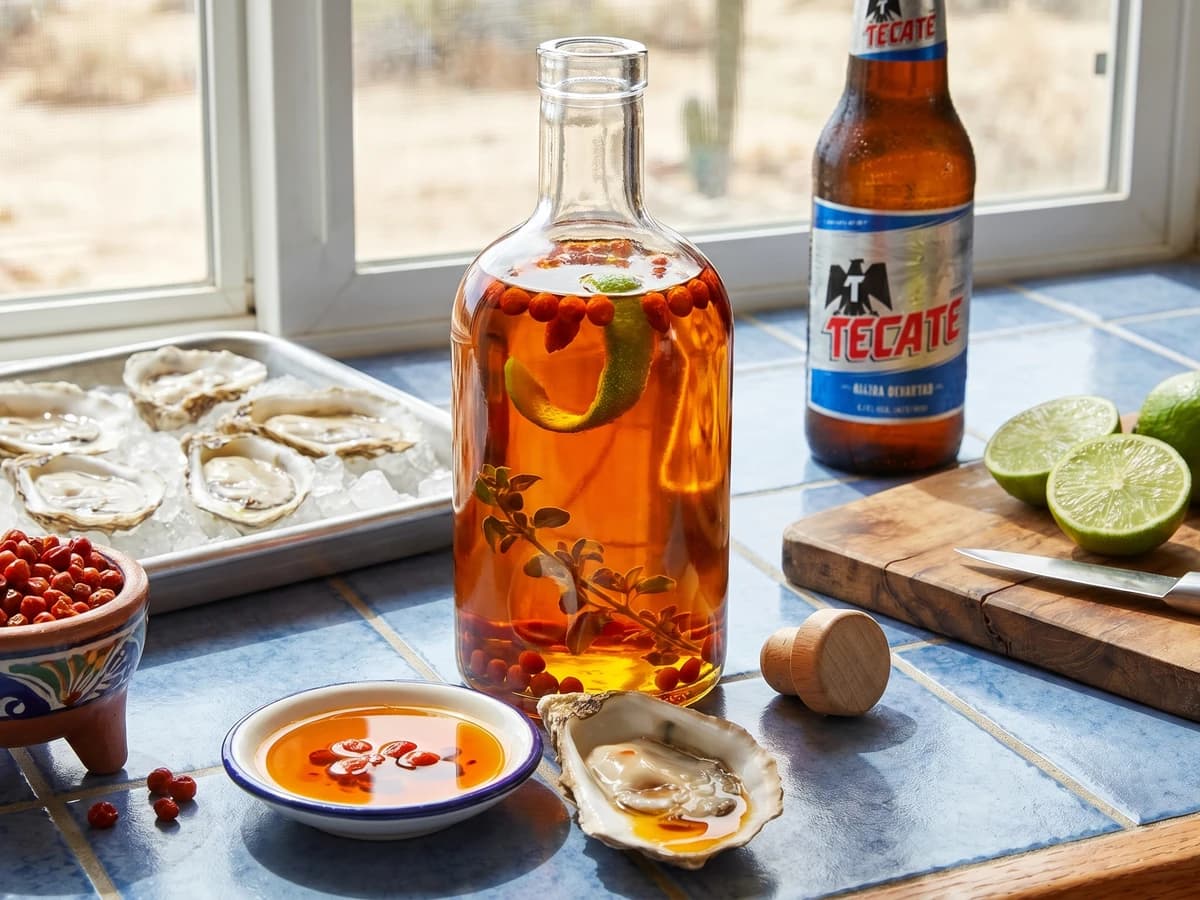
Baja California's wild chiltepin steeped in olive oil with garlic, orejon, and lime peel, until the oil turns ruby-amber and carries the slow, sneaky burn of the desert coast.
A cooking platform built around craft, culture, and the stories behind what we eat.
Created by
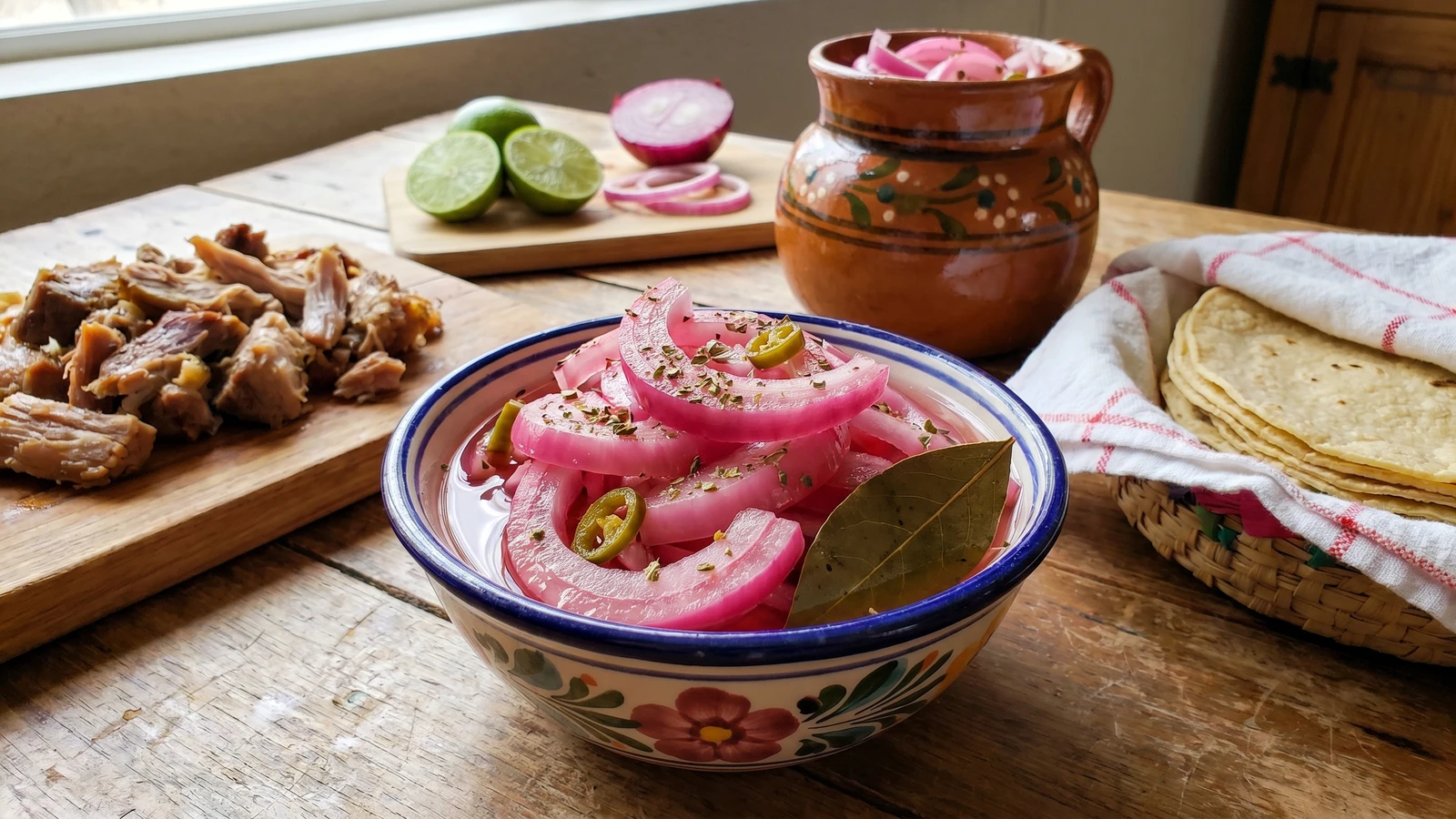
Guanajuato's Bajío table pickle, thin red onion softened in hot vinegar with orégano mexicano, cumin, bay leaf, and serrano, the sharp pink bite beside carnitas from Apaseo.
Guanajuato, in the Bajío, is where this escabeche belongs. Apaseo el Grande and Apaseo el Alto sit on the road between Celaya and Querétaro, carnitas country, market-table country, the kind of place where a bowl of pink onion is not decoration. It is balance.
The onion is cebolla morada, sliced thin enough to fold but not so thin it disappears. The brine is vinagre blanco with orégano mexicano, comino, laurel, black pepper, garlic, and a little chile serrano. Not because everything Mexican must burn. No. The serrano gives a green edge, the vinegar gives the bite, and the oregano tells you this is central Mexico, not Yucatán's sour-orange cebolla for cochinita.
I learned this version from a señora in the mercado near Celaya who sold carnitas by the kilo and kept her escabeche in a glazed clay jar behind the counter. She poured the hot vinegar over the onion, covered it, and left it alone. No me vengas con atajos. The onion needs time to lose its raw shout and turn bright, pink, sharp, useful.
This is not a side salad. It is a working condiment. You put it on carnitas, tacos de cueritos, beans with manteca, a torta de chicharrón, anything that needs acid to cut fat. Cada estado, su propia cocina.
Escabeche entered Mexican cooking through Spanish preservation techniques brought in the 16th century, but Mexican cooks quickly adapted it to local vegetables, chiles, herbs, and table habits. In the Bajío, vinegar pickles became practical companions to pork cookery, especially carnitas and chicharrón, because the region's market food often leans on manteca de cerdo. Guanajuato's version differs from Yucatán's pickled red onion by using vinegar, cumin, bay leaf, and Mexican oregano instead of sour orange and habanero.
Quantity
2 large
sliced into thin half-moons
Quantity
1 cup
Quantity
1/2 cup
Quantity
1 1/2 teaspoons
Quantity
1 teaspoon
Quantity
2
lightly crushed
Quantity
2
Quantity
1 teaspoon
lightly crushed
Quantity
1/2 teaspoon
lightly crushed
Quantity
1/2 teaspoon
Quantity
1
sliced lengthwise
Quantity
1 tablespoon
| Ingredient | Quantity |
|---|---|
| red onionssliced into thin half-moons | 2 large |
| white vinegar | 1 cup |
| water | 1/2 cup |
| kosher salt | 1 1/2 teaspoons |
| granulated sugar | 1 teaspoon |
| garlic cloveslightly crushed | 2 |
| bay leaves | 2 |
| dried Mexican oreganolightly crushed | 1 teaspoon |
| cumin seedslightly crushed | 1/2 teaspoon |
| whole black peppercorns | 1/2 teaspoon |
| fresh chile serranosliced lengthwise | 1 |
| fresh lime juice | 1 tablespoon |
Cut the red onions from root to tip, peel them, and slice into thin half-moons. They should be thin enough to soften in hot vinegar but thick enough to keep a little bite. If your knife is dull, sharpen it first. Ragged onion leaks water and turns limp.
Place the sliced onion in a clean glass jar or glazed clay jar. Add the crushed garlic, bay leaves, Mexican oregano, cumin seeds, peppercorns, and sliced serrano. Crush the oregano between your fingers before it goes in. That releases the aroma. Dry oregano thrown in whole tastes like dust.
Combine the white vinegar, water, salt, and sugar in a small saucepan. Bring just to a simmer, stirring until the salt and sugar dissolve. Do not boil it hard. You want hot vinegar to soften the onion, not a harsh brine that makes the whole jar taste sharp and flat.
Pour the hot brine over the onions. Press the onion down with a clean spoon so everything is submerged. The color will start changing almost immediately, from purple-white to bright pink. That is the acid doing its work. Add the lime juice now for a cleaner finish.
Cover the jar and let it sit at room temperature for 30 minutes, then refrigerate for at least 90 minutes before serving. Two hours works. Overnight is better. The onion should be crisp, pink, sour, lightly herbal, and ready to cut through the fat of carnitas. Así se hace y punto.
1 serving (about 60g)
Culinary guides, cultural storytelling, and the editorial depth that makes cooking meaningful.
Discover Culinary ExplorerChef Lupita
Baja California's wild chiltepin steeped in olive oil with garlic, orejon, and lime peel, until the oil turns ruby-amber and carries the slow, sneaky burn of the desert coast.

Chef Lupita
Puebla's Lenten convent adobo, a brick-red vinegar chile paste of ancho, guajillo, garlic, oregano, and comino made to dress fish for the meatless calendar.
Chef Lupita
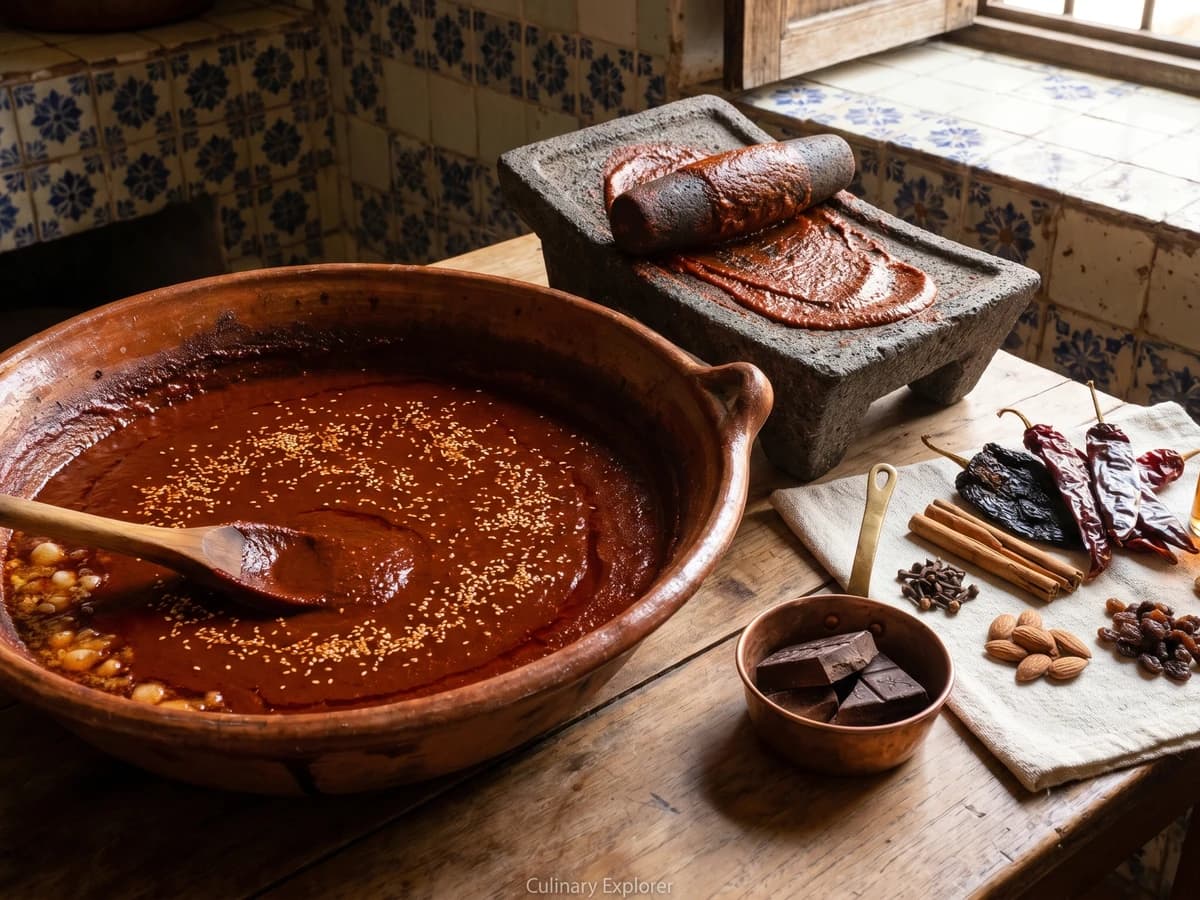
Zacatecas' wedding-table adobo, built from toasted guajillo and ancho, piloncillo, sour orange, chocolate, canela, clavo, almonds, sesame, and lard.

Chef Lupita
Puebla's convent kitchens built this adobo with ancho, guajillo, jerez, almonds, raisins, clove, and lard, a baroque marinade that stains pork loin and finishes as the sauce.