Chef Lupita
Aceite de Chiltepin Bajacaliforniano
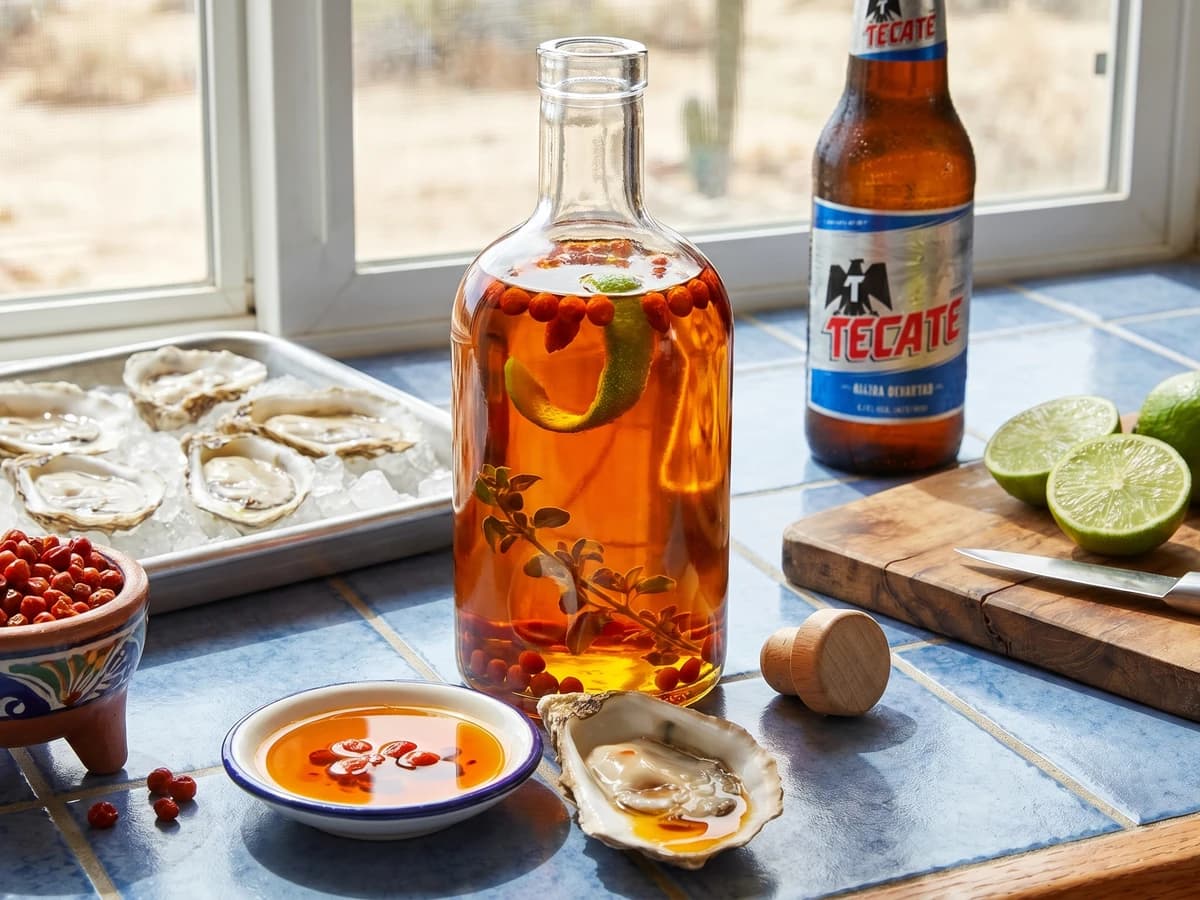
Baja California's wild chiltepin steeped in olive oil with garlic, orejon, and lime peel, until the oil turns ruby-amber and carries the slow, sneaky burn of the desert coast.
A cooking platform built around craft, culture, and the stories behind what we eat.
Created by
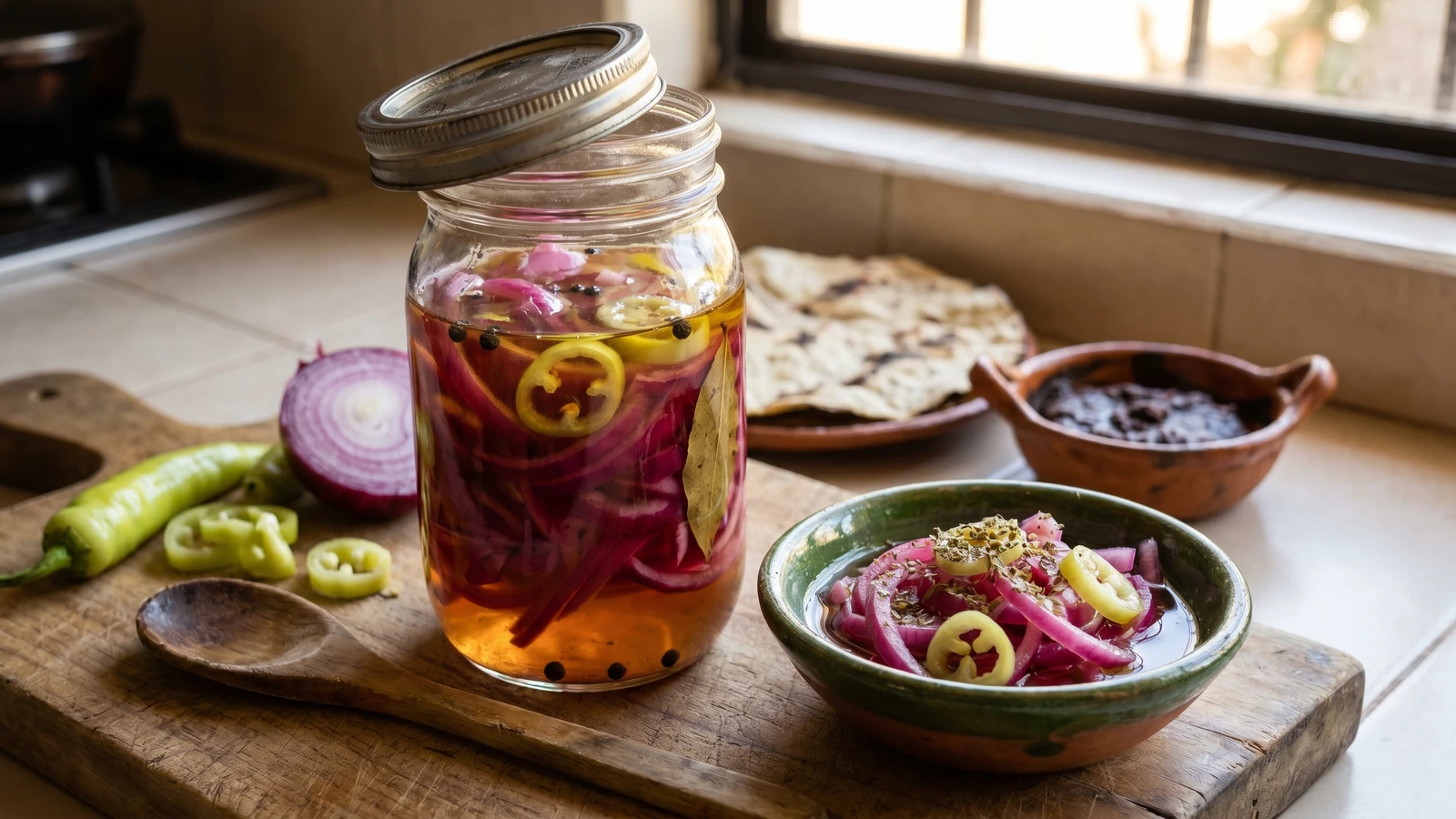
Oaxaca's pickled red onions cut with chile de agua and pineapple vinegar, the bright acidic crunch that finishes tlayudas, tortas, and any plate of grilled meat from the Valles Centrales.
This is a Oaxacan condiment. Specifically from the Valles Centrales, the cluster of valleys around the city of Oaxaca where chile de agua grows and where the markets, Central de Abastos, 20 de Noviembre, Sanchez Pascuas, sell it by the kilo from June through September. Outside that season and outside that geography, you will not find this chile easily. That is the truth of it.
Chile de agua is not a substitute for anything and nothing is a real substitute for it. Light green, thin-walled, shaped like a small horn, it carries a clean grassy heat that lives somewhere between a guero and a young serrano, with a brightness the others do not have. It is the chile of the Valles Centrales the way poblano is the chile of Puebla. Use what is in season. If your market does not have chile de agua right now, the encurtido waits.
The vinegar is the other half of the dish. Vinagre de piña, made from pineapple peels fermented with piloncillo and water, has a fruity edge that white distilled vinegar will never match. The senoras at 20 de Noviembre keep crocks of it going year-round and ladle from it as needed. If you cannot make your own, find a Mexican brand at a tienda. Apple cider vinegar cut with a spoon of pineapple juice is a compromise, not an upgrade.
My mother kept a jar of cebollas en escabeche in the refrigerator at all times. Hers was a Jalisciense version with carrot and jalapeño. The Oaxacan version is leaner, sharper, and built around chile de agua specifically. I learned this version from a woman who runs a memelas stall at Mercado Sanchez Pascuas. She watched me write it down and told me, in that flat tone Oaxacan cooks have, to use real pineapple vinegar or not bother. Saber cocinar es saber vivir.
The technique of escabeche, vegetables and meats preserved in vinegar with toasted spices, arrived in Mexico through the Spanish, who in turn inherited it from the Persian and Arab sikbaj tradition by way of Andalusian cooking. In Oaxaca, the method merged with pre-Columbian fermentation traditions and indigenous chiles, including chile de agua, which is grown almost exclusively in the Valles Centrales and has no commercial cultivation outside that region. The use of vinagre de piña rather than European wine vinegar reflects an 18th and 19th-century Mexican adaptation: pineapple peels, a market byproduct, were fermented with piloncillo and water to produce a cheap, fruity household vinegar that became the workhorse acid in regional encurtidos and adobos.
Quantity
2 large (about 1 pound)
sliced into thin half-moons
Quantity
3
stemmed and sliced into thin rings
Quantity
1 1/2 cups
Quantity
1/2 cup
Quantity
4
peeled and lightly smashed
Quantity
2
Quantity
1 tablespoon
Quantity
1 teaspoon
Quantity
1 teaspoon
lightly toasted
Quantity
4
Quantity
2
Quantity
1 1/2 tablespoons
Quantity
1 tablespoon
grated if using piloncillo
Quantity
1 tablespoon
| Ingredient | Quantity |
|---|---|
| red onionssliced into thin half-moons | 2 large (about 1 pound) |
| fresh chile de aguastemmed and sliced into thin rings | 3 |
| vinagre de piña (Mexican pineapple vinegar) | 1 1/2 cups |
| cold water | 1/2 cup |
| garlic clovespeeled and lightly smashed | 4 |
| bay leaves | 2 |
| dried Mexican oregano (oregano oaxaqueño preferred) | 1 tablespoon |
| whole black peppercorns | 1 teaspoon |
| whole cumin seedlightly toasted | 1 teaspoon |
| whole allspice berries | 4 |
| whole cloves | 2 |
| kosher salt | 1 1/2 tablespoons |
| piloncillo or dark brown sugargrated if using piloncillo | 1 tablespoon |
| olive oil | 1 tablespoon |
Slice the red onions into thin half-moons, no thicker than a coin. Stem the chile de agua and slice them into thin rings. Leave the seeds in. The seeds are part of the heat and the chile de agua is not a punishing chile to begin with. If you remove them, you have made a polite encurtido and that is not what this is.
Bring a kettle of water to a boil. Place the sliced onions in a heatproof colander set in the sink and pour the boiling water slowly over them. Thirty seconds, no more. Shake the colander dry. This step takes the raw bite out of the onion without cooking it. Skip it and the encurtido will taste sharp for the first three days. Asi se hace y punto.
Heat a small dry comal or skillet over medium. Add the cumin, peppercorns, allspice, and cloves. Toast for about 90 seconds, swirling the pan, until the cumin darkens a shade and the kitchen smells warm and resinous. Tip them onto a plate to stop the toasting. Cold spices give you a flat brine.
In a non-reactive saucepan, combine the pineapple vinegar, water, garlic, bay leaves, oregano, the toasted spices, salt, and piloncillo. Bring to a bare simmer over medium heat. As soon as the salt and piloncillo dissolve, pull the pan off the burner. Do not boil it. Boiling pineapple vinegar drives off the fruity edge that is the whole point of using it. Vinagre de piña casero is not white vinegar with sugar. It is a living vinegar with body and a faint sweetness from the pineapple skins it was made from.
Pack the blanched onions and the sliced chile de agua into a clean glass jar or ceramic bowl. Pour the warm brine over them, making sure the spices distribute. Drizzle the olive oil across the top. The oil seals the surface and softens the bite. Press the onions down so the brine covers everything. Let it sit at room temperature for one hour, uncovered.
Cover and refrigerate for at least 4 hours before serving. Twenty-four hours is better. Three days is when it really settles. The onions turn a deep magenta, the chile de agua softens just enough, and the brine takes on the warm color of the toasted spices. Recetas probadas y garantizadas. Spoon over tlayudas, pile on tortas de cochinita or carne enchilada, scatter over grilled meats. The encurtido does the work the meat cannot do alone.
1 serving (about 67g)
Culinary guides, cultural storytelling, and the editorial depth that makes cooking meaningful.
Discover Culinary ExplorerChef Lupita
Baja California's wild chiltepin steeped in olive oil with garlic, orejon, and lime peel, until the oil turns ruby-amber and carries the slow, sneaky burn of the desert coast.

Chef Lupita
Puebla's Lenten convent adobo, a brick-red vinegar chile paste of ancho, guajillo, garlic, oregano, and comino made to dress fish for the meatless calendar.
Chef Lupita
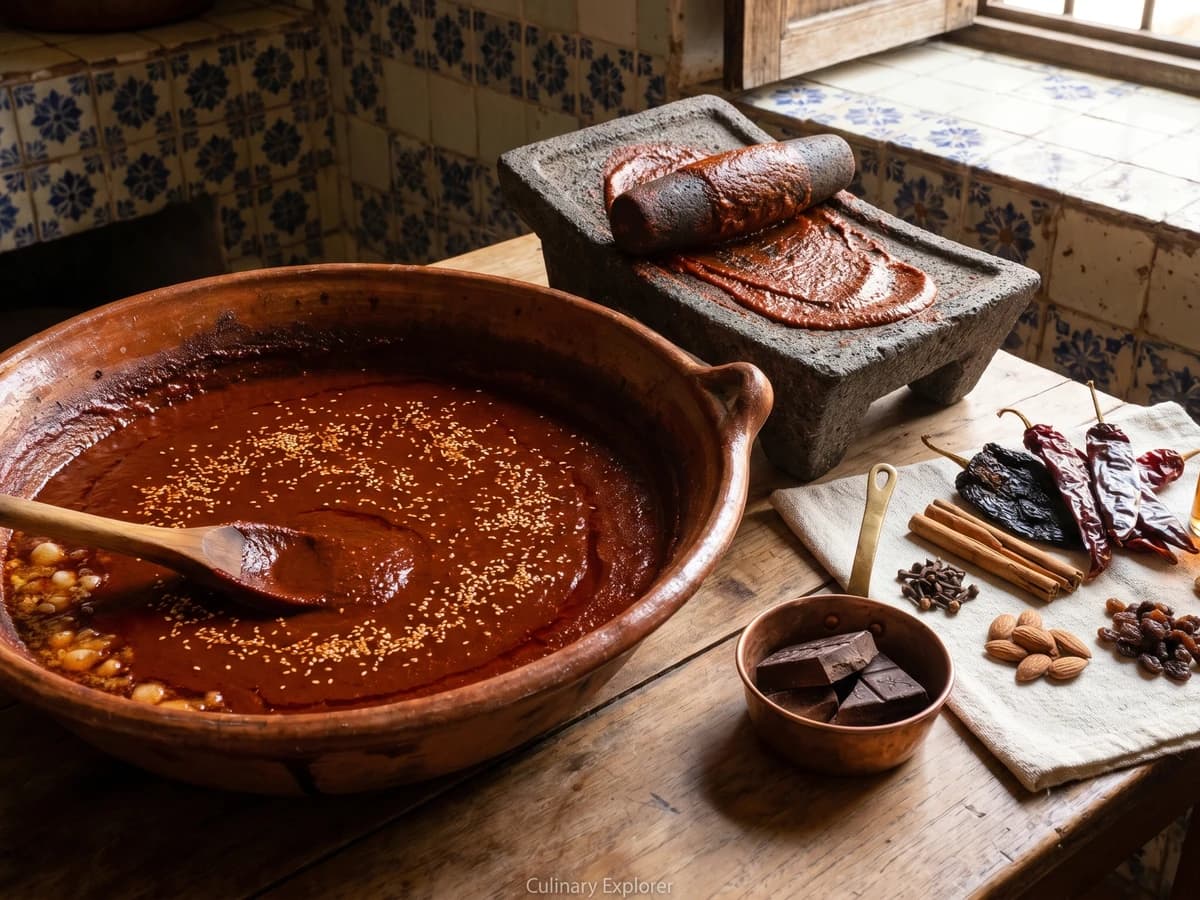
Zacatecas' wedding-table adobo, built from toasted guajillo and ancho, piloncillo, sour orange, chocolate, canela, clavo, almonds, sesame, and lard.

Chef Lupita
Puebla's convent kitchens built this adobo with ancho, guajillo, jerez, almonds, raisins, clove, and lard, a baroque marinade that stains pork loin and finishes as the sauce.