Culinary Explorer
A cooking platform built around craft, culture, and the stories behind what we eat.
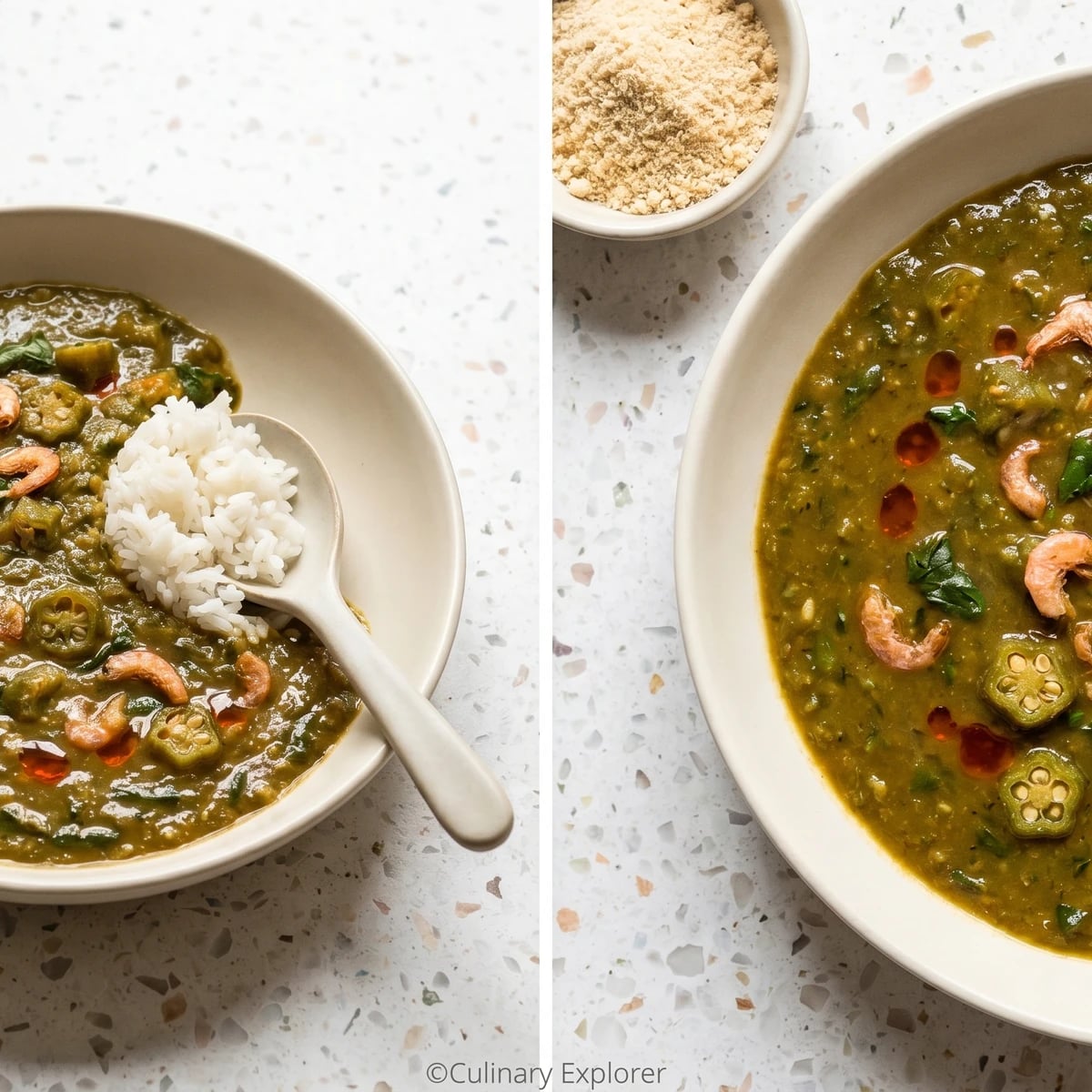
Caruru Paraense
Created by Chef Juliana
You think Pará caruru is too big for your stove. It isn't. Okra, dried shrimp, dendê, and cassava flour become a thick festive stew when a gente builds the base properly.
You hear Caruru Paraense and I can already hear the little voice: isso não é pra mim. Belém, Círio, camarão seco, dendê, all those words line up like a closed door. No. Cozinhar não é dom, é um aprendizado. A closed door is usually just a recipe badly explained, and a gente is going to write this one in plain words.
I don't claim Belém as my kitchen. Paraense and Amazonas cooks carry these traditions, and anyone with sense listens to them first. What I can teach is the slow technique: desalt the shrimp so salt doesn't bully the pot, make broth from the shrimp itself, build a refogado with onion, garlic, and pimenta-de-cheiro, let okra's baba thicken instead of fighting it, and add the farinha gradually so it turns silky, not lumpy.
This is not a sleepy Tuesday pan. On September 27, children get caruru and the cook gets a long afternoon. At the Almoço do Círio, the Pará Christmas, the table is crowded, loud, and somehow better on day three. Still, the intelligence is the same as the everyday pê-efe: rice, beans if they're there, something from the pot, something green, everyone fed from comida de verdade.
Expect the pot to look strange before it looks right. Okra does that. It goes sticky, then glossy, then thick and spoonable. Stay with it, taste late, and don't let a packet or powder pretend to be flavor. The shrimp, the refogado, the dendê, and the farinha can do their own work.
Ingredients
dried salted shrimp (camarão seco)
Quantity
10 ounces
rinsed
water
Quantity
5 cups, plus more for soaking
okra
Quantity
2 pounds
washed, dried, trimmed, and sliced into 1/2-inch rounds
| Ingredient | Quantity |
|---|---|
| dried salted shrimp (camarão seco)rinsed | 10 ounces |
| water | 5 cups, plus more for soaking |
| okrawashed, dried, trimmed, and sliced into 1/2-inch rounds | 2 pounds |
Where cooking meets culture.
Culinary guides, cultural storytelling, and the editorial depth that makes cooking meaningful.
Discover Culinary Explorer