Culinary Explorer

A cooking platform built around craft, culture, and the stories behind what we eat.
Discover Culinary Explorer
Carraca de Puerco Tuxtleca

Carraca de Puerco Tuxtleca

Created by

Tuxtla Gutiérrez's cantina botana of pork head simmered with laurel and thyme, dried overnight, then fried in manteca until the ear, skin, and cartilage crackle under your teeth.

Appetizers & Snacks
Mexican
Game Day
Comfort Food
BBQ
45 min
Active Time
3 hr cook11 hr 45 min total
Yield6 to 8 servings as a botana

Chiapas, the Central Depression around Tuxtla Gutiérrez, is where carraca de puerco belongs. Not the highland tamal table of San Cristóbal, not the coast, and not Michoacán carnitas. This is a Tuxtla cantina botana: pork head, ear, snout, cheek, skin, cooked until tender, dried, and fried in manteca de cerdo until the cartilage cracks cleanly under your teeth.

I learned the method from a señora near Mercado Juan Sabines, the kind of cook who checks the ear with her fingers and knows by touch whether it will fry crisp. Her seasoning was plain because the pork was not weak: garlic, white onion, laurel, tomillo, orégano mexicano, pimienta gorda. The chile sat on the side in a small molcajete, chile simojovel when the vendor had it, because not every Chiapas dish throws chile into the pot.

The lesson is drying. Simmer the head until it surrenders, then chill it uncovered so the skin tightens. Wet skin spits in the lard and stays rubbery. Dry skin blisters. La manteca es el sabor, and here it is also the tool that turns economical cuts into a botana people fight over.

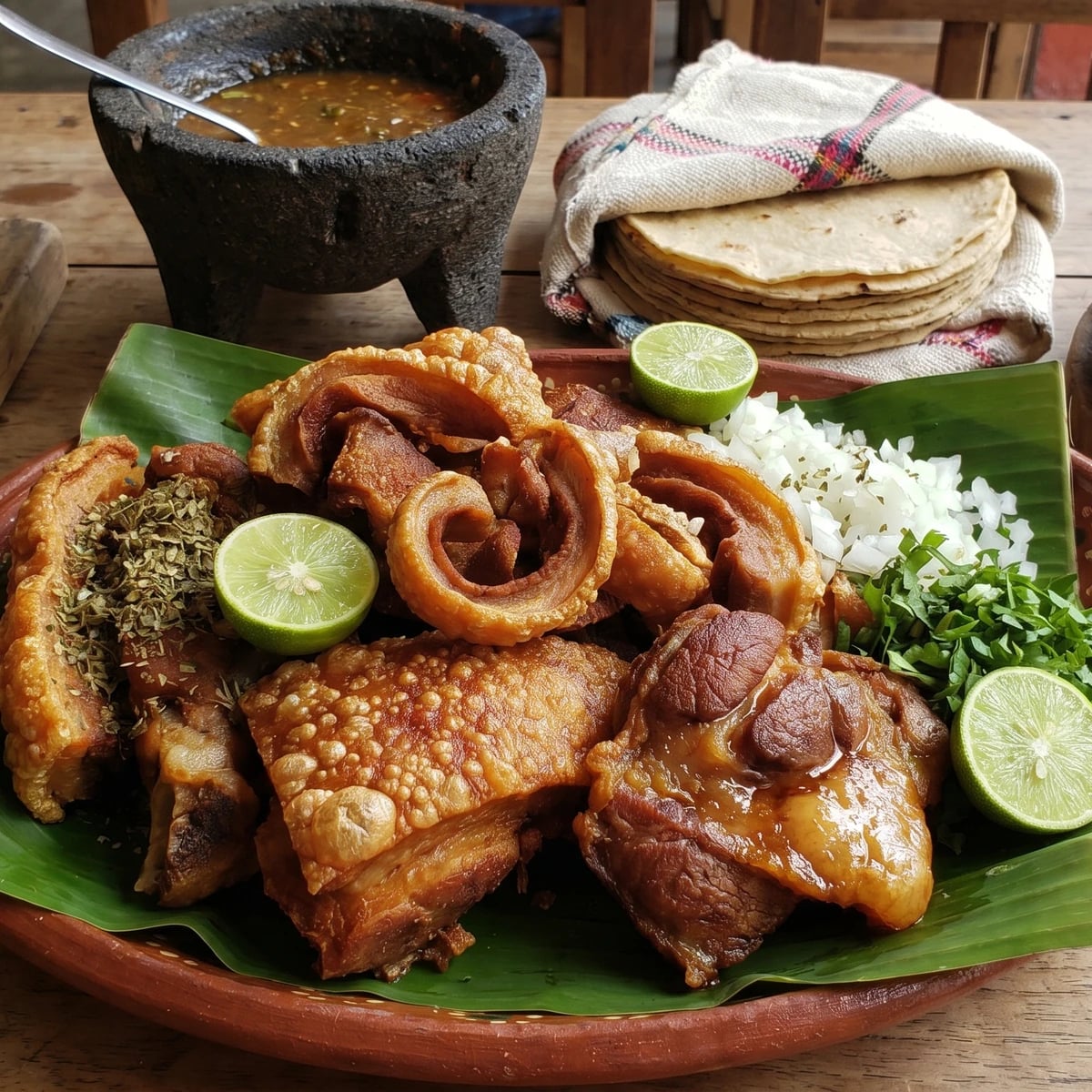
Serve it on a red-brown barro platter from Chiapa de Corzo, lined with a piece of hoja de plátano if you have one, with lime halves, warm corn tortillas, and the salsa on the table. No flour tortillas. No sour cream. This is Tuxtla's carraca. Cada estado, su propia cocina.

Tuxtla Gutiérrez sits in the Central Depression of Chiapas, historically Zoque territory, between the highland Maya kitchens and the Grijalva basin. Carraca de puerco grew from the colonial pork economy after pigs arrived in Chiapas in the 16th century, when head, ear, snout, and skin became valuable market food in the hands of cooks who knew how to handle collagen, cartilage, and lard. Unlike carnitas michoacanas, which center whole-pig confit in copper cazos, Tuxtla's carraca focuses on pork head parts simmered with laurel and herbs, chilled, then fried in manteca and eaten as a cantina botana with lime and salsa.

The technique, the tradition, and the story behind every dish.

Discover Culinary Explorer

Ingredients

cleaned pork head pieces

Quantity

4 pounds

including ear, snout, cheek, skin, and cartilage, sawed into large pieces by the butcher

cold water

Quantity

enough to cover by 2 inches

sal de grano

Quantity

2 tablespoons, plus more to taste

white onion

Quantity

1 medium

quartered

head of garlic

Quantity

1

halved crosswise

bay leaves

Quantity

3

black peppercorns

Quantity

1 teaspoon

whole allspice berries

Quantity

4

fresh thyme sprigs

Quantity

4

dried Mexican oregano

Quantity

1 tablespoon

divided

dried thyme

Quantity

1/2 teaspoon

for finishing

pork lard (manteca de cerdo)

Quantity

2 pounds

or enough to come halfway up the pork pieces

dried chile simojovel

Quantity

6

stemmed

tomatillos (miltomates)

Quantity

6

husked and rinsed

garlic cloves

Quantity

2

unpeeled

finely chopped white onion

Quantity

1/4 cup

lime halves (optional)

Quantity

8 to 10

for serving

warm hand-pressed corn tortillas or tostadas (optional)

Quantity

for serving

finely diced white onion (optional)

Quantity

for serving

chopped cilantro (optional)

Quantity

for serving

banana leaf (optional)

Quantity

1

passed over a flame to soften, for lining the platter

Equipment Needed

  • Heavy 8-quart stockpot
  • Wire rack set over a sheet pan
  • Cast iron comal
  • Volcanic stone molcajete
  • Wide high-sided clay cazuela or heavy Dutch oven for frying
  • Kitchen spider or slotted spoon

Instructions

  1. 1

    Clean the head

    Ask the butcher for cleaned pork head pieces with ear, snout, cheek, skin, and cartilage. At home, rinse them well under cold water and scrape away any bristles. If a patch of skin still has hair, pass it quickly over a gas flame and scrape with the back of a knife. Do not replace this with pork shoulder. The ear and snout are not decoration. They are the carraca.

    The butcher should remove the eyes and brain and saw the head into pieces that fit your pot. If you have to fight the bones at home, you bought the wrong cut.
  2. 2

    Simmer the pork

    Put the pork head pieces in a heavy pot and cover with cold water by 2 inches. Add 1 tablespoon of sal de grano, the quartered onion, halved head of garlic, bay leaves, black peppercorns, allspice berries, fresh thyme, and 2 teaspoons of the dried Mexican oregano. Bring to a gentle simmer, then skim the gray foam that rises. Cook 2 to 2 1/2 hours, until the cheek is tender and the ear can be pierced with a knife but still holds its shape. A hard boil tears the skin and clouds the broth. Keep it patient.

  3. 3

    Drain and dry

    Lift the pork pieces onto a wire rack set over a sheet pan. Strain the broth and save it for beans or rice. Let the pork cool until you can handle it, then refrigerate uncovered at least 8 hours, preferably overnight. This is not dead time. This is the step that makes the skin blister instead of turning rubbery in the lard.

  4. 4

    Toast the salsa

    Heat a dry comal over medium. Toast the chile simojovel for 10 to 15 seconds per side, just until fragrant and a shade darker. Do not burn it. Put the toasted chiles in a small bowl and cover with hot water for 10 minutes. On the same comal, roast the tomatillos and unpeeled garlic cloves until the tomatillos soften and blister in spots and the garlic turns tender.

  5. 5

    Grind the salsa

    Peel the roasted garlic and grind it in a molcajete with 1/2 teaspoon sal de grano. Add the soaked chile simojovel and work it into a rough paste. Add the roasted tomatillos one by one and crush them into the chile. Stir in the finely chopped white onion. This salsa should be rough, smoky, and direct. A blender will make it smoother, but the molcajete gives it teeth.

  6. 6

    Chop the carraca

    Remove any large bones from the chilled pork. Cut the cheek and snout into 1-inch chunks and slice the ears into thick strips. Keep the skin and cartilage attached where you can. Pat everything very dry with towels and season lightly with sal de grano. Do not add the oregano yet. Herbs burn in the lard and taste dusty.

  7. 7

    Heat the manteca

    Melt the manteca de cerdo in a wide, high-sided cazuela or Dutch oven over medium-high heat. You want enough fat to come halfway up the pork pieces. If using a thermometer, aim for 350F. If cooking by eye, a small piece of skin should bubble hard the moment it touches the lard. La manteca es el sabor, and vegetable oil will not give you the same finish.

  8. 8

    Fry in batches

    Fry the pork in small batches, 6 to 9 minutes per batch, turning with a spider or slotted spoon. The skin should bubble, the ear strips should curl at the edges, and the cheek meat should turn deep golden brown. Do not crowd the pot. Crowding drops the temperature and gives you greasy pork instead of carraca. Transfer each batch to a wire rack, not paper towels, so the bottom stays crisp.

    Dry pork still spits a little because head meat has gelatin and fat. Use a high-sided pot and stand back when the first pieces go in. Wet pork spits dangerously. That is why the overnight drying matters.
  9. 9

    Season and serve

    While the carraca is still glossy from the lard, toss it with the remaining dried Mexican oregano, the dried thyme, and a final pinch of sal de grano. Line a clay platter with the softened banana leaf if using, then pile the carraca generously. Serve immediately with lime halves, warm corn tortillas or tostadas, diced white onion, cilantro, and the chile simojovel salsa. Squeeze the lime at the table so the skin stays crisp. Recetas probadas y garantizadas.

Chef Tips

  • Buy the pork head from a Mexican butcher and ask for ear, snout, cheek, and skin with cartilage. A tray of boneless pork chunks is easier, yes, and it is also not carraca. No me vengas con atajos.
  • The overnight drying is not optional. The women who make this in Tuxtla know that texture is built before the pork ever touches the lard.
  • Use manteca de cerdo. Vegetable oil fries the surface, but lard gives the clean pork flavor and the right brittle edge. La manteca es el sabor.
  • Chile simojovel is a smoky dried chile from Chiapas. If you cannot find it, chile de árbol will work for the salsa, but understand the compromise: you lose the local smoke and the Chiapas identity becomes thinner.
  • Save the strained cooking broth. It carries garlic, laurel, pork skin, and bone. Use it for frijoles de la olla, rice, or a pot of greens. Saber cocinar es saber vivir.

Advance Preparation

  • The pork head can be simmered and refrigerated uncovered one day ahead. That is the best way to make carraca because the skin dries properly.
  • The chile simojovel salsa can be made up to one day ahead and refrigerated. Bring it back to room temperature before serving.
  • Carraca is best the day it is fried. Leftovers can be re-crisped on a hot comal or in a 425F oven for 8 to 10 minutes, but the first fry is the cleanest texture.

Frequently Asked Questions

Nutrition Information

1 serving (about 260g)

Calories
760 calories
Total Fat
53 g
Saturated Fat
19 g
Trans Fat
0 g
Unsaturated Fat
34 g
Cholesterol
190 mg
Sodium
1150 mg
Total Carbohydrates
30 g
Dietary Fiber
5 g
Sugars
3 g
Protein
42 g

Note: Chef personas and recipes are created with AI assistance. Cook with care: follow safe food-handling practices, check doneness with a thermometer when needed, and adapt for allergies and your kitchen.

Where cooking meets culture.

Culinary guides, cultural storytelling, and the editorial depth that makes cooking meaningful.

Discover Culinary Explorer

More from Chiapas & Tabasco Appetizers & Snacks

Browse the full collection