
Chef Lupita
Acitrón de Cidra Conventual
Puebla's convent-style acitrón, made from cidra peel instead of endangered biznaga, built through repeated syrup soakings until the cubes turn firm, translucent, and ready for rosca or chiles en nogada.
A cooking platform built around craft, culture, and the stories behind what we eat.
Created by
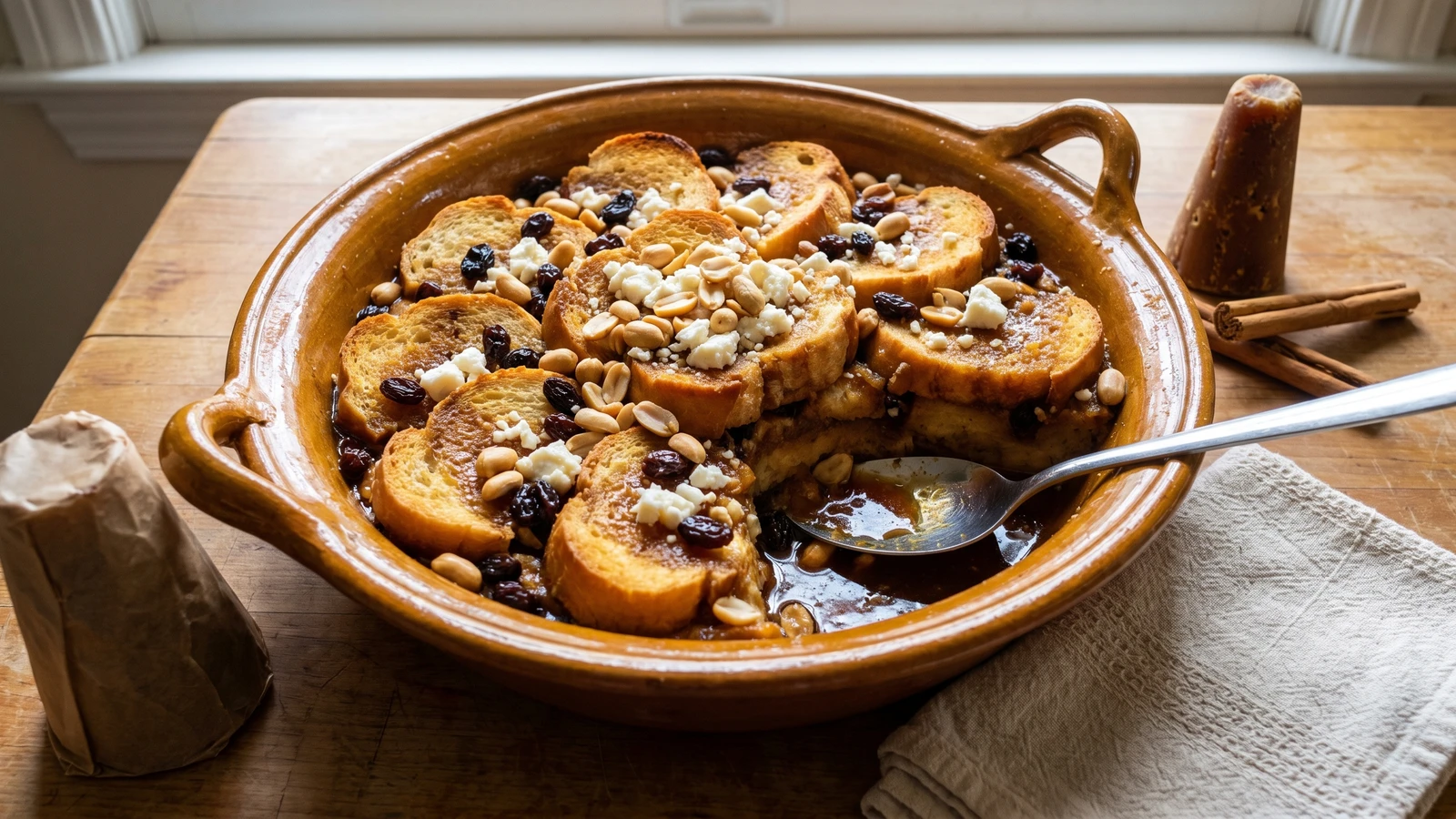
Jalisco's capirotada de agua layers dry bolillo with piloncillo syrup, cinnamon, clove, raisins, peanuts, and salty aged cheese, the Lenten dessert that belongs to Friday kitchens.
Jalisco, especially Guadalajara and Los Altos, keeps capirotada de agua on the Lenten table. Not capirotada de leche. That is another version. This one is built with piloncillo syrup, toasted bolillo, raisins, peanuts, cinnamon, clove, and queso anejo or cotija, baked until the bread drinks the syrup and the top turns crisp at the edges.
The bread matters. Use bolillo that is at least one day old, two is better. Fresh bread collapses into paste. Dry bread holds its shape, soaks up the piloncillo, and gives you layers instead of mush. My mother wrote in her notebook: 'pan seco, no sentimentalismos.' Dry bread, no sentimentality. She was right.
This is Catholic kitchen food, yes, but it is also household economy. Nothing wasted. Old bread becomes dessert. Piloncillo stretches sweetness without needing white sugar. A handful of peanuts, a few raisins, a little salty cheese. The women who perfected this were not decorating plates. They were feeding families through Cuaresma with what the mercado and the pantry gave them. Saber cocinar es saber vivir.
Capirotada descends from Spanish bread dishes documented by the early 16th century, including savory versions made with broth, meat, bread, cheese, and spices. In New Spain, the dish changed through Catholic Lenten practice: meat disappeared, piloncillo syrup replaced broth in many households, and regional cooks added local pantry ingredients such as peanuts, raisins, and aged cheese. The symbolism often taught in central and western Mexico, bread as the body of Christ, piloncillo syrup as blood, cinnamon as the cross, cloves as nails, varies by family and parish, which is why capirotada arguments are as common as capirotada itself.
Quantity
6
sliced 3/4 inch thick
Quantity
3 tablespoons
softened
Quantity
12 ounces
chopped
Quantity
3 cups
Quantity
2
Quantity
4
Quantity
1 strip
Quantity
1/4 teaspoon
Quantity
3/4 cup
Quantity
3/4 cup
Quantity
1 cup
crumbled
Quantity
1/2 cup
Quantity
1 tablespoon
| Ingredient | Quantity |
|---|---|
| day-old bolillossliced 3/4 inch thick | 6 |
| unsalted butter or pork lardsoftened | 3 tablespoons |
| piloncillochopped | 12 ounces |
| water | 3 cups |
| Mexican cinnamon sticks | 2 |
| whole cloves | 4 |
| orange peel | 1 strip |
| kosher salt | 1/4 teaspoon |
| raisins | 3/4 cup |
| roasted unsalted peanuts | 3/4 cup |
| queso anejo or cotijacrumbled | 1 cup |
| sliced almonds (optional) | 1/2 cup |
| butter or lard for the baking dish | 1 tablespoon |
Heat the oven to 325F. Lay the bolillo slices on a baking sheet in one layer. Bake for 12 to 15 minutes, turning once, until the bread feels dry and firm but not browned hard. If your bolillo is already two days old, this will be quick. The point is structure. Wet bread makes paste, and paste is not capirotada.
Raise the oven to 350F. Brush the bread lightly with the softened butter or lard and return it to the oven for 8 to 10 minutes, until the edges turn golden. Some Jalisco kitchens fry the bread. Good. This baked version is cleaner for a home oven, but the fat still matters because it protects the bread from collapsing when the syrup hits it.
Combine the piloncillo, water, cinnamon sticks, cloves, orange peel, and salt in a saucepan. Bring to a simmer over medium heat, stirring until the piloncillo dissolves. Cook for 12 to 15 minutes, until the syrup darkens slightly and smells of cane sugar and cinnamon. Strain out the spices. Do not boil it into candy. You need syrup that soaks, not syrup that hardens.
Grease a 2-quart clay cazuela or baking dish with butter or lard. Spoon a little syrup into the bottom. Add a layer of toasted bolillo, then scatter raisins, peanuts, queso anejo, and almonds if using. Repeat the layers until everything is used, ending with cheese and peanuts on top. Pour the warm piloncillo syrup slowly over the whole dish, pausing so the bread can drink it.
Let the assembled capirotada sit for 10 minutes. Press the bread down gently with the back of a spoon so the top layer touches the syrup. Do not smash it. You are helping the layers settle, not making pudding from a box. La cocina no es decoración, es trabajo.
Bake uncovered at 350F for 25 to 30 minutes, until the syrup bubbles at the edges, the top pieces of bread are crisp, and the cheese has softened into salty white patches between the raisins and peanuts. The center should be moist but not swimming. If it looks dry, spoon a little syrup from the edges back over the top.
Let it rest 15 minutes before serving. Capirotada de agua should hold in loose spoonfuls, with crisp bread on top and sticky piloncillo underneath. Serve it warm or at room temperature, straight from the cazuela. Así se hace y punto.
1 serving (about 205g)
Culinary guides, cultural storytelling, and the editorial depth that makes cooking meaningful.
Discover Culinary ExplorerChef Lupita
Puebla's convent-style acitrón, made from cidra peel instead of endangered biznaga, built through repeated syrup soakings until the cubes turn firm, translucent, and ready for rosca or chiles en nogada.

Chef Lupita
Ciudad de México's Tulyehualco alegría is popped huautli folded into piloncillo honey, pressed with peanuts, pepitas, and raisins, then cut into the rectangular bars that built a pueblo's identity.

Chef Lupita
Oaxaca's pre-Columbian amaranth bar, popped on a hot comal and bound with piloncillo, honey, and the sacred Zapotec grain that the Spanish tried, and failed, to outlaw.

Chef Lupita
Querétaro's mercado candy of popped amaranto pressed with dark piloncillo syrup, pepitas, pecans, and cacahuate, a Bajío sweet that respects the seed before it decorates the table.