
Chef Lupita
Acitrón de Cidra Conventual
Puebla's convent-style acitrón, made from cidra peel instead of endangered biznaga, built through repeated syrup soakings until the cubes turn firm, translucent, and ready for rosca or chiles en nogada.
A cooking platform built around craft, culture, and the stories behind what we eat.
Created by
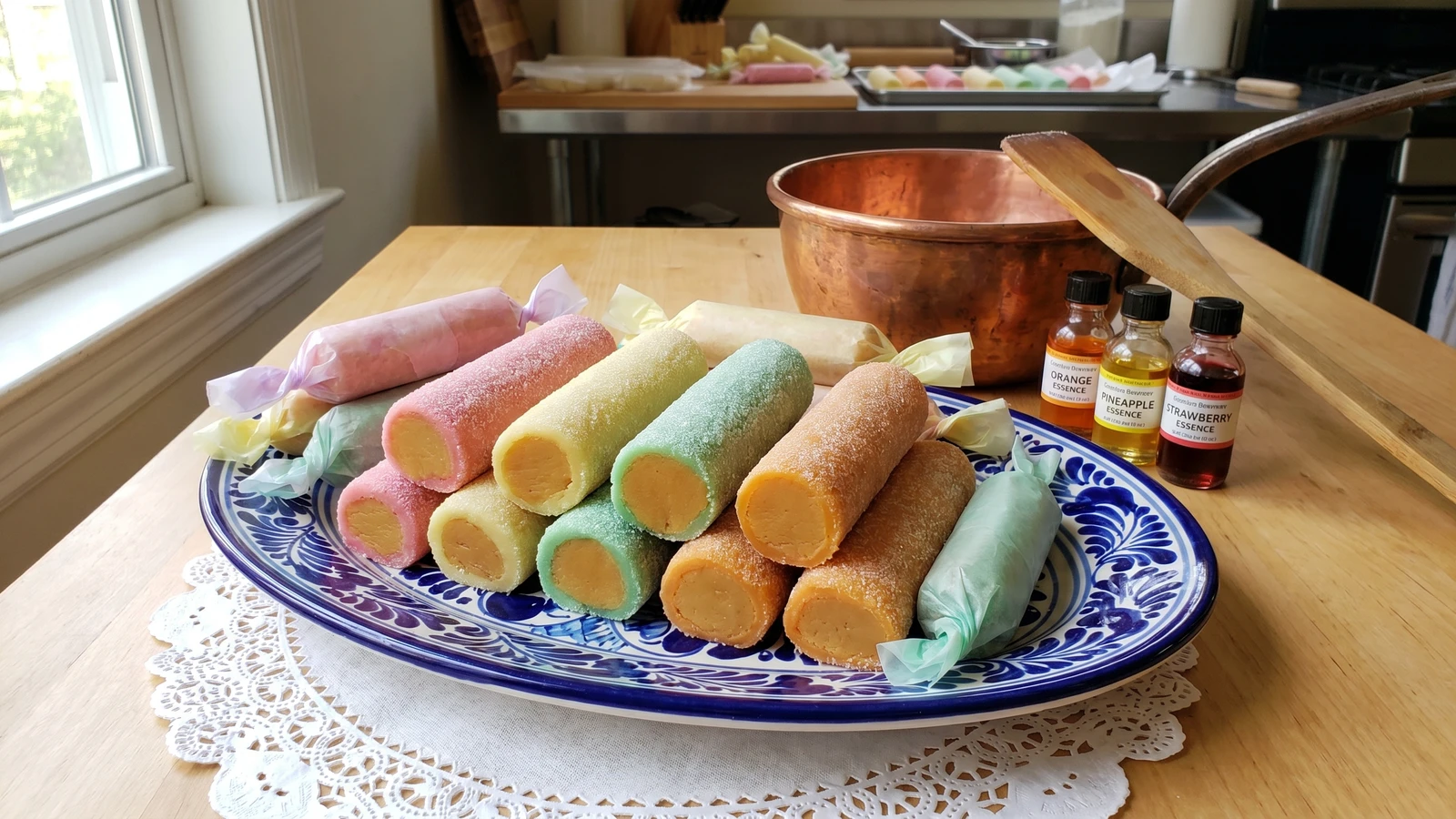
Puebla's Santa Clara candy turns cooked camote into a slow-stirred convent paste, scented with fruit essences, rolled in colored sugar, and wrapped like the dulces sold on Calle de los Dulces.
Puebla de los Angeles, in the shadow of the old convent kitchens, owns this camote. Not the roasted street-cart sweet potato split open with lechera. This is the dulce from Santa Clara, a convent candy from the hands of las Clarisas, sold today along Calle de los Dulces in pastel papers twisted at the ends.
The defining ingredient is camote amarillo, cooked until soft, then forced through a ricer so no fibers break the paste. The technique is almibar: cane sugar cooked to hilo flojo, then the camote is stirred in a heavy cazo until it releases from the sides like thick masa. Fruit essences give the colors their voice: naranja, pina, fresa. Do not pour in fruit puree because you are impatient. It loosens the paste and the candy will not set.
I learned to respect this dulce after a señora in Puebla tapped my wooden spoon and said, "todavia no." Still not ready. Fifteen minutes later the paste finally held the groove. That is convent cooking: ordered, repetitive, exact. La cocina no es decoracion, es trabajo. Wrap the logs in pink, mint green, and pale yellow paper, set them on talavera, and a poblano will know what they are before you say the name. Cada estado, su propia cocina.
Camotes poblanos are tied to the Convento de Santa Clara and the Poor Clare nuns, las Clarisas, who helped define Puebla's colonial confectionery from the 17th century onward. The candy joins an American tuber, camote, with cane sugar and Spanish almibar technique, a criollo-conventual pattern also seen in tortitas de Santa Clara and other dulces sold around today's Calle de los Dulces. By the 19th century, wrapped camotes had become one of Puebla's edible signatures, carried by travelers as a sweet that could survive the road better than milk-based convent candies.
Quantity
2 pounds
scrubbed
Quantity
as needed
for boiling the camotes
Quantity
3 cups
Quantity
1/2 cup
Quantity
1 small stick, about 2 inches
Quantity
1 tablespoon
Quantity
1/4 teaspoon
Quantity
1/4 teaspoon
Quantity
1/4 teaspoon
Quantity
1/4 teaspoon
Quantity
2 to 4 drops
Quantity
2 to 4 drops
Quantity
2 to 4 drops
Quantity
1/2 cup
for rolling
| Ingredient | Quantity |
|---|---|
| camote amarillo or orange-fleshed sweet potatoscrubbed | 2 pounds |
| waterfor boiling the camotes | as needed |
| granulated cane sugar | 3 cups |
| reserved camote cooking water | 1/2 cup |
| Mexican cinnamon stick (canela) | 1 small stick, about 2 inches |
| fresh lime juice | 1 tablespoon |
| fine sea salt | 1/4 teaspoon |
| natural orange essence | 1/4 teaspoon |
| natural pineapple essence | 1/4 teaspoon |
| natural strawberry essence | 1/4 teaspoon |
| pink vegetable food coloring (optional) | 2 to 4 drops |
| pale yellow vegetable food coloring (optional) | 2 to 4 drops |
| mint green vegetable food coloring (optional) | 2 to 4 drops |
| fine granulated cane sugarfor rolling | 1/2 cup |
Put the whole scrubbed camotes in a pot and cover them with water by two inches. Bring to a steady simmer and cook until a knife passes through the thickest part without resistance, 35 to 45 minutes depending on their size. Cook them whole, with the skin on. Cut pieces take on too much water, and watery camote makes candy that slumps instead of holding its shape.
Lift the camotes from the pot and save 1/2 cup of the cooking water. When they are cool enough to handle, peel them and pass the flesh through a potato ricer or food mill. You should have a smooth paste with no strings. Do not mash carelessly with a fork and call it finished. The candy remembers every fiber.
Combine the 3 cups cane sugar, reserved camote water, canela, lime juice, and salt in a heavy cazo or stainless steel saucepan. Cook over medium heat, stirring only until the sugar dissolves. Let it bubble until it reaches hilo flojo, 223F to 225F, or until a drop between two fingers pulls into a thin thread when carefully cooled on a spoon first. This is almibar. Do not bring me corn syrup. The syrup is the technique.
Remove the canela. Add the camote puree to the almibar and lower the heat to medium-low. Stir constantly with a wooden paddle, scraping the bottom and corners, for 25 to 35 minutes. At first it looks loose and glossy. Then it thickens, turns satiny, and begins to pull away from the sides of the pot. Drag the spoon through the center. If the groove holds for a few seconds, it is ready. If it closes immediately, sigue moviendo. Keep stirring.
Spread the hot paste on a lightly sugared tray and let it cool for 10 minutes. Divide it into three bowls. Mix orange essence into one, pineapple essence into the second, and strawberry essence into the third. Add only enough coloring to make soft Puebla dulceria colors: pink, pale yellow, mint green if you want a mixed tray. The old sweets were not neon. A few drops are enough.
Dust your hands lightly with cane sugar. Take 2 tablespoons of paste and roll it into a short log, about 3 1/2 inches long and 1 inch thick. Keep the shape plain. This is not a pastry-school sculpture. It is the camote sold in Puebla, wrapped and carried home in paper.
Roll each log in the fine granulated cane sugar until the surface is evenly coated. Set the pieces on waxed paper or a parchment-lined tray with space between them. Let them dry at room temperature for at least 5 hours, or overnight if the kitchen is humid. The outside should feel set and lightly sandy from the sugar, while the inside stays dense and tender.
Wrap each camote in pastel waxed paper or cellophane, twisting the ends closed. Serve them on a Puebla talavera platter, not stacked in a plastic tub like hardware. They keep well because sugar is doing its work. Recetas probadas y garantizadas.
1 serving (about 65g)
Culinary guides, cultural storytelling, and the editorial depth that makes cooking meaningful.
Discover Culinary ExplorerChef Lupita
Puebla's convent-style acitrón, made from cidra peel instead of endangered biznaga, built through repeated syrup soakings until the cubes turn firm, translucent, and ready for rosca or chiles en nogada.

Chef Lupita
Ciudad de México's Tulyehualco alegría is popped huautli folded into piloncillo honey, pressed with peanuts, pepitas, and raisins, then cut into the rectangular bars that built a pueblo's identity.

Chef Lupita
Oaxaca's pre-Columbian amaranth bar, popped on a hot comal and bound with piloncillo, honey, and the sacred Zapotec grain that the Spanish tried, and failed, to outlaw.

Chef Lupita
Querétaro's mercado candy of popped amaranto pressed with dark piloncillo syrup, pepitas, pecans, and cacahuate, a Bajío sweet that respects the seed before it decorates the table.