Culinary Explorer
A cooking platform built around craft, culture, and the stories behind what we eat.
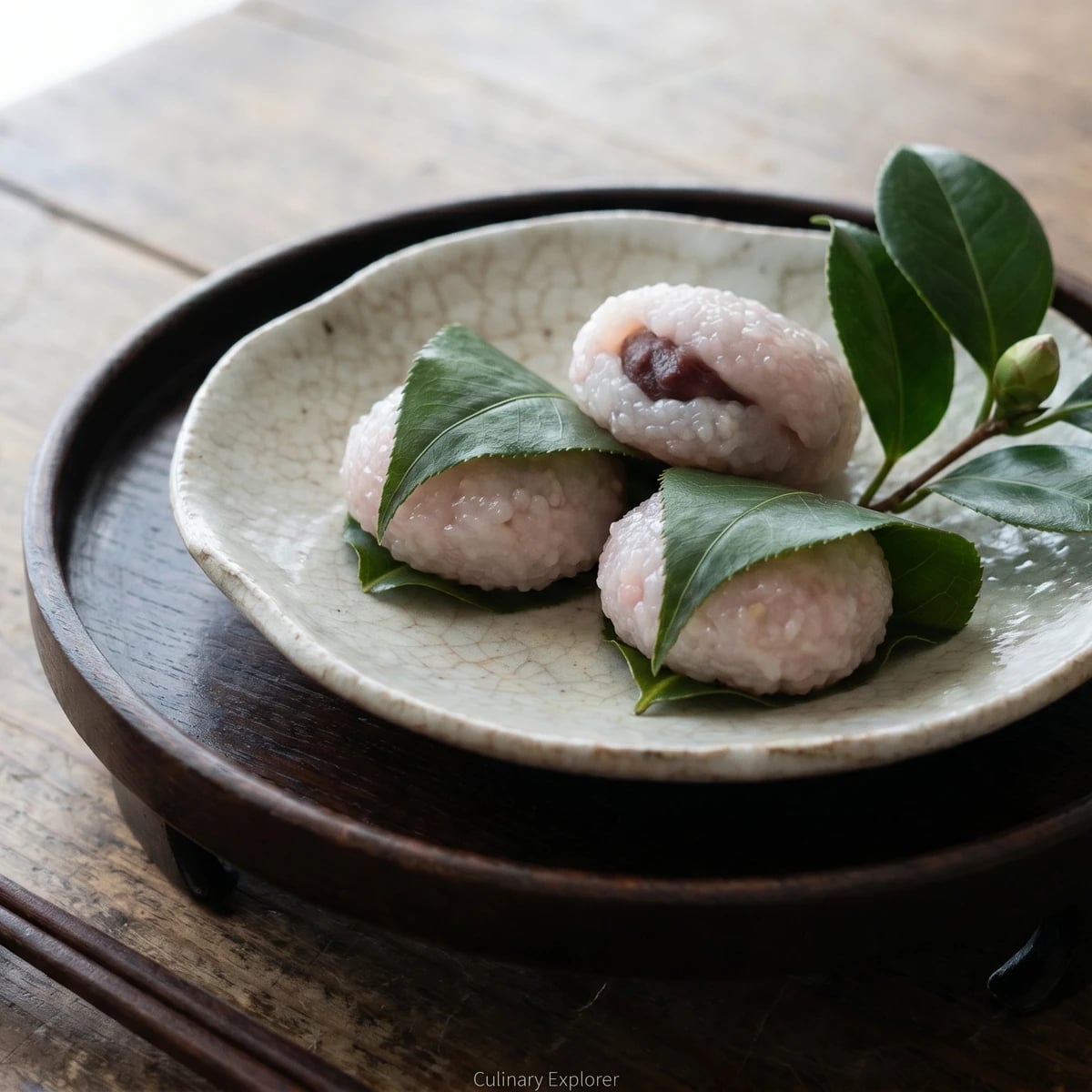
Camellia Leaf Mochi (椿餅, Tsubaki Mochi)
Created by Chef Takumi
The first February sweet: tender dōmyōji rice around anko, pressed between two camellia leaves. The work is small, but the season announces itself clearly.
Tsubaki mochi begins with the leaves. Two glossy camellia leaves hold a pale rice cake between them, and before you taste anything you already know the month has turned. This is the first signal that spring is coming, not loudly, which is just as well. February is not a month for shouting.
The sweet itself is simpler than its age suggests. Dōmyōji-ko, coarse grains of steamed and dried glutinous rice, is softened with water and sugar, then steamed until each grain turns tender and faintly translucent. You fold it around anko, sweet red bean paste, and press it lightly between the leaves. That is the dish. The one detail that decides it is water: too little and the grains stay chalky, too much and they lose their clean shape.
Use food-safe, unsprayed camellia leaves, and don't eat them. They are the vessel, the season, and the name. If you cannot find them, make the dōmyōji mochi by all means, but call it what it is. Honmono asks for very little here, so we should give it the one thing it asks for.
Ingredients
dōmyōji-ko (coarse glutinous rice flour)
Quantity
100g
water
Quantity
150ml
granulated sugar
Quantity
35g
| Ingredient | Quantity |
|---|---|
| dōmyōji-ko (coarse glutinous rice flour) | 100g |
| water | 150ml |
| granulated sugar | 35g |
Where cooking meets culture.
Culinary guides, cultural storytelling, and the editorial depth that makes cooking meaningful.
Discover Culinary Explorer