
Chef Lupita
Aguascalientes Beef Tongue Pozole (Pozole de Lengua)
Aguascalientes' Bajio pozole de lengua, built with cacahuazintle hominy, tender beef tongue, chile ancho and guajillo, with xoconostle brightness and table garnishes.
A cooking platform built around craft, culture, and the stories behind what we eat.
Created by
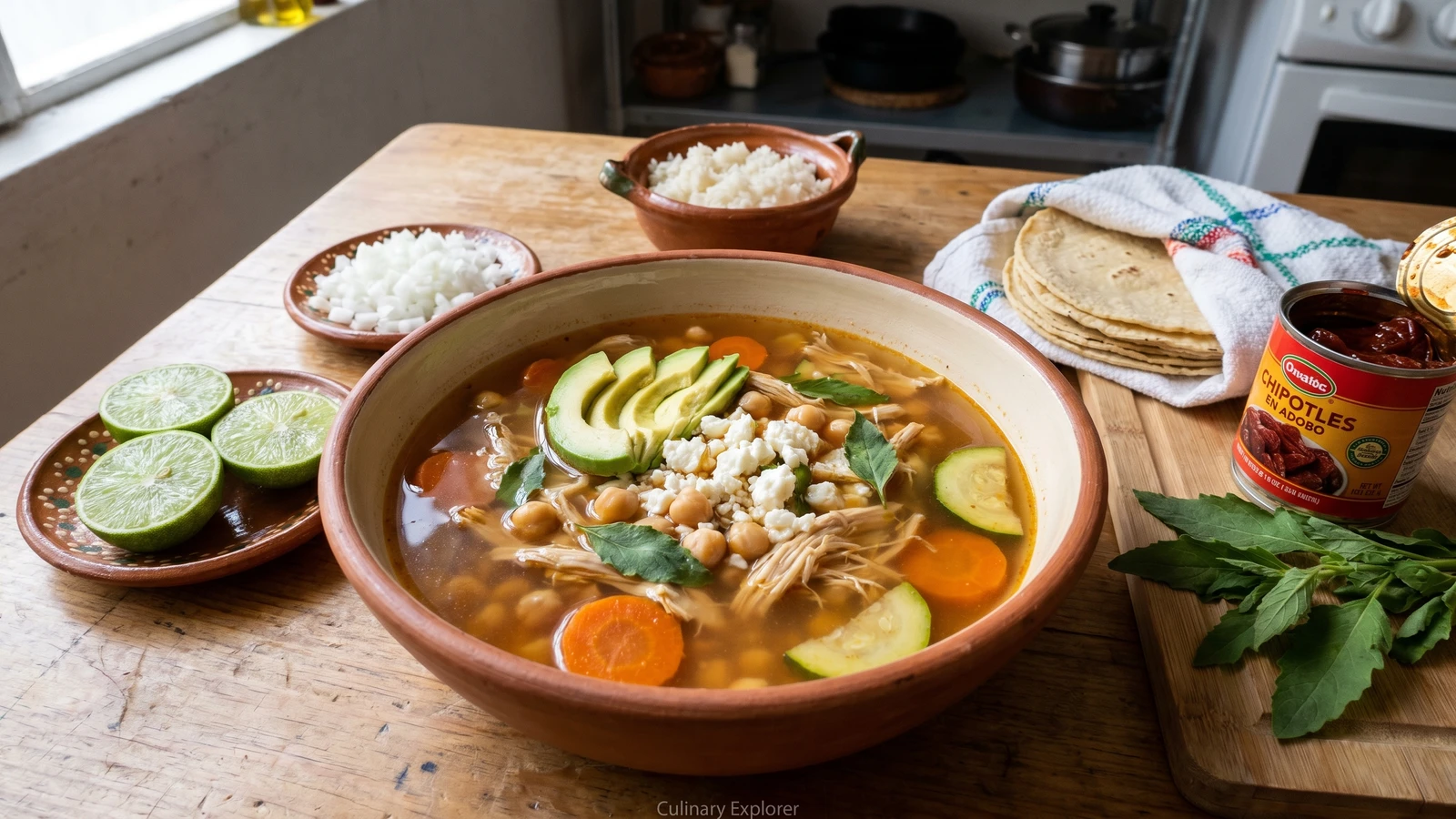
Born in Tlalpan in the south of Ciudad de México, a chicken caldo built on a chipotle-bloomed broth with garbanzo, zanahoria, and epazote, finished with avocado, queso fresco, and a hard squeeze of lime.
This caldo is from Tlalpan, the old volcanic borough in the south of Ciudad de México, and the name carries the neighborhood the way pozole carries Jalisco. The story most capitalinos repeat is that the dish was invented in the cantinas of Tlalpan a century ago, served to men who needed something restorative between rounds of pulque. Whether the cantina version is true or apocryphal, the caldo settled into the home kitchens of the city and never left. This is comida casera. Weeknight food. The kind of soup a mother in Roma or Coyoacan makes when somebody is tired or somebody is sick or somebody just came in from the rain.
What makes caldo tlalpeño tlalpeño and not just chicken soup is the chipotle and the epazote. Two ingredients. Both pre-Columbian. The chipotle gives it the smoky depth that separates this caldo from the watery broths people pass off as Mexican chicken soup outside Mexico. The epazote, torn in at the end, gives it the herbaceous note that no other herb can replace. Cilantro is not a substitute. Oregano is not a substitute. If you cannot find fresh epazote, leave it out and call the soup something else. Esto no es comida de un solo México, but it is comida capitalina, and the herb is not negotiable.
The garbanzo is what makes it filling. The zanahoria, calabacita, and chayote are what make it a complete meal in one pot. The avocado, queso fresco, and lime at the table are what make it caldo tlalpeño and not generic chicken stew. Each diner finishes their own bowl. That is the ritual. My mother's notebook has a page for this caldo, written in pencil with the margin note 'más chipotle del que crees,' more chipotle than you think. She was right. Saber cocinar es saber vivir.
Caldo tlalpeño takes its name from the Tlalpan delegación in the southern reaches of Ciudad de México, an area that was a colonial-era village long before it was absorbed into the capital, and the dish is generally credited to the cantinas and fondas of that neighborhood in the late 19th or early 20th century. The combination of chipotle, a Nahuatl word for a smoke-dried jalapeño, and epazote, also Nahuatl, anchors the caldo in pre-Columbian Mesoamerican flavor architecture even though the chicken, garbanzo, and carrot are post-conquest European introductions. The dish entered the national repertoire through the Ciudad de México middle-class home cookbooks of the mid-20th century, most notably the recetarios published by Josefina Velázquez de León, who codified it as a representative dish of capitalino home cooking and helped distinguish it from the regional caldos of the rest of the country.
Quantity
1 (about 3 1/2 pounds)
cut into 8 pieces, or use 2 1/2 pounds bone-in thighs and breasts
Quantity
10 cups
Quantity
1 medium
half left whole, half finely diced for serving
Quantity
1
halved crosswise, plus 2 cloves minced
Quantity
2
Quantity
1 tablespoon, plus more to taste
Quantity
1 cup
soaked overnight in cold water (or substitute 1 can cooked garbanzos, drained)
Quantity
2 medium
peeled and cut into 1/2-inch rounds
Quantity
2 medium
cut into 1/2-inch half-moons
Quantity
1
peeled and cut into 1/2-inch cubes
Quantity
2 to 3 whole
plus 1 tablespoon of the adobo sauce
Quantity
2 large sprigs
Quantity
1 tablespoon
Quantity
2
sliced
Quantity
1/2 cup
Quantity
for serving
Quantity
for serving
warmed
Quantity
for serving
| Ingredient | Quantity |
|---|---|
| whole chickencut into 8 pieces, or use 2 1/2 pounds bone-in thighs and breasts | 1 (about 3 1/2 pounds) |
| cold water | 10 cups |
| white onionhalf left whole, half finely diced for serving | 1 medium |
| head of garlichalved crosswise, plus 2 cloves minced | 1 |
| bay leaves | 2 |
| kosher salt | 1 tablespoon, plus more to taste |
| dried garbanzossoaked overnight in cold water (or substitute 1 can cooked garbanzos, drained) | 1 cup |
| zanahorias (carrots)peeled and cut into 1/2-inch rounds | 2 medium |
| calabacitas (Mexican squash)cut into 1/2-inch half-moons | 2 medium |
| chayotepeeled and cut into 1/2-inch cubes | 1 |
| chipotles en adoboplus 1 tablespoon of the adobo sauce | 2 to 3 whole |
| fresh epazote | 2 large sprigs |
| manteca de cerdo (pork lard) | 1 tablespoon |
| ripe Hass avocados (optional)sliced | 2 |
| crumbled queso fresco (optional) | 1/2 cup |
| lime halves (optional) | for serving |
| hand-pressed corn tortillas (optional)warmed | for serving |
| cooked white rice (optional) | for serving |
If you soaked dried garbanzos overnight, drain them and put them in a saucepan with fresh cold water by two inches. Simmer for 45 minutes to an hour, until tender but not falling apart. Salt only at the end. If you are using canned, skip this step. Dried garbanzos give the caldo a cleaner flavor and a firmer bite, but a good Mexican brand of canned garbanzo will not ruin the soup.
Place the chicken pieces in a heavy 6-quart stockpot. Cover with the cold water. Add the whole half of the onion, the halved head of garlic, the bay leaves, and the salt. Bring to a gentle simmer over medium heat. Skim the gray foam that rises in the first ten minutes. Cold water draws the flavor from the bones slowly. A rolling boil clouds the broth and toughens the meat.
Lower the heat until the broth bubbles lazily. Cover partially and cook for 35 to 40 minutes, until the chicken is tender and pulls away from the bone with a fork. Lift the chicken out with tongs and set it on a plate to cool. Strain the broth through a fine-mesh sieve into a clean pot. Discard the spent onion, garlic, and bay leaves. Once the chicken is cool enough to handle, pull the meat off the bones in generous shreds. Set aside.
In a small skillet, melt the lard over medium heat. Add the minced garlic and cook for 30 seconds until fragrant. Add the chipotles en adobo and the spoonful of adobo sauce. Mash the chiles into the lard with the back of a wooden spoon and cook for two minutes. The kitchen will smell smoky and sharp. La manteca es el sabor. This step takes the chipotle from a raw canned product to a base that has bloomed and integrated. Skip it and the chipotle tastes like it came straight from the tin.
Stir the bloomed chipotle mixture into the strained broth. Bring to a simmer. Add the zanahorias and the cooked garbanzos. Simmer for 10 minutes. Add the chayote and cook 5 more minutes. Add the calabacitas last and cook just 4 to 5 minutes more, until tender but not mushy. Calabacita falls apart fast. Watch it.
Add the shredded chicken back to the pot and let it warm through for two minutes. Tear the epazote leaves off the stems and stir them in at the very end. Epazote loses its character if you boil it. It should perfume the caldo, not stew in it. Taste for salt. The broth should taste clean, smoky from the chipotle, herbaceous from the epazote, and confident. If it tastes shy, add salt until it does not.
Ladle the caldo into deep clay bowls, making sure every bowl gets shredded chicken, garbanzo, and a piece of each vegetable. Top each bowl with avocado slices and a sprinkle of queso fresco. Set the diced raw onion, lime halves, and warm tortillas in small dishes around the table. Each person finishes their own bowl with a squeeze of lime and a spoonful of onion. That ritual is part of the caldo. Recetas probadas y garantizadas.
1 serving (about 580g)
Culinary guides, cultural storytelling, and the editorial depth that makes cooking meaningful.
Discover Culinary ExplorerChef Lupita
Aguascalientes' Bajio pozole de lengua, built with cacahuazintle hominy, tender beef tongue, chile ancho and guajillo, with xoconostle brightness and table garnishes.

Chef Lupita
Veracruz's Gulf coast rice from Alvarado, built with seafood stock, tomato, chile chipotle, epazote, shrimp, fish, jaiba, and pulpo, served loose and brothy in a clay cazuela.

Chef Lupita
Costa Chica's wet salt-beef stew, built from chile costeño, guajillo, tomato, manteca, yuca, plantain, and masa dumplings, the ranching pot of Cuajinicuilapa and Pinotepa.

Chef Lupita
Michoacán's P'urhépecha atápakua is a masa-thickened sauce and stew at once, built with pork, chile guajillo, and hierbabuena added only at the end.