Culinary Explorer
A cooking platform built around craft, culture, and the stories behind what we eat.
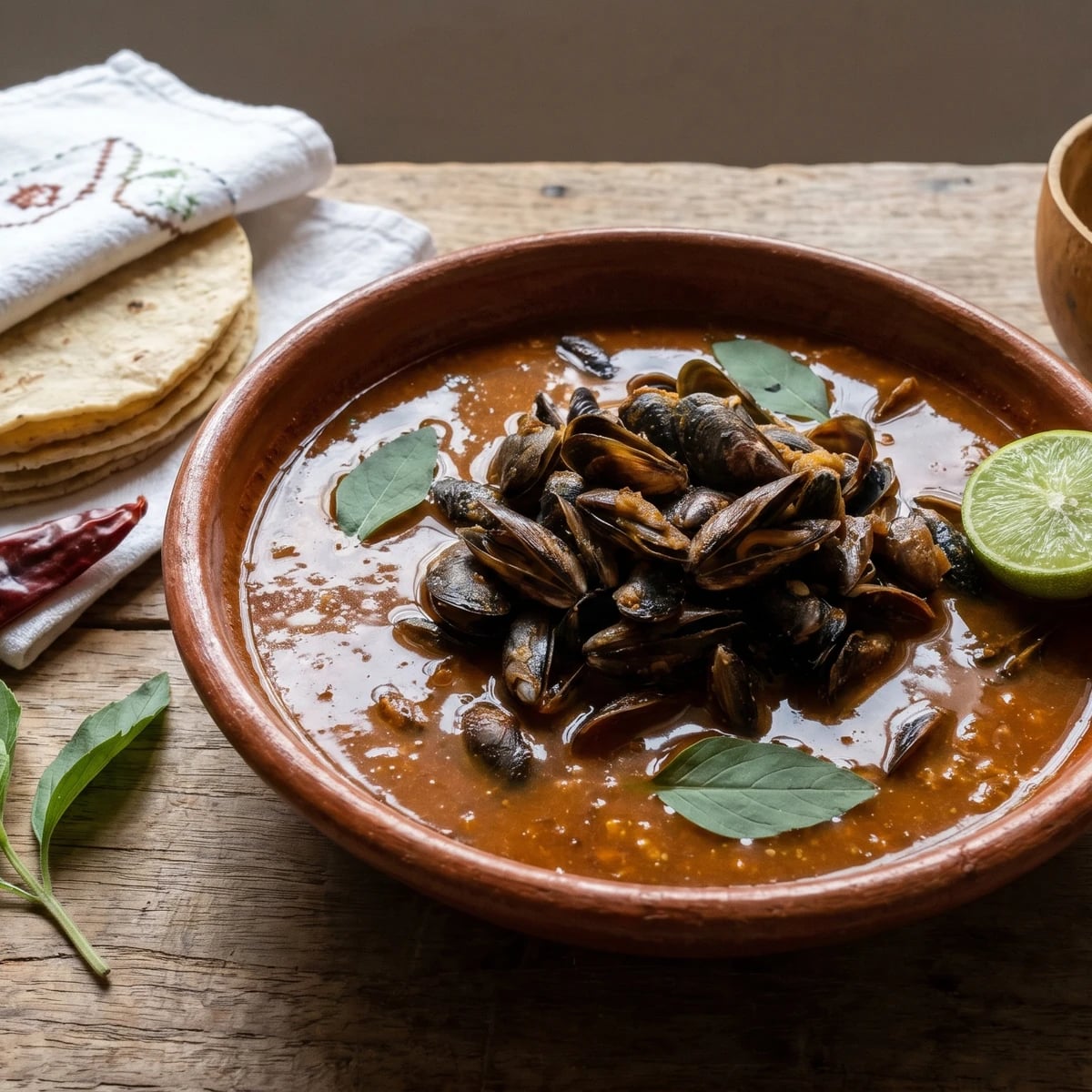
Caldo de Tichinda de Chacahua
Created by Chef Lupita
A thick, masa-bodied chowder of tiny mangrove mussels, chile costeño, and pitiona herb from the Afro-Mexican lagoon communities of Chacahua on Oaxaca's Costa Chica, cooked the way the women who harvest the tichindas have always cooked it.
This is Oaxacan food, but it is not the Oaxaca most people know. Forget the Valles Centrales, forget the seven moles. This dish comes from the Costa Chica, the stretch of Pacific coast between Huatulco and the Guerrero border, where the mangrove lagoons of Chacahua open into the sea and the communities that line them are Afro-Mexican. The women of these communities, Chacahua, El Azufre, Charco Redondo, Corralero, have been harvesting tichindas from the mangrove roots for as long as anyone can remember. They wade into the lagoon at low tide, pry the tiny dark mussels off the roots by hand, carry them back in buckets, and cook them the same afternoon.
The tichinda is a small mussel, no bigger than a thumbnail. Black shell, briny meat, and a flavor that tastes like the lagoon itself: mineral, saline, a little wild. You cannot buy them in Mexico City. You cannot order them online. You eat this caldo where the tichindas live, or you find the closest thing your coast can offer and you accept the compromise. I first had this in a cook's home outside the Lagunas de Chacahua park, a woman named Doña Cira who served it in a gourd jicara with a stack of tortillas and nothing else. The broth was thick from the masa, red-brown from the chile costeño, and perfumed with pitiona, an herb that grows wild in the Costa Chica and smells like nothing else in the Mexican kitchen. She watched me eat the whole bowl and said: "Ya ves, no necesita mas." She was right.
Chile costeño is the chile of this coast. Small, thin, and hot. It comes in red and yellow, and for this caldo you want the red one, dried, toasted until it puffs. The masa goes in dissolved in broth, thickening the liquid into something between a soup and a stew. The pitiona goes in at the end, just long enough to release its perfume, not long enough to turn bitter. Cada estado, su propia cocina, and within Oaxaca, every coast, every valley, every mountain range has its own kitchen too. This one belongs to the lagoons.
Ingredients
fresh tichinda mussels
Quantity
2 pounds
scrubbed clean and purged (or substitute the smallest fresh mussels available)
water
Quantity
6 cups
dried chile costeño rojo
Quantity
6
stemmed
| Ingredient | Quantity |
|---|---|
| fresh tichinda musselsscrubbed clean and purged (or substitute the smallest fresh mussels available) | 2 pounds |
| water | 6 cups |
| dried chile costeño rojostemmed | 6 |
Where cooking meets culture.
Culinary guides, cultural storytelling, and the editorial depth that makes cooking meaningful.
Discover Culinary Explorer