Culinary Explorer
A cooking platform built around craft, culture, and the stories behind what we eat.
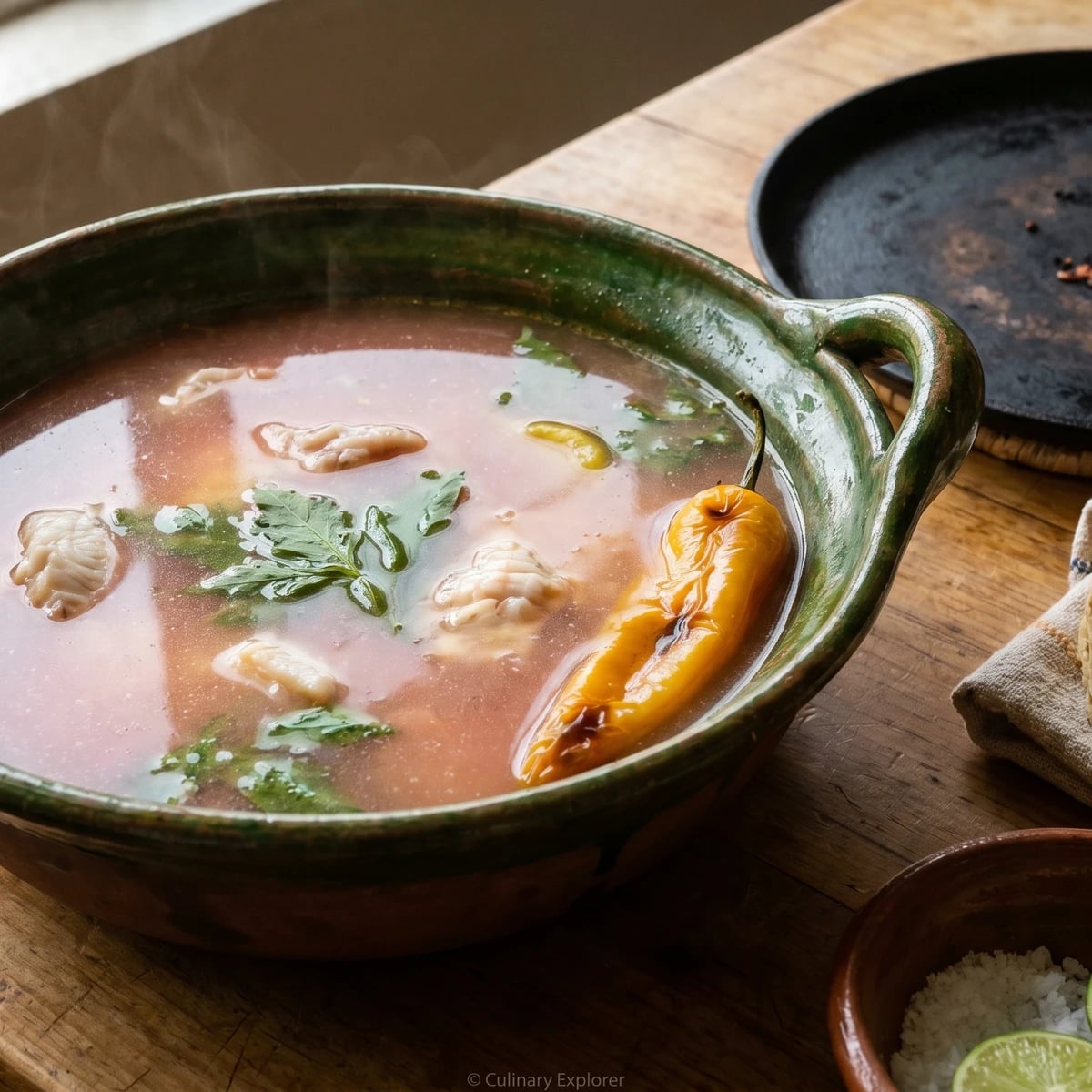
Caldo de Pescado Blanco de Pátzcuaro
Created by Chef Lupita
Michoacán's lake-basin caldo, built with delicate pescado blanco, roasted tomato, epazote, and a whole chile perón, gives you Pátzcuaro's clean freshwater cooking in under an hour.
Michoacán, the lake basin of Pátzcuaro, this is where the caldo lives. Around Janitzio, Pacanda, Tzintzuntzan, and the shoreline towns, pescado blanco is not just fish. It is the taste of the lake, the thing the market women protect with their eyes when you ask where it came from.
The fish is kurucha urapiti, pescado blanco, small and silver, with flesh so delicate you do not bully it. The broth is light tomato, not a red chile stew. Epazote goes in near the end. Chile perón goes in whole, blistered on the comal, so it perfumes the pot without turning the soup into a contest. Not all Mexican food is chile first. This is a 32-state cuisine.
Do not confuse this with caldo michi from Lake Chapala. That is Jalisco and it has its own pride. Pátzcuaro's version is cleaner, more restrained, built around the fish and the herb. The women who perfected it know the timing because they have watched this fish fall apart when someone lets the pot boil. The lesson is simple: build the broth first, add the fish last, and keep your hands calm.
My mother was Jalisciense, so this was not her everyday soup. I learned it on the lake, from a señora who told me, without smiling, that if the fish was bad the recipe was already dead. She was right. Si no conoces el mercado, no conoces la cocina.
Ingredients
Pátzcuaro pescado blanco
Quantity
1 1/2 pounds, about 4 small whole fish
scaled and gutted with heads left on when available
kosher salt
Quantity
1 1/2 teaspoons, divided, plus more to taste
ripe Roma tomatoes (jitomate guaje)
Quantity
1 pound
halved
| Ingredient | Quantity |
|---|---|
| Pátzcuaro pescado blancoscaled and gutted with heads left on when available | 1 1/2 pounds, about 4 small whole fish |
| kosher salt | 1 1/2 teaspoons, divided, plus more to taste |
| ripe Roma tomatoes (jitomate guaje)halved | 1 pound |
Where cooking meets culture.
Culinary guides, cultural storytelling, and the editorial depth that makes cooking meaningful.
Discover Culinary Explorer