
Chef Lupita
Aguascalientes Beef Tongue Pozole (Pozole de Lengua)
Aguascalientes' Bajio pozole de lengua, built with cacahuazintle hominy, tender beef tongue, chile ancho and guajillo, with xoconostle brightness and table garnishes.
A cooking platform built around craft, culture, and the stories behind what we eat.
Created by
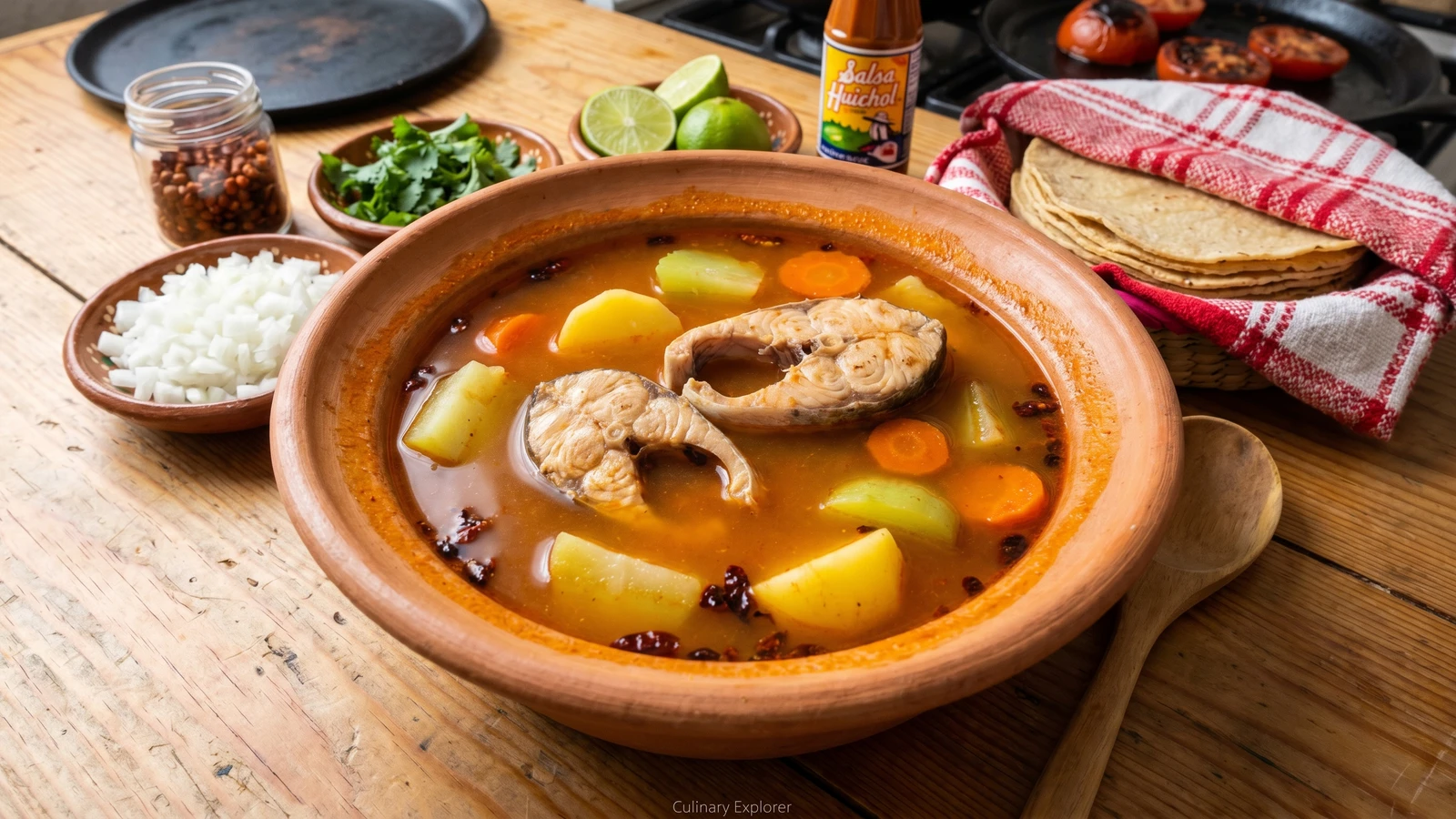
Sinaloa's river-catfish broth, built on charred tomato fried in lard, simmered with chayote, papas, and the bone-in steaks of cuatete, then finished with crushed chiltepín at the table.
This is from Sinaloa. Specifically from the freshwater rivers of the state, the Fuerte, the Sinaloa, the Culiacán, where cuatete, the small whiskered catfish, is pulled out by hand-line fishermen and carried to inland markets while the saltwater shrimp goes to the coast. Caldo de cuatete is what the river towns eat when the rest of the state is eating mariscos.
The fish goes in whole, cut crosswise into bone-in steaks. Do not let anyone talk you into a boneless filet. The bones, the head, the cartilage along the spine, that is where the broth gets its body. A clean caldo de cuatete is built on three things: a tomato base charred on the comal and fried in manteca, a bunch of cilantro stems and hierbabuena tied together to perfume the pot, and chiltepín crushed at the last minute. The chiltepín is not optional. It is the wild chile of the noroeste, smaller than a pea, hotter than a serrano, and it grows wild along the Sierra Madre Occidental from Sonora down through Sinaloa. If a recipe tells you to substitute red pepper flakes, throw the recipe out.
This is a Cuaresma dish. The forty days of Lent when the Catholic kitchens of northern Mexico turn to fish, and Sinaloa's home cooks reach for the cuatete that costs less than the camaron. It is also a weeknight dish, a budget dish, a dish that feeds six people for what one fillet of branzino costs at a fancy market. Saber cocinar es saber vivir, and knowing how to turn a small river fish into a serious caldo is part of what that saying means.
My mother did not cook cuatete. The river fish never made it to Mexico City in the form she knew. But on a trip to Mocorito a few years back, an octogenaria in a kitchen with a comal heated by mesquite showed me how she charred her tomatoes, fried her base in lard until the fat broke, and dropped the cuatete in at the very end. She crushed the chiltepín between her thumb and forefinger over each bowl as she ladled. I wrote it down in my own notebook that night. Recetas probadas y garantizadas.
Cuatete (Ictalurus pricei and related freshwater catfish species native to the rivers of northwestern Mexico) has been a staple of inland Sinaloan and Sonoran kitchens since pre-Columbian times, when the Cahita-speaking peoples (including the Mayo and Yaqui) fished the Río Fuerte and Río Sinaloa with weirs and hand-thrown nets. The Spanish introduction of pork lard, onion, and garlic transformed the indigenous practice of simmering the fish in plain water with wild herbs into the modern caldo, and the colonial-era enforcement of Catholic Lenten restrictions cemented its place on the Cuaresma table across rural Sinaloa. The chiltepín (Capsicum annuum var. glabriusculum), the only chile species native to what is now Mexico that still grows wild and is harvested commercially from wild stands rather than cultivated, has been a defining flavor of noroeste cooking for at least two thousand years and was traded along indigenous routes between the Sierra Madre and the coastal lowlands long before Spanish contact.
Quantity
2 pounds
cleaned, gutted, and cut crosswise into 2-inch steaks with bone in
Quantity
2 tablespoons
for rinsing the fish
Quantity
1 teaspoon
for rinsing the fish
Quantity
3 medium
cored
Quantity
1/2 medium
Quantity
4
peeled
Quantity
2 tablespoons
Quantity
1
sliced into thin half-moons
Quantity
2 medium
peeled and sliced into 1/4-inch coins
Quantity
2 stalks
sliced 1/4 inch thick
Quantity
1 medium
peeled and cut into 1/2-inch cubes
Quantity
2 medium
peeled and cut into 1-inch chunks
Quantity
8 cups
Quantity
1 large bunch
stems tied with kitchen twine, plus more leaves for serving
Quantity
2 sprigs
Quantity
1
Quantity
1 teaspoon
crumbled between your palms
Quantity
10 to 15
plus more for the table
Quantity
1 tablespoon, plus more to taste
Quantity
1/2 medium
finely diced
Quantity
for serving
Quantity
for serving
Quantity
for serving
| Ingredient | Quantity |
|---|---|
| whole cuatete (freshwater catfish)cleaned, gutted, and cut crosswise into 2-inch steaks with bone in | 2 pounds |
| fresh lime juicefor rinsing the fish | 2 tablespoons |
| kosher saltfor rinsing the fish | 1 teaspoon |
| ripe Roma tomatoescored | 3 medium |
| white onion (for the base) | 1/2 medium |
| garlic clovespeeled | 4 |
| manteca de cerdo (pork lard) | 2 tablespoons |
| small white onionsliced into thin half-moons | 1 |
| carrotspeeled and sliced into 1/4-inch coins | 2 medium |
| celery from the heartsliced 1/4 inch thick | 2 stalks |
| chayotepeeled and cut into 1/2-inch cubes | 1 medium |
| yellow potatoespeeled and cut into 1-inch chunks | 2 medium |
| water or light fish stock | 8 cups |
| fresh cilantrostems tied with kitchen twine, plus more leaves for serving | 1 large bunch |
| fresh hierbabuena (spearmint) | 2 sprigs |
| bay leaf | 1 |
| dried Mexican oreganocrumbled between your palms | 1 teaspoon |
| dried chiltepínplus more for the table | 10 to 15 |
| kosher salt | 1 tablespoon, plus more to taste |
| white onion (for serving) (optional)finely diced | 1/2 medium |
| lime halves (optional) | for serving |
| warm hand-pressed corn tortillas (optional) | for serving |
| salsa Huichol or salsa de chiltepín (optional) | for serving |
Place the cuatete steaks in a colander. Rub them with the lime juice and the teaspoon of salt, working it into the flesh and along the bone. Rinse under cold running water for a full minute. River fish carries the flavor of the river, and the lime and salt clean it without taking away what makes cuatete cuatete. Pat the steaks dry and set them on a plate in the refrigerator while you build the broth.
Heat a dry comal or heavy skillet over medium-high. Char the tomatoes, the onion half, and the garlic cloves directly on the dry surface. Turn them every couple of minutes. The tomato skins will blister and split. The onion will go soft with black edges. The garlic will turn golden inside its papery skin. This takes about 8 minutes total. Charring on the comal is the noroeste way to deepen flavor without adding fat. Skip it and the broth tastes like canned soup.
Peel the garlic. Drop the charred tomatoes (skins and all), the onion, the garlic, and 1 cup of the water into a blender. Blend until completely smooth. You want a deep red-orange puree, not a chunky salsa. Set it aside.
In a wide cazuela or heavy 6-quart pot, melt the manteca over medium heat. When it shimmers, add the sliced onion half-moons. Cook for 4 minutes until they turn translucent at the edges. Pour in the blended tomato base. It will sputter the moment it hits the fat. Cook for 6 to 8 minutes, stirring often, until the puree darkens by a shade and the fat starts to separate at the edges. La manteca es el sabor. This step is the difference between a Sinaloan caldo and a generic fish soup.
Pour in the 8 cups of water. Add the carrots, celery, chayote, and potatoes. Drop in the tied bunch of cilantro stems, the hierbabuena, the bay leaf, and the crumbled oregano. Crush 8 of the chiltepín between your fingers and add them straight to the pot. Add the tablespoon of salt. Bring to a simmer and cook uncovered for 15 minutes, until the potatoes and chayote are almost tender but still hold a little bite.
Lower the heat so the broth barely trembles. Slide the cuatete steaks in one at a time, tucking them between the vegetables so they sit in the liquid. Crush 4 more chiltepín over the top. Cover the pot and cook for 8 to 10 minutes. The fish is done when it pulls cleanly from the bone with the tip of a fork and turns from translucent gray to opaque white. Do not boil it. Hard boiling toughens river catfish and clouds the broth.
Pull the pot off the heat. Lift out the bunch of cilantro stems, the hierbabuena, and the bay leaf and discard them. Their job is done. Taste the broth. It should be bright from the tomato, warm from the chiltepín, and herbal underneath. Adjust the salt now, before it goes to the table. Let the caldo rest for 5 minutes off the heat so the flavors settle.
Ladle into deep bowls, giving each person a piece of cuatete with bones, a generous pile of vegetables, and plenty of broth. Set the diced raw onion, fresh cilantro leaves, lime halves, extra chiltepín, and warm corn tortillas in small dishes around the table. Each diner crushes a chiltepín or two into their bowl, squeezes the lime, and eats the broth with a torn piece of tortilla in the other hand. Asi se come en Sinaloa.
1 serving (about 680g)
Culinary guides, cultural storytelling, and the editorial depth that makes cooking meaningful.
Discover Culinary ExplorerChef Lupita
Aguascalientes' Bajio pozole de lengua, built with cacahuazintle hominy, tender beef tongue, chile ancho and guajillo, with xoconostle brightness and table garnishes.

Chef Lupita
Veracruz's Gulf coast rice from Alvarado, built with seafood stock, tomato, chile chipotle, epazote, shrimp, fish, jaiba, and pulpo, served loose and brothy in a clay cazuela.

Chef Lupita
Costa Chica's wet salt-beef stew, built from chile costeño, guajillo, tomato, manteca, yuca, plantain, and masa dumplings, the ranching pot of Cuajinicuilapa and Pinotepa.

Chef Lupita
Michoacán's P'urhépecha atápakua is a masa-thickened sauce and stew at once, built with pork, chile guajillo, and hierbabuena added only at the end.