
Chef Lupita
Acitrón de Cidra Conventual
Puebla's convent-style acitrón, made from cidra peel instead of endangered biznaga, built through repeated syrup soakings until the cubes turn firm, translucent, and ready for rosca or chiles en nogada.
A cooking platform built around craft, culture, and the stories behind what we eat.
Created by
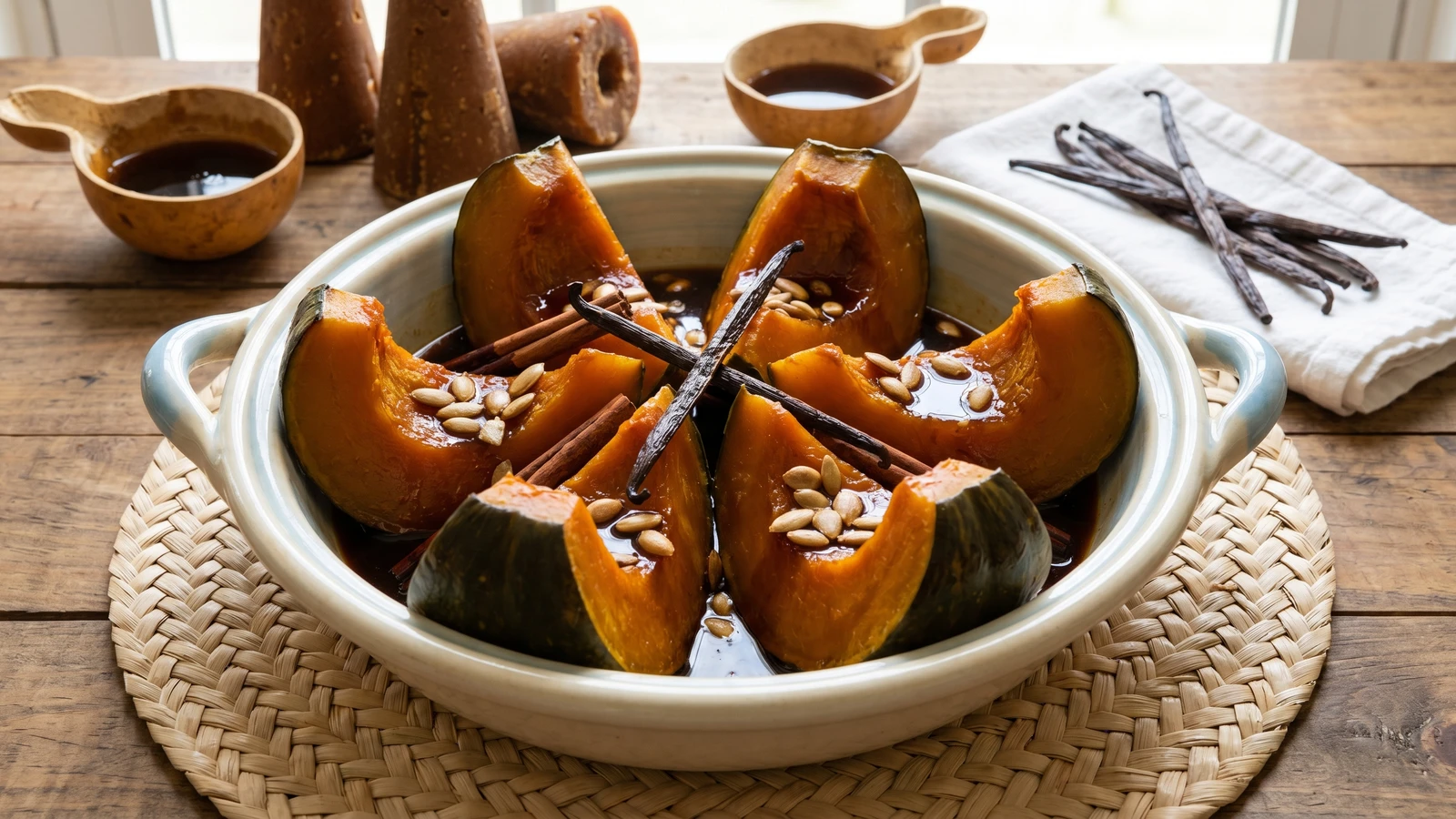
Veracruz's altar pumpkin, slow-simmered in piloncillo with canela, clavo, orange, and vainilla de Papantla until the flesh turns amber and the rind shines like lacquer.
Veracruz, especially the Sotavento and the vanilla country around Papantla, knows this calabaza by the smell first: piloncillo melting into dark syrup, canela opening in the pot, clavo doing its sharp work, and real vainilla de Papantla staining everything with that deep floral perfume. This is food for the altar. You cook it before Día de Muertos, let it rest, and set it out in a clay cazuela because the dead are not served carelessness.
The pumpkin must be calabaza de Castilla, cut with the rind still on. Don't peel it. The rind is what holds the wedge together while the syrup works its way into the flesh. A señora in Tlacotalpan once watched me cut the pieces too small and said, 'Así se deshace, niña.' She was right. Big wedges. Low heat. Patience.
The syrup is not refined sugar water. It is piloncillo, the dark cone from cane, broken up and melted slowly with water, canela de Ceylan if you can get it, clavo de olor, orange peel, and a whole vanilla pod from Papantla. Veracruz gave Mexico vanilla, so don't insult the pot with extract when the pod is the point. Recetas probadas y garantizadas, but only if you respect the ingredients.
Serve it warm, room temperature, or cold from the refrigerator the next day when the syrup has thickened and the pumpkin has taken on the color of old amber. Cada estado, su propia cocina. This one carries the Gulf humidity, the sugarcane fields, and the vanilla vines of northern Veracruz.
Calabaza de Castilla is descended from squash domesticated in Mesoamerica thousands of years before the conquest, while piloncillo entered the dish after Spanish sugarcane production expanded through Veracruz, Morelos, and Puebla in the colonial period. The word 'tacha' refers to the large copper sugar kettles, tachos, used in cane mills, where fruit and squash were sometimes candied in concentrated cane syrup. In Veracruz, the addition of vainilla de Papantla connects the Day of the Dead sweet to the Totonac region, where vanilla was cultivated and traded long before it became a global flavoring.
Quantity
1 medium, about 5 pounds
washed, seeded, and cut into 3-inch wedges with rind on
Quantity
1 1/2 pounds
chopped or broken into pieces
Quantity
3 cups
Quantity
2
Quantity
6
Quantity
1 strip, about 4 inches long
white pith removed
Quantity
1
split lengthwise
Quantity
1/2 teaspoon
Quantity
1/2 cup
Quantity
1/4 cup
lightly toasted, for serving
Quantity
for serving
| Ingredient | Quantity |
|---|---|
| calabaza de Castillawashed, seeded, and cut into 3-inch wedges with rind on | 1 medium, about 5 pounds |
| piloncillochopped or broken into pieces | 1 1/2 pounds |
| water | 3 cups |
| Mexican cinnamon sticks (canela) | 2 |
| whole cloves (clavo de olor) | 6 |
| orange peelwhite pith removed | 1 strip, about 4 inches long |
| whole vainilla de Papantla podsplit lengthwise | 1 |
| kosher salt | 1/2 teaspoon |
| fresh orange juice | 1/2 cup |
| pepitas (optional)lightly toasted, for serving | 1/4 cup |
| cold milk or crema (optional) | for serving |
Wash the calabaza de Castilla well because the rind stays on. Cut it in half, scrape out the seeds and fibers, then cut the pumpkin into large 3-inch wedges. Do not make little cubes. Small pieces collapse before the syrup has time to glaze them. Big wedges are how the flesh stays intact.
In a wide clay cazuela or heavy pot, combine the piloncillo, water, canela, cloves, orange peel, split vainilla de Papantla pod, salt, and orange juice. Bring to a gentle simmer over medium heat, stirring until the piloncillo dissolves. The syrup should smell dark, floral, and warm, not sharp like raw sugar.
Lay the pumpkin wedges rind side down in the syrup as much as possible. They can overlap a little, but don't pack them so tightly that the syrup cannot move around them. Spoon syrup over the exposed flesh. The liquid will not cover the pumpkin, and that is correct.
Lower the heat, cover the pot, and simmer gently for 45 minutes. Every 15 minutes, uncover and baste the pumpkin with the syrup. Do not stir hard. You are candying the pumpkin, not making puree. The flesh will soften and turn deeper orange while the rind keeps its shape.
Uncover the pot and continue simmering for 35 to 50 minutes, basting often, until the syrup thickens and clings to the spoon. The pumpkin should be tender when pierced near the rind, but not falling apart. If the syrup reduces too fast before the pumpkin is tender, add hot water a quarter cup at a time. No me vengas con atajos. Slow syrup is the dish.
Turn off the heat and let the pumpkin rest in the syrup for at least 30 minutes. Better yet, cool it completely and refrigerate it overnight. The wedges drink in the piloncillo as they sit. Serve in a shallow bowl with extra syrup spooned over the top, a few toasted pepitas if you want crunch, and cold milk or crema on the side if that is how your house serves it.
1 serving (about 370g)
Culinary guides, cultural storytelling, and the editorial depth that makes cooking meaningful.
Discover Culinary ExplorerChef Lupita
Puebla's convent-style acitrón, made from cidra peel instead of endangered biznaga, built through repeated syrup soakings until the cubes turn firm, translucent, and ready for rosca or chiles en nogada.

Chef Lupita
Ciudad de México's Tulyehualco alegría is popped huautli folded into piloncillo honey, pressed with peanuts, pepitas, and raisins, then cut into the rectangular bars that built a pueblo's identity.

Chef Lupita
Oaxaca's pre-Columbian amaranth bar, popped on a hot comal and bound with piloncillo, honey, and the sacred Zapotec grain that the Spanish tried, and failed, to outlaw.

Chef Lupita
Querétaro's mercado candy of popped amaranto pressed with dark piloncillo syrup, pepitas, pecans, and cacahuate, a Bajío sweet that respects the seed before it decorates the table.