Culinary Explorer
A cooking platform built around craft, culture, and the stories behind what we eat.
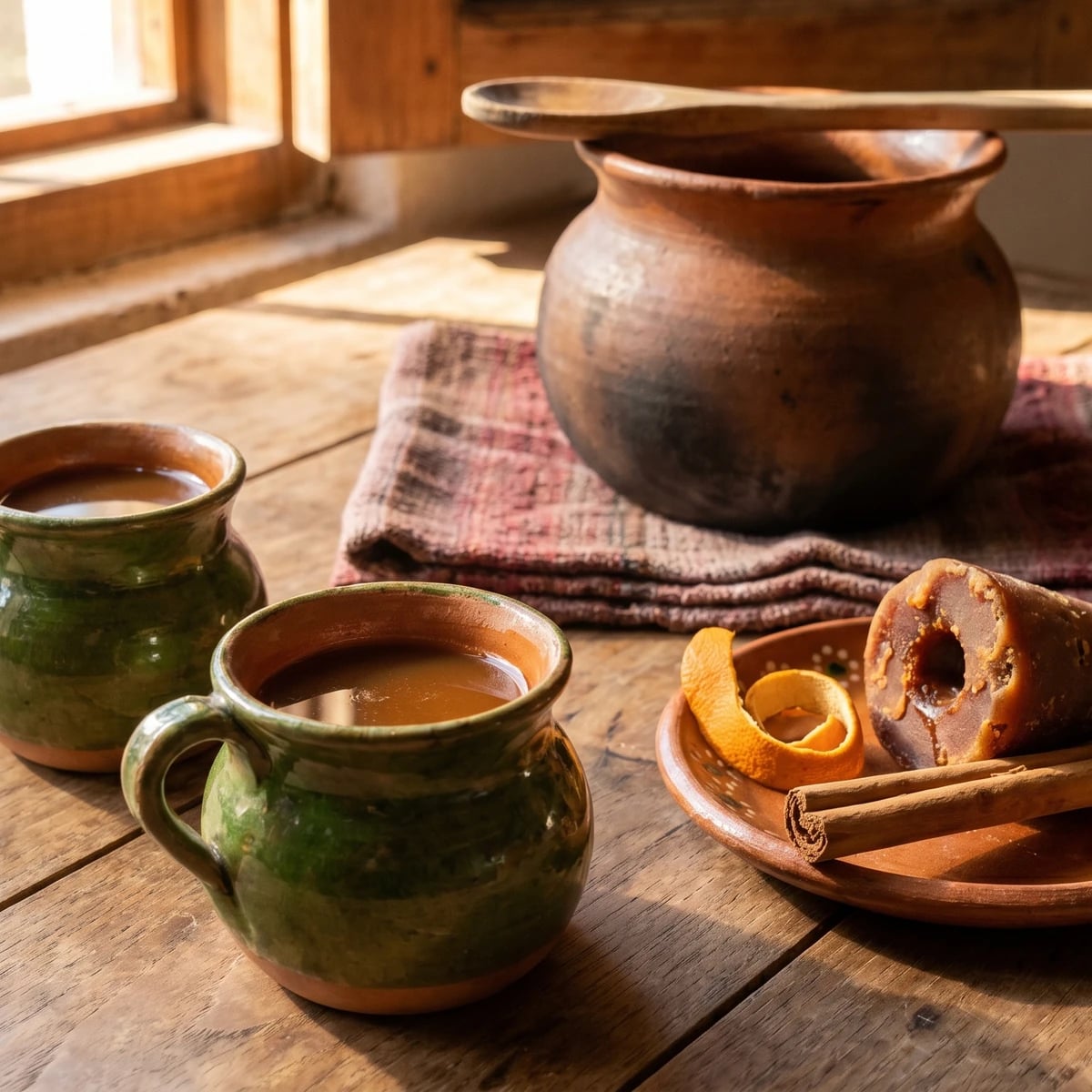
Café de Olla Oaxaqueño
Created by Chef Lupita
Oaxaca's morning coffee, brewed in an olla de barro with piloncillo, canela, and a strip of orange peel. The clay pot gives it an earthen depth that no French press or drip machine can touch.
Oaxaca grows coffee. This is something most people outside Mexico don't know. The Sierra Sur, the mountain range that runs along Oaxaca's southern coast, produces some of the finest arabica in the country. Pluma Hidalgo, a small town clinging to the mountainside at 1,300 meters, has been growing coffee since the late 1800s, and its beans have a clean, bright acidity that no commercial blend can replicate. When you make café de olla oaxaqueño, this is the coffee you want. If you can't get Pluma Hidalgo, find a medium-roast Mexican coffee with origin on the bag. If the bag doesn't tell you where the beans come from, keep looking.
The olla de barro is not decoration. It is the method. Clay is porous. Over years of use, the pot absorbs the oils from the coffee, the caramel from the piloncillo, the warmth of the canela. A well-seasoned olla brews a different cup than a new one. My comadre in Tlacolula has an olla that belonged to her mother. She says the coffee tastes better every year. I believe her. I've tasted it. If you brew café de olla in a steel pot, you will get coffee with piloncillo. You will not get café de olla. The name tells you what vessel to use. Listen to it.
Piloncillo is not brown sugar. It is unrefined cane pressed into a cone, and it carries molasses, mineral, and a depth that white or brown sugar cannot give you. You break it with the back of a heavy knife or wrap it in a towel and hit it with a hammer. It dissolves slowly in the simmering water, turning the pot a dark amber before the coffee even goes in. Canela, the soft-bark Ceylon cinnamon, not the hard cassia sticks sold in most American grocery stores, gives the brew its warmth without bitterness. A strip of orange peel ties it together. Some cooks in the Valles Centrales add a clove or two. Every kitchen adjusts. That is how it should be.
My mother made café de olla every morning in a small clay pot she brought from Jalisco. The coffee wasn't Oaxacan. The pot wasn't Oaxacan. But the method was the same one used from Chiapas to Durango. She never measured the piloncillo. She broke off a piece, dropped it in, tasted the water once it dissolved, and added more if the morning needed sweetness. Saber cocinar es saber vivir, she used to say, and that included knowing how to brew a proper cup of coffee before the sun was fully up.
Ingredients
water
Quantity
6 cups
piloncillo
Quantity
6 ounces (about 3/4 of a standard cone)
broken into rough pieces
canela (Ceylon cinnamon)
Quantity
2 sticks, each about 3 inches long
| Ingredient | Quantity |
|---|---|
| water | 6 cups |
| piloncillobroken into rough pieces | 6 ounces (about 3/4 of a standard cone) |
| canela (Ceylon cinnamon) | 2 sticks, each about 3 inches long |
Where cooking meets culture.
Culinary guides, cultural storytelling, and the editorial depth that makes cooking meaningful.
Discover Culinary Explorer