Culinary Explorer
A cooking platform built around craft, culture, and the stories behind what we eat.
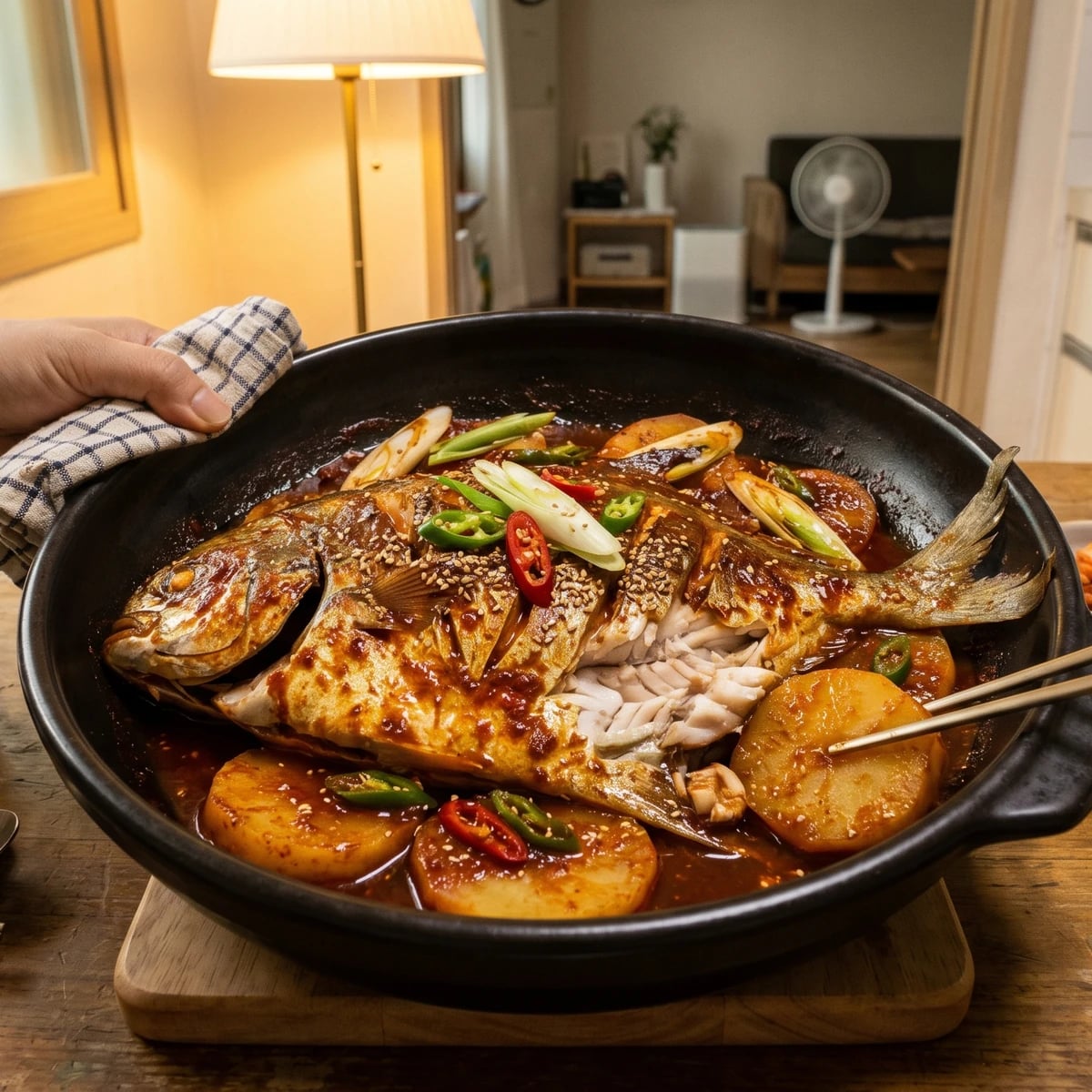
Byeongeo-jorim (병어조림, Braised Silver Pomfret)
Created by Chef Jeong-sun
A summer fish braise from the Korean home table, whole silver pomfret simmered gently over potato until the spicy soy sauce clings and the soft flesh lifts clean from the bone.
Byeongeo belongs to early summer. In the west-coast markets the good ones are broad through the belly, bright-skinned, and firm enough that the fishmonger does not have to explain them. Cook the month you're standing in: late spring to midsummer is when this fish gives itself most kindly to a pot. In winter, if the pomfret looks tired, make godeungeo-mu-jorim (mackerel braised with radish) and wait for this one.
People call byeongeo easy because the flesh is soft and there are few small bones. Only half true. The dish lives or dies by timing, because potato is stubborn and pomfret is delicate. Notebook 27 says potato first, fish second, no flipping. Let the potatoes drink the sauce before the fish goes in, then baste the fish from above so it stays whole.
At Master Seong-nyeo's stove, this was the braise she allowed for children and elders, not because it was bland, but because the flesh lifts cleanly from the center bone when cooked right. The sauce is soy, gochugaru, garlic, ginger, and just enough sweetness to round the salt. Don't bury it under gochujang or sugar. Serve it with rice and one clean banchan, and warn the table about the bone even when you think they know. That is care, not fussing.
Ingredients
whole cleaned silver pomfret (byeongeo)
Quantity
2 fish, 300 to 350g each
head on if possible
fine sea salt
Quantity
1/2 teaspoon
rice wine or soju
Quantity
2 tablespoons
divided
| Ingredient | Quantity |
|---|---|
| whole cleaned silver pomfret (byeongeo)head on if possible | 2 fish, 300 to 350g each |
| fine sea salt | 1/2 teaspoon |
| rice wine or sojudivided | 2 tablespoons |
Where cooking meets culture.
Culinary guides, cultural storytelling, and the editorial depth that makes cooking meaningful.
Discover Culinary Explorer