Culinary Explorer
A cooking platform built around craft, culture, and the stories behind what we eat.
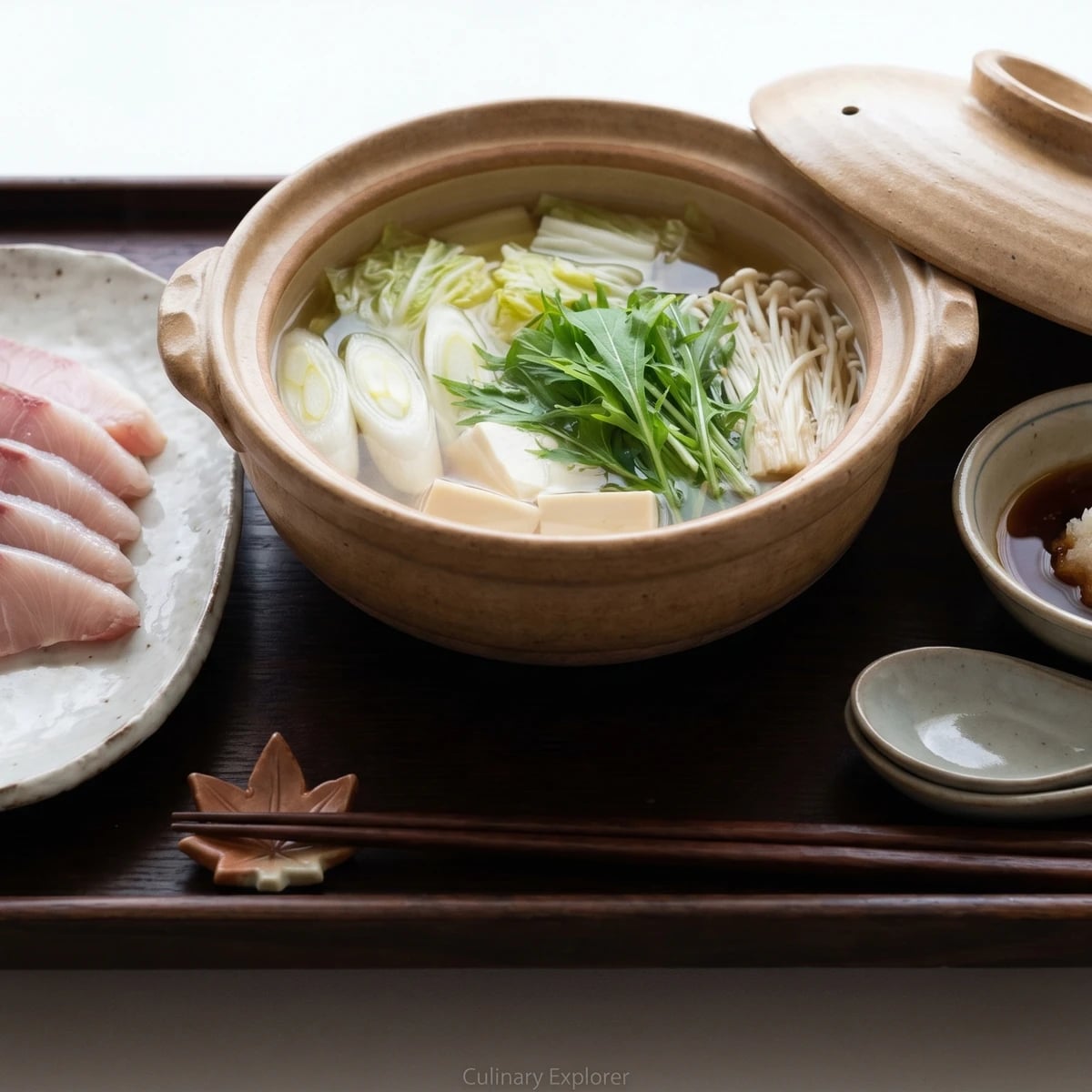
Buri-shabu (ぶりしゃぶ, Toyama yellowtail hot pot)
Created by Chef Takumi
Toyama winter buri needs little bravery, only good fish and a steady hand. Swish each slice through clear konbu dashi for three seconds, just enough to warm the fat and leave the center glossy.
Winter buri is the fish that announces Toyama's cold. When it comes fat from Himi, the flesh is firm, pink, and glistening fresh, with enough richness that a long simmer would be punishment. Buri-shabu asks for the opposite: a clear konbu broth, a slice of fish, and three seconds in the pot.
People hear hot pot and imagine a large performance. This one is calmer. The broth is there to wake the fat, not to cook the fish through. Swish the slice until the edges turn pearl-white and the center stays raw and glossy, then dip it in ponzu shōyu with grated daikon. The fat loosens, the surface warms, and the fish tastes cleaner than if you had hidden it under sauce.
The cut decides the dish. Aim for slices about 3 mm thick, drawn cleanly across the grain. Too thin and they cook through before the fat has any grace; too thick and the center stays cold and stubborn. If your fishmonger will slice it, let them. If you cut it yourself, chill the fish until firm and let the knife do the seasoning.
We eat this at the winter table as nabemono, the shared pot that keeps a meal unhurried. The vegetables are not filler; they sweeten the broth and give the fish a place to rest between bites. Honmono here isn't difficult. It's the courage to buy the right fish in its shun, heat it almost not at all, and leave it alone.
Ingredients
raw-suitable winter buri (mature Japanese amberjack, often sold as yellowtail)
Quantity
600g
ideally Himi kan-buri, skin removed, bloodline trimmed, sliced 3 mm thick
cold water
Quantity
6 cups
konbu
Quantity
1 piece (12 to 15g)
| Ingredient | Quantity |
|---|---|
| raw-suitable winter buri (mature Japanese amberjack, often sold as yellowtail)ideally Himi kan-buri, skin removed, bloodline trimmed, sliced 3 mm thick | 600g |
| cold water | 6 cups |
| konbu | 1 piece (12 to 15g) |
Where cooking meets culture.
Culinary guides, cultural storytelling, and the editorial depth that makes cooking meaningful.
Discover Culinary Explorer