
Chef Lupita
Acitrón de Cidra Conventual
Puebla's convent-style acitrón, made from cidra peel instead of endangered biznaga, built through repeated syrup soakings until the cubes turn firm, translucent, and ready for rosca or chiles en nogada.
A cooking platform built around craft, culture, and the stories behind what we eat.
Created by
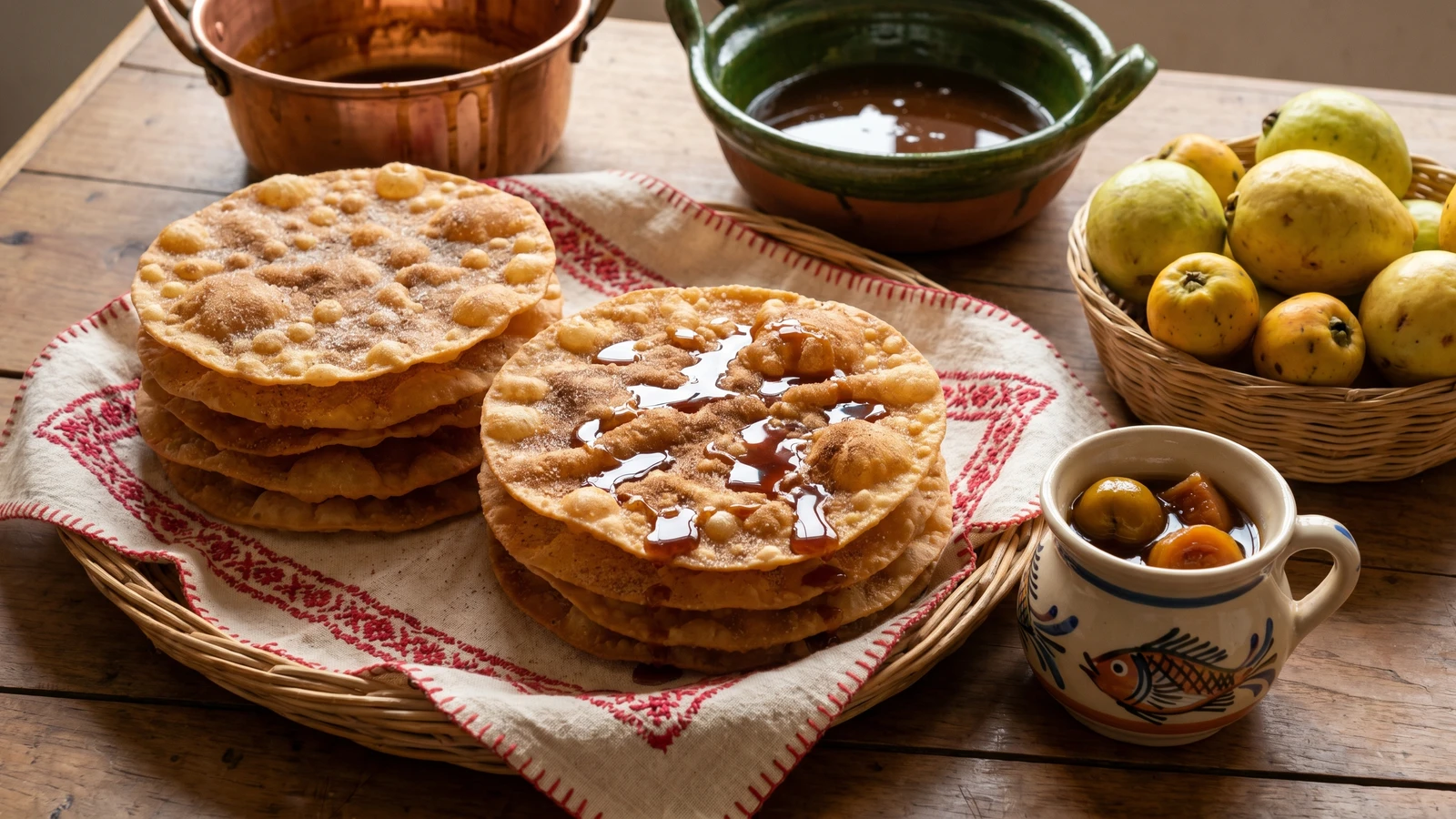
Michoacán's Uruapan buñuelos are crisp fried-dough wheels served at Christmas with a dark miel de tejocote y guayaba, the kind of dulce that closes a Posada in the Meseta.
Michoacán, Uruapan, edge of the Meseta Purépecha. These buñuelos live between the market stalls full of guayaba, tejocote, canela, and piloncillo, and the Christmas tables where the sweet things arrive after the tamales and atole. This is not a dessert from a restaurant plate. It belongs on a wicker tray, stacked high, with the miel in a clay jarrito so each person can bathe the buñuelo until it softens just at the edges.
The fruit defines this version. Tejocote, Mexican hawthorn, gives the syrup its tart body, and guayaba gives perfume. Piloncillo gives the dark mineral sweetness. Refined sugar has no business here. It makes a flat syrup. The women who taught me this in Uruapan cooked the miel until the fruit stained it amber-brown and the canela sat at the back of the throat. Not hot. Not chile. Complex. Learn the difference.
The dough is wheat flour, egg, a little manteca de cerdo, and enough rest to let it stretch thin without fighting you. You roll the discs until they are almost translucent, then fry them in clean lard or neutral oil until they blister and turn golden. If they are thick, they eat like bread. If they are thin, they crack under the teeth before the miel catches them. Así se hace y punto.
My mother did not write this one in her Jalisco notebook, but she wrote a line that applies: "la miel manda." The syrup commands the dish. Make it first, let it sit with the fruit, and fry the buñuelos when the table is ready. Saber cocinar es saber vivir.
Mexican buñuelos descend from Spanish fried-dough sweets brought during the colonial period, but regional cooks changed them with local syrups, fruits, and holiday rituals. In Michoacán, especially around Uruapan and the Purépecha Plateau, Christmas fruit syrups rely on piloncillo, tejocote, guayaba, canela, and clavo, ingredients also tied to ponche navideño. Tejocote, a native Mexican hawthorn used since pre-Columbian times, became a December fruit because it holds its shape in long cooking and gives syrup the tart backbone refined sugar cannot provide.
Quantity
2 cups, plus more for rolling
Quantity
1 tablespoon
finely grated
Quantity
1/2 teaspoon
Quantity
1/2 teaspoon
Quantity
2 tablespoons
softened
Quantity
1
at room temperature
Quantity
1/2 cup, plus 1 to 2 tablespoons more if needed
Quantity
2 pounds
for frying
Quantity
1 pound
rinsed
Quantity
6
trimmed and quartered
Quantity
12 ounces
chopped
Quantity
4 cups
Quantity
2
Quantity
4
Quantity
1 strip
with no bitter white pith
Quantity
1 pinch
| Ingredient | Quantity |
|---|---|
| all-purpose flour | 2 cups, plus more for rolling |
| piloncillofinely grated | 1 tablespoon |
| fine sea salt | 1/2 teaspoon |
| baking powder | 1/2 teaspoon |
| manteca de cerdosoftened | 2 tablespoons |
| large eggat room temperature | 1 |
| warm water | 1/2 cup, plus 1 to 2 tablespoons more if needed |
| manteca de cerdo or neutral oilfor frying | 2 pounds |
| tejocotesrinsed | 1 pound |
| ripe guavastrimmed and quartered | 6 |
| piloncillochopped | 12 ounces |
| water | 4 cups |
| Mexican canela sticks | 2 |
| whole cloves | 4 |
| orange peelwith no bitter white pith | 1 strip |
| fine sea salt | 1 pinch |
Put the tejocotes in a small pot, cover with water, and simmer for 8 to 10 minutes, just until the skins loosen. Drain, cool enough to handle, and peel them with your fingers or a small knife. Leave them whole. The skin is tough and does not belong in the miel.
In a cazo de cobre or heavy enameled pot, combine the peeled tejocotes, guavas, chopped piloncillo, 4 cups water, canela, cloves, orange peel, and a pinch of salt. Bring to a steady simmer over medium heat. Stir until the piloncillo dissolves, then lower the heat and cook 30 to 35 minutes, until the syrup turns amber-brown and lightly coats a spoon. The guava should perfume the pot and the tejocote should stay whole.
In a wide bowl, whisk the flour, grated piloncillo, salt, and baking powder. Rub in the softened manteca with your fingertips until the flour feels sandy. Add the egg and 1/2 cup warm water. Knead in the bowl until the dough comes together, adding 1 tablespoon more water only if dry flour remains. You want a firm, smooth dough, not a sticky one.
Turn the dough onto the counter and knead 6 to 8 minutes, until elastic and smooth. Divide into 18 to 20 small balls, each about the size of a large walnut. Rub them lightly with a film of manteca, cover with a clean servilleta, and rest 40 minutes. Resting is not laziness. It lets the dough stretch thin instead of snapping back.
Dust the counter lightly with flour. Roll each dough ball into a thin circle, 7 to 8 inches wide. Then stretch it gently over the back of your hands, turning as you go, until the center is almost translucent. Lay the discs on a floured cloth and keep them covered. Thin buñuelos blister. Thick ones sulk in the oil.
Melt the manteca de cerdo or heat the oil in a wide heavy pot to 350F. The fat should be deep enough for the buñuelo to float. If you do not have a thermometer, drop in a small scrap of dough. It should bubble immediately and rise without darkening too fast. La manteca es el sabor, but clean neutral oil is acceptable when you are feeding people who cannot eat pork.
Fry one buñuelo at a time. Slide the disc into the hot fat and press the center gently with tongs so it stays mostly flat. Fry 45 to 60 seconds per side, until golden with pale blisters and darker freckles at the edges. Drain upright against a rack or on brown paper. Do not stack them while hot or they will soften before the miel ever touches them.
Stack the buñuelos on a wicker tray or green-glazed Michoacán barro plate. Spoon the warm miel de tejocote y guayaba into a clay jarrito with a few pieces of fruit. At the table, pour the miel over each buñuelo just before eating. The center should soften and the rim should stay crisp. That contrast is the point.
1 serving (about 115g)
Culinary guides, cultural storytelling, and the editorial depth that makes cooking meaningful.
Discover Culinary ExplorerChef Lupita
Puebla's convent-style acitrón, made from cidra peel instead of endangered biznaga, built through repeated syrup soakings until the cubes turn firm, translucent, and ready for rosca or chiles en nogada.

Chef Lupita
Ciudad de México's Tulyehualco alegría is popped huautli folded into piloncillo honey, pressed with peanuts, pepitas, and raisins, then cut into the rectangular bars that built a pueblo's identity.

Chef Lupita
Oaxaca's pre-Columbian amaranth bar, popped on a hot comal and bound with piloncillo, honey, and the sacred Zapotec grain that the Spanish tried, and failed, to outlaw.

Chef Lupita
Querétaro's mercado candy of popped amaranto pressed with dark piloncillo syrup, pepitas, pecans, and cacahuate, a Bajío sweet that respects the seed before it decorates the table.