
Chef Graziella
Brodetto all'Anconetana
The storied fish stew of Ancona, where up to thirteen varieties of Adriatic fish simmer gently in a broth sharpened with vinegar and gilded with saffron. Every port town claims theirs is authentic.
A cooking platform built around craft, culture, and the stories behind what we eat.
Created by
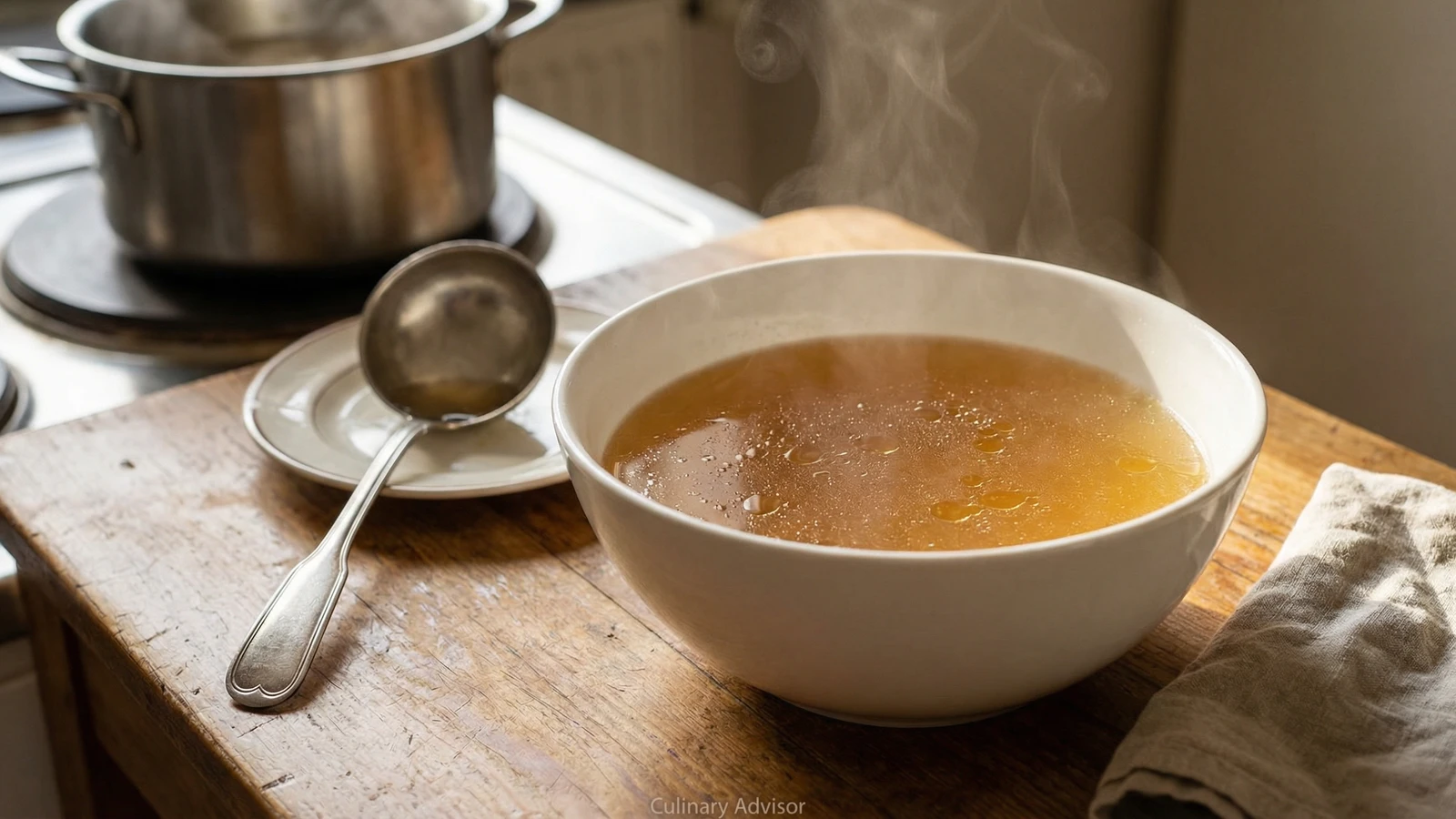
The patient work that makes everything else possible. Three meats, a handful of vegetables, cold water, and four hours of your time. This is where Italian cooking begins.
Without proper broth, nothing else matters. Not your risotto, not your tortellini in brodo, not your braised meats. The foundation determines the quality of everything built upon it. This is not my opinion. It is physics.
Americans reach for boxes and cans. They wonder why their risotto tastes flat, why their soup lacks soul. The answer sits on the stovetop, requiring nothing more than bones, vegetables, cold water, and patience. The ingredients cost almost nothing. The technique requires no special skill. Yet few people bother. This is the great mystery of modern cooking.
Three meats make proper brodo: beef for depth, veal for body, chicken for roundness. Each contributes what the others lack. The vegetables are simple and unseasoned. Onion, carrot, celery. Perhaps a tomato for color. Parsley stems. Bay leaves. The aromatics should whisper, not shout. What you keep out is as significant as what you put in.
Brodo di carne predates written recipes in Italy, appearing in medieval household records as the cornerstone of kitchen economy. Every scrap of meat and bone went into the pot. The broth nourished the family; the boiled meat, called bollito, became the second course. This dual purpose defined Italian frugality for centuries, though modern cooks often make broth for its own sake.
Quantity
2 pounds
bone-in
Quantity
1 pound
Quantity
1 (about 3 pounds)
or 2 pounds chicken backs and wings
Quantity
2 medium
halved, unpeeled
Quantity
3
scrubbed and cut into large pieces
Quantity
3
cut into large pieces
Quantity
1 small
halved
Quantity
6 sprigs
Quantity
2
Quantity
8
Quantity
6 quarts
Quantity
to taste
| Ingredient | Quantity |
|---|---|
| beef shin or shankbone-in | 2 pounds |
| meaty veal bones | 1 pound |
| whole chickenor 2 pounds chicken backs and wings | 1 (about 3 pounds) |
| yellow onionshalved, unpeeled | 2 medium |
| carrotsscrubbed and cut into large pieces | 3 |
| celery stalks with leavescut into large pieces | 3 |
| ripe tomatohalved | 1 small |
| flat-leaf Italian parsley | 6 sprigs |
| bay leaves | 2 |
| whole black peppercorns | 8 |
| cold water | 6 quarts |
| kosher salt | to taste |
Place the beef shin, veal bones, and whole chicken in a stockpot large enough to hold everything comfortably. The pot must be tall rather than wide. A narrow pot means less surface area and less evaporation. Cover with the cold water. The water must be cold. Starting with cold water draws flavor from the bones gradually. Hot water seals the surface and traps flavor inside.
Set the pot over medium heat. Watch it carefully. As the water heats, gray foam will rise to the surface. This is protein and impurities. Skim it away with a large spoon, dipping the spoon in a bowl of cold water between passes. Continue skimming until no more foam rises. This takes 20 to 30 minutes and requires your attention. A clear broth begins with patient skimming.
Once the liquid reaches a bare simmer and the foam is removed, add the halved onions, carrots, celery, tomato, parsley, bay leaves, and peppercorns. Do not add salt yet. Push the vegetables below the surface of the liquid.
Adjust the heat so the liquid barely trembles. A true simmer shows only the occasional lazy bubble breaking the surface. Never let it boil. Boiling agitates the fat and proteins, turning clear broth cloudy. There is no remedy for cloudy broth except starting over. Let it simmer, uncovered, for 3 to 4 hours. Do not stir. Skim any fat that collects on the surface.
The broth is ready when it is deeply golden, richly aromatic, and tastes of meat rather than water. Dip a spoon and taste. The flavor should be round and full, with no single element dominating. If it tastes thin, simmer longer. If the meats are falling apart and the broth is still pale, your heat was too low. Time cannot be the only measure. Your palate must decide.
Remove the pot from heat. Using a slotted spoon, lift out the large pieces of meat and bone. Discard the vegetables. They have given everything. Line a fine-mesh strainer with dampened cheesecloth and set it over a large clean pot or bowl. Ladle the broth through the strainer gently. Do not press on the solids. Pressing releases particles that cloud the broth.
Season the strained broth with salt to taste. The amount depends on how you will use it. Broth for sipping needs more salt than broth destined for risotto, where it will reduce. Let the broth cool uncovered until it stops steaming, then refrigerate. The fat will solidify on the surface. Remove it before using, or leave it as a protective seal if storing longer.
1 serving (about 240g)
Culinary guides, cultural storytelling, and the editorial depth that makes cooking meaningful.
Discover Culinary ExplorerChef Graziella
The storied fish stew of Ancona, where up to thirteen varieties of Adriatic fish simmer gently in a broth sharpened with vinegar and gilded with saffron. Every port town claims theirs is authentic.

Chef Graziella
Bread dumplings from the Italian Alps, where Austrian tradition meets Italian restraint. Stale bread, smoked speck, and mountain herbs, poached in clear beef broth.
Chef Graziella
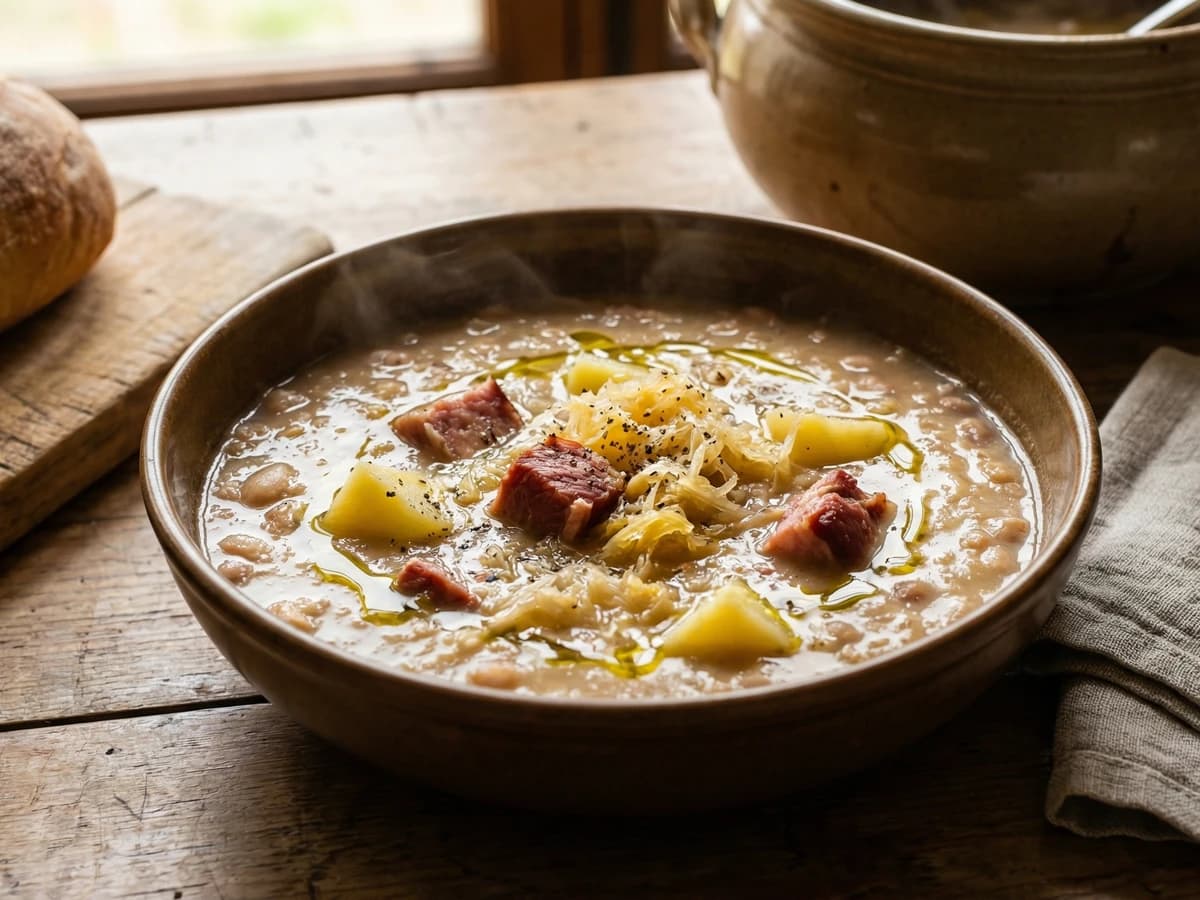
The great soup of Trieste, where Austro-Hungarian sauerkraut meets Italian beans and the smoke of cured pork. A dish that proves Italian cooking has always absorbed its neighbors.
Chef Graziella
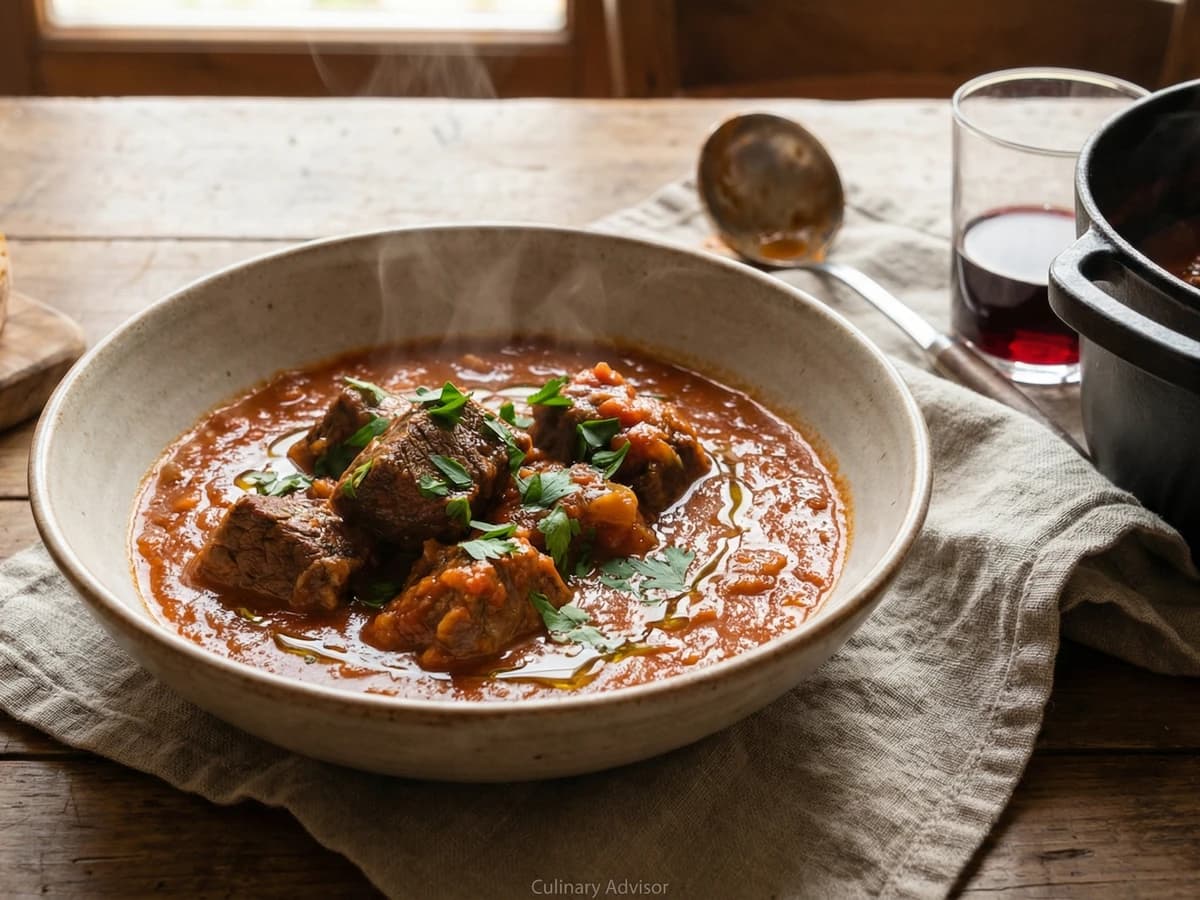
The Italian grandmother's answer to beef stew: chunks of chuck braised with patient soffritto, good wine, and San Marzano tomatoes until the meat surrenders and the sauce becomes something worth sopping bread in.