
Chef Ally
Braised White Beans with Sage
Creamy cannellini beans, slow-simmered with aromatics until they release their starch into a silky broth, crowned with shattering fried sage and the greenest olive oil you can find.
A cooking platform built around craft, culture, and the stories behind what we eat.

Created by
Leeks braised slowly in butter and stock until their layers turn silky and sweet, then dressed while still warm with a punchy Dijon vinaigrette that wakes everything up.
Leeks are the quietest member of the onion family, and perhaps the most elegant. At the market, look for stalks that feel heavy for their size with tight, unblemished layers and deep green tops. Avoid any with yellowing leaves or a slimy feel at the base. The best leeks appear in late fall and carry through early spring, when cold weather concentrates their sugars and softens their bite.
This is a dish about getting out of the way. You braise the leeks gently in butter and good stock until they surrender completely, their layers becoming silky and almost sweet. Then you dress them while they are still warm with a sharp mustard vinaigrette that cuts through the richness and reminds you that vegetables can be deeply satisfying on their own terms.
I learned to cook leeks this way in France, where they understand that a simple preparation done with care and good ingredients needs nothing more. Your choices shape the food system, and choosing leeks from a farmer who grew them in healthy soil, without shortcuts, is a choice that matters. The leeks will taste better for it, and the meal will mean more.
Quantity
4 (about 2 pounds)
white and light green parts only
Quantity
3 tablespoons
Quantity
1 cup
Quantity
1/2 teaspoon, plus more to taste
Quantity
2 tablespoons
Quantity
1 tablespoon
Quantity
1
minced
Quantity
1/4 cup
Quantity
to taste
freshly cracked
Quantity
1 tablespoon
snipped
Quantity
1 tablespoon
| Ingredient | Quantity |
|---|---|
| large leekswhite and light green parts only | 4 (about 2 pounds) |
| unsalted butter | 3 tablespoons |
| chicken stock or vegetable stock | 1 cup |
| fine sea salt | 1/2 teaspoon, plus more to taste |
| Dijon mustard | 2 tablespoons |
| white wine vinegar | 1 tablespoon |
| small shallotminced | 1 |
| good olive oil | 1/4 cup |
| black pepperfreshly cracked | to taste |
| fresh chivessnipped | 1 tablespoon |
| fresh parsley leaves | 1 tablespoon |
Trim the root ends and the dark green tops from each leek, leaving only the white and pale green sections. Slice each leek in half lengthwise. Hold each half under cold running water, fanning the layers gently to flush out any grit hiding between them. Leeks grow in sandy soil and will hold that sand stubbornly if you do not wash them well. Shake off excess water and lay them cut side up on a clean towel.
Melt the butter in a large skillet or braiser over medium heat. When it foams and the foam begins to subside, arrange the leeks in a single layer, cut side down. Let them cook undisturbed for three to four minutes until the cut surfaces turn golden. You want color here, a light caramelization that will sweeten the finished dish.
Carefully flip the leeks cut side up. Pour in the stock and add the salt. The liquid should come about halfway up the sides of the leeks. Reduce heat to low, cover the pan, and let the leeks braise gently for twenty to twenty-five minutes. They are ready when a knife slides through the thickest part without resistance. The layers should be silky, almost melting, but still holding their shape.
While the leeks braise, whisk together the Dijon mustard, white wine vinegar, and minced shallot in a small bowl. Let the shallot soften in the acid for a few minutes. Then drizzle in the olive oil slowly, whisking constantly until the vinaigrette emulsifies and thickens slightly. Season with salt and pepper. Taste it. The mustard should be present and sharp, cutting through rather than disappearing.
Transfer the braised leeks to a serving platter, arranging them cut side up. Spoon the vinaigrette generously over the warm leeks while they can still absorb the dressing. The warmth opens the pores of the vegetable, letting the mustard and vinegar penetrate the layers. Scatter the chives and parsley over the top. Serve warm or at room temperature.
1 serving (about 150g)
Culinary guides, cultural storytelling, and the editorial depth that makes cooking meaningful.
Discover Culinary ExplorerChef Ally
Creamy cannellini beans, slow-simmered with aromatics until they release their starch into a silky broth, crowned with shattering fried sage and the greenest olive oil you can find.
Chef Ally
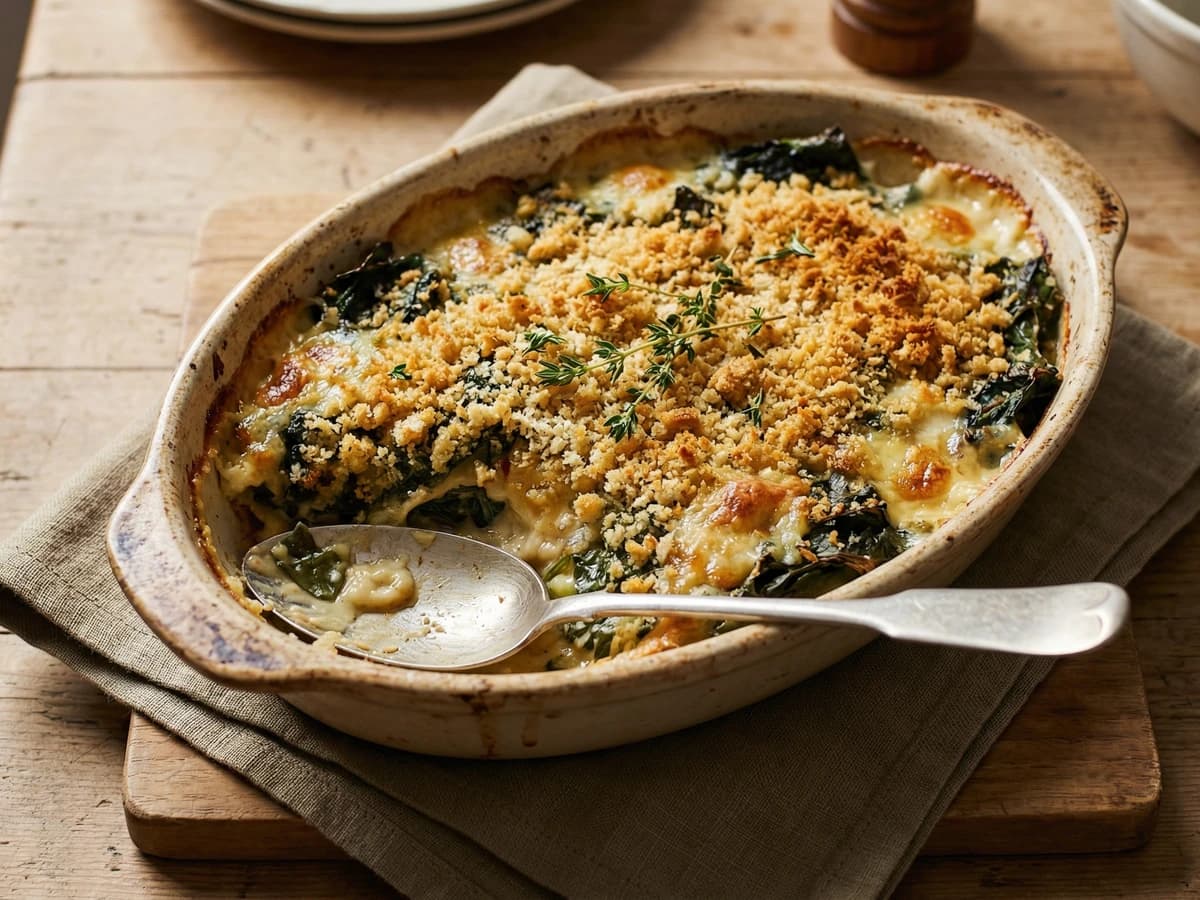
Swiss chard stems and leaves treated with equal care, layered with nutmeg-scented cream and aged gruyère, finished with breadcrumbs that shatter when you break through to the tender greens below.

Chef Ally
Small potatoes roasted slowly with bay leaves until they are golden and crackling outside, soft as butter within, perfumed with something ancient and green that makes guests ask what you did.

Chef Ally
Thin-sliced potatoes layered in garlicky cream, baked low and slow until the top turns golden and the center yields like silk. This is the dish that needs nothing but perfect ingredients and time.