
Chef Dean
Chocolate Babka
A magnificent swirl of buttery brioche dough and bittersweet chocolate, twisted into dramatic layers that tear apart in soft, cocoa-ribboned sheets. Eastern European tradition meets American abundance.
A cooking platform built around craft, culture, and the stories behind what we eat.
Created by
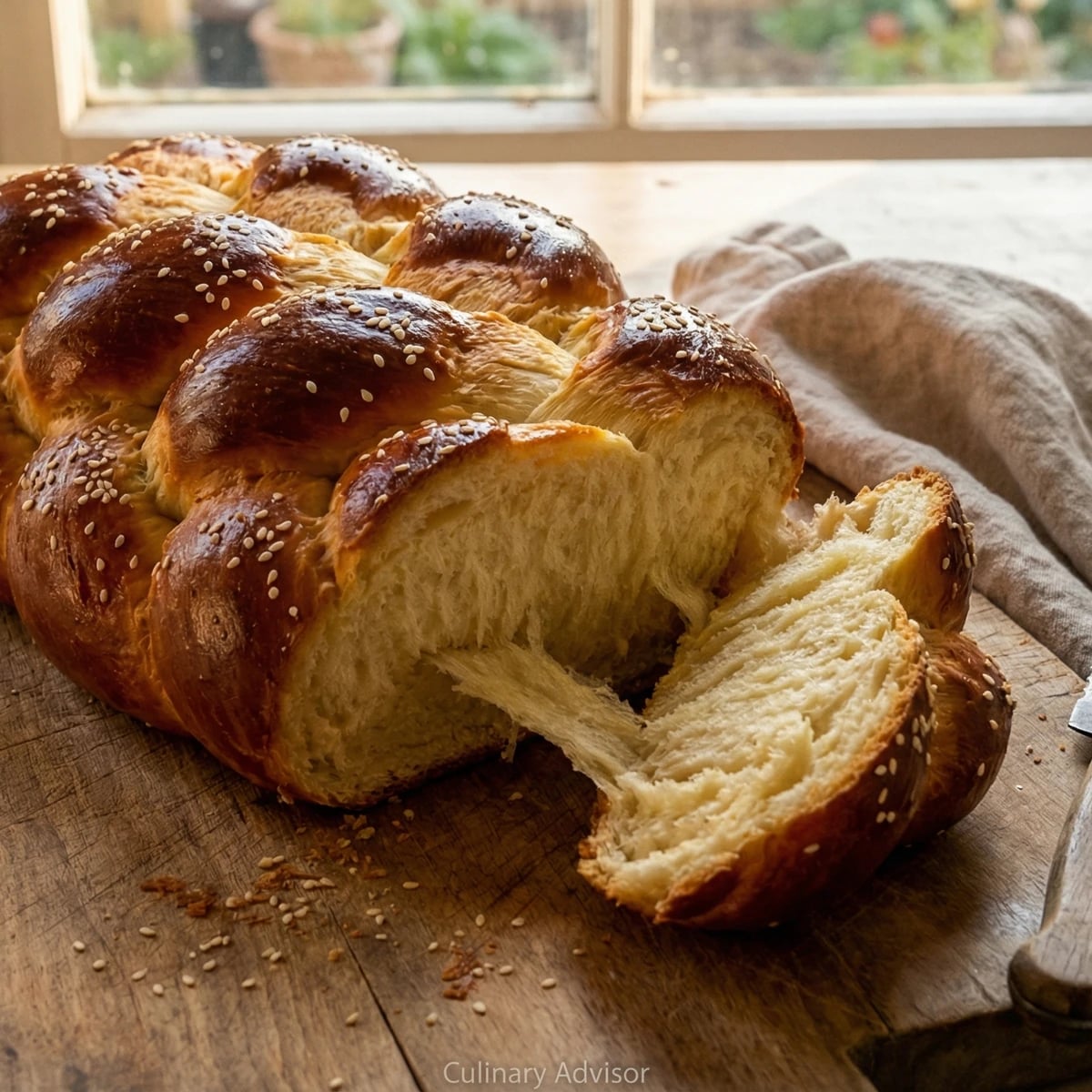
A golden, egg-enriched loaf braided by hand, its burnished crust giving way to a crumb so tender it pulls apart in soft, sweet strands. The bread of Friday nights, holidays, and ordinary weeks made sacred.
Start with the flour. Seek out stone-ground bread flour from a mill you trust, something with character and life still in it. Industrial flour will work, but good flour makes this bread worth the effort. The wheat should smell like wheat.
Challah is one of those recipes that asks for patience rather than skill. Eggs enrich the dough. Honey sweetens it gently. Oil keeps it tender for days. But time is the real ingredient. You mix, you wait, you shape, you wait again. The dough tells you when it is ready, if you pay attention.
The braiding intimidates people, but it should not. Three strands crossed over each other, the same motion you would use to braid hair or rope. The beauty is in the imperfection, the way a homemade loaf looks handmade. That irregularity is honest. It says someone stood in a kitchen and made this with their hands.
Every meal is a meaningful choice. A loaf of challah torn at a table, shared among family or friends, connects you to generations who did the same. The bread itself is simple. What it means is not.
Quantity
4 cups (500g)
preferably stone-ground
Quantity
2 1/4 teaspoons (1 packet)
Quantity
1 cup
105-110°F
Quantity
1/4 cup
Quantity
1/4 cup
grapeseed or light olive oil
Quantity
2
at room temperature
Quantity
1 1/2 teaspoons
Quantity
1
beaten with 1 tablespoon water, for egg wash
Quantity
1 tablespoon
| Ingredient | Quantity |
|---|---|
| bread flourpreferably stone-ground | 4 cups (500g) |
| active dry yeast | 2 1/4 teaspoons (1 packet) |
| warm water105-110°F | 1 cup |
| honey | 1/4 cup |
| neutral oilgrapeseed or light olive oil | 1/4 cup |
| large eggsat room temperature | 2 |
| fine sea salt | 1 1/2 teaspoons |
| eggbeaten with 1 tablespoon water, for egg wash | 1 |
| sesame seeds or poppy seeds (optional) | 1 tablespoon |
Pour the warm water into a large bowl. The temperature matters: too cool and the yeast stays dormant, too hot and you kill it. It should feel like bathwater against your wrist. Stir in the honey until dissolved, then sprinkle the yeast over the surface. Wait ten minutes. The yeast should foam and bubble, proof that it is alive and ready to work.
Add the oil and eggs to the yeast mixture and whisk until combined. The eggs make challah what it is: rich, golden, tender. Add the flour and salt, stirring with a wooden spoon until a shaggy mass forms. The dough will look rough and unpromising. This is normal.
Turn the dough onto a clean, unfloured surface. Knead for eight to ten minutes, using the heel of your hand to push the dough away, then folding it back toward you. At first it will be sticky and ragged. Resist adding flour. As you work, the dough transforms: it becomes smooth, elastic, and slightly tacky but no longer sticking to your hands. When you press a finger into it, the dough should spring back slowly.
Shape the dough into a ball and place it in a lightly oiled bowl, turning once to coat. Cover with a clean kitchen towel or plastic wrap and set in a warm spot. Let it rise until doubled in size, about one and a half to two hours. The dough is ready when you press two fingers into it and the indentation remains.
Punch down the risen dough to release the gas. Turn it onto your work surface and divide into three equal pieces for a traditional braid, or six for a more intricate loaf. Roll each piece into a rope about fourteen inches long and roughly one inch thick. Keep the thickness even along the length. If the dough springs back stubbornly, let it rest for five minutes under a towel, then continue.
For a three-strand braid: Pinch the three ropes together at one end and press firmly to seal. Braid as you would hair, alternating outer strands over the center. Keep gentle tension so the braid is snug but not tight. Pinch the ends together and tuck both ends underneath the loaf. Transfer to a parchment-lined baking sheet.
Cover the shaped loaf loosely with a kitchen towel and let it rise again until puffy and nearly doubled, about forty-five minutes to one hour. The challah should look airy and the braid should have softened and expanded. While it rises, preheat your oven to 350°F.
Beat the remaining egg with one tablespoon of water until smooth. Using a soft pastry brush, gently coat the entire surface of the challah, getting into the crevices of the braid. This wash gives challah its characteristic mahogany shine. Sprinkle with sesame or poppy seeds if you like.
Bake for thirty to thirty-five minutes, until the challah is a deep golden brown and sounds hollow when you tap the bottom. The internal temperature should reach 190°F. If the top browns too quickly, tent loosely with foil for the final ten minutes.
Transfer to a wire rack and let cool for at least twenty minutes. The bread is still cooking inside, and cutting too soon releases steam that should stay in the crumb. When you finally tear into it, the texture should be soft, slightly sweet, and pull apart in tender strands.
1 serving (about 80g)
Culinary guides, cultural storytelling, and the editorial depth that makes cooking meaningful.
Discover Culinary Explorer
Chef Dean
A magnificent swirl of buttery brioche dough and bittersweet chocolate, twisted into dramatic layers that tear apart in soft, cocoa-ribboned sheets. Eastern European tradition meets American abundance.

Chef Dean
The real thing: a chewy, caraway-flecked loaf with honest tang and a crackly crust that shatters under the knife. This is the bread that built the great delis of New York.

Chef Dean
Dense, chewy bagels with that distinctive sourdough tang and shatteringly thin crust, made the way they were before commercial yeast arrived in America. Worth every minute of the wait.

Chef Dean
A magnificent braided loaf with burnished mahogany crust, tender golden crumb, and the satisfying heft of bread made with purpose. This is the bread that transforms Friday evening into something sacred.