Culinary Explorer
A cooking platform built around craft, culture, and the stories behind what we eat.
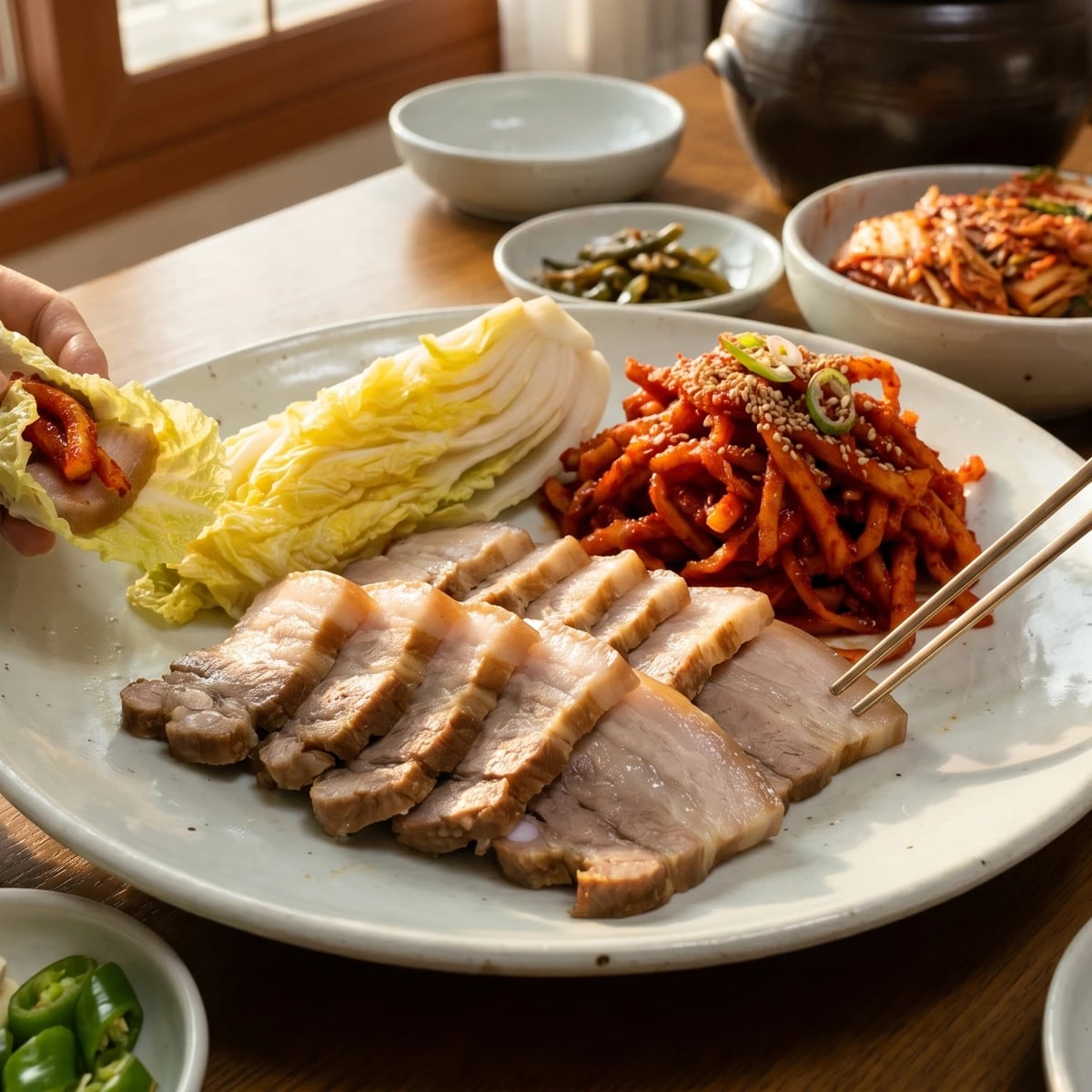
Bossam (Boiled Pork Wraps)
Created by Chef Jeong-sun
Pork belly simmered gently with doenjang, ginger, onion, and garlic, then sliced thick and wrapped in salted napa cabbage with spicy radish and saeujeot at the center of the table.
Bossam belongs to the table where people build their own bite. One person reaches for cabbage, another for salted shrimp, someone else is too generous with the garlic and learns a small lesson. This is celebration food, yes, but it also sits beside kimjang, when fresh pork is boiled to feed the hands that have been salting and stuffing cabbage all day.
The dish lives or dies by the simmer. Boil the pork hard and the meat tightens; let it murmur steadily and the fat turns soft while the lean stays juicy. Doenjang (fermented soybean paste) goes into the pot not to make a stew, but to round the pork and quiet its heaviness. Ginger and onion do the same work. Measure them. 손맛 is real; I measure it anyway.
Tonight this asks three things from you: salt the cabbage until it bends, season the radish so it tastes bright instead of sweet, and slice the pork only after it has rested. Then put everything on the table at once. We say ssam wraps fortune, and bossam is the dish that proves it with both hands.
Ingredients
pork belly slab
Quantity
1.2kg
skin removed or left on; pork shoulder may be used
water
Quantity
10 cups
doenjang (Korean fermented soybean paste)
Quantity
3 tablespoons
| Ingredient | Quantity |
|---|---|
| pork belly slabskin removed or left on; pork shoulder may be used | 1.2kg |
| water | 10 cups |
| doenjang (Korean fermented soybean paste) | 3 tablespoons |
Where cooking meets culture.
Culinary guides, cultural storytelling, and the editorial depth that makes cooking meaningful.
Discover Culinary Explorer