
Chef Lupita
Acitrón de Cidra Conventual
Puebla's convent-style acitrón, made from cidra peel instead of endangered biznaga, built through repeated syrup soakings until the cubes turn firm, translucent, and ready for rosca or chiles en nogada.
A cooking platform built around craft, culture, and the stories behind what we eat.
Created by
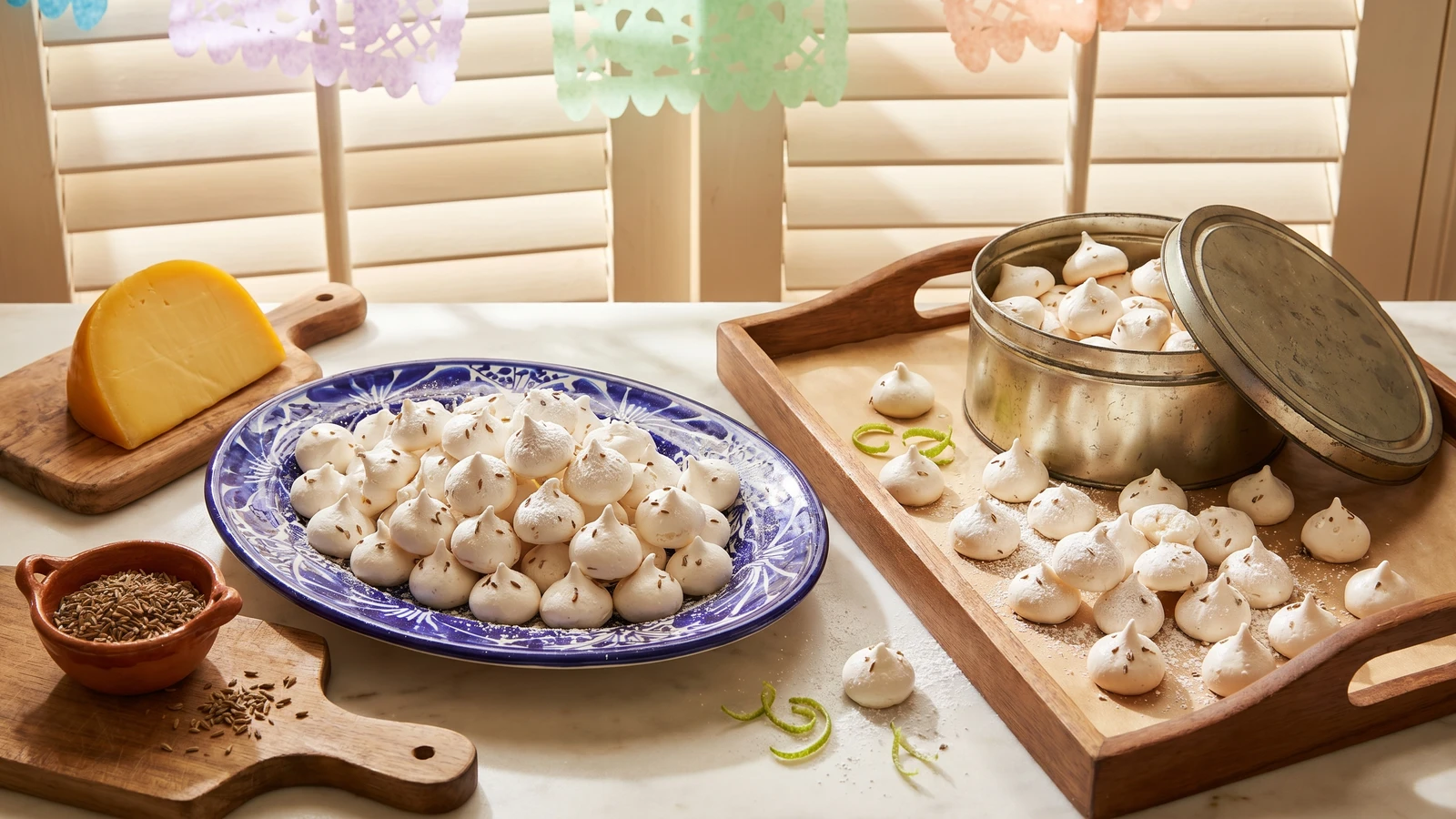
Tiny Yucatecan meringues scented with toasted anís and a whisper of lima, dried in a slow oven until they crack against the teeth and dissolve into licorice. The dulce that lives in tins on Peninsula kitchen shelves.
These belong to Yucatán. To the Peninsula. To the dulcerías around the Plaza Grande in Mérida, to the tin canisters on top of the refrigerator in Valladolid, to the little paper cones the señoras sell outside the cathedral after misa. Bombas de anís are not a Christmas-only sweet, but at Navidad and Hanal Pixán the tins come down and the bombas appear next to the mazapanes and the dulce de papaya on the Yucatecan table.
The recipe is short. Clara de huevo, sugar, anís, a breath of lime. That is all. Which means there is nowhere to hide. The whites have to be clean, the sugar has to dissolve completely, the anís has to be toasted, and the oven has to stay low for over an hour. People assume meringue is easy because the ingredients are few. Meringue is unforgiving for exactly that reason. No me vengas con atajos.
The anís is what makes these Yucatecan. Not vanilla, not almond, not rosewater. Anís. The Peninsula's love of anís goes back centuries, you taste it in the xtabentún liqueur, in certain panes dulces, in the licuados the abuelas make for upset stomachs. Toast the seeds before you grind them. The difference is not subtle. Cada estado, su propia cocina, and the Yucatán speaks in anís and achiote and sour orange. These little bombas speak in the first of those three.
My mother did not make these. Her notebook is Jalisciense, not yucateca. I learned bombas from a woman named Doña Reyna who ran a dulcería off Calle 59 in Mérida and let me sit in her kitchen for three afternoons watching her pipe them while she told me which other señoras were doing it wrong and why. She is the reason there is lime zest in this recipe. She said it makes the anís sing. She was right.
Meringue confections like bombas de anís arrived in the Yucatán Peninsula through the colonial Spanish convents of the 17th and 18th centuries, where nuns adapted European sugar-and-egg-white sweets to local palates by incorporating anís, a spice the Spanish had traded heavily through their Mediterranean and New World routes. The Peninsula's particular affinity for anís, evident in xtabentún liqueur, certain panes de muerto, and these dulces, reflects both the convent inheritance and the regional preference for aromatic rather than fiery flavors, a defining feature of Yucatecan cuisine that sets it apart from central and northern Mexico. Bombas are traditionally counted among the dulces tradicionales sold in Mérida's historic dulcerías such as Dulcería y Sorbetería Colón, which has anchored the Plaza Grande since 1907 and helped codify the city's catalog of sweets.
Quantity
4
at room temperature
Quantity
1 cup
Quantity
2 teaspoons
lightly toasted and finely ground
Quantity
1 teaspoon
left whole
Quantity
1/4 teaspoon
Quantity
pinch
Quantity
1/2 teaspoon
from a Yucatecan lima or Persian lime
Quantity
for finishing
| Ingredient | Quantity |
|---|---|
| large egg whites (clara de huevo)at room temperature | 4 |
| superfine sugar (azúcar refinada) | 1 cup |
| whole anís seedslightly toasted and finely ground | 2 teaspoons |
| whole anís seeds (for the surface)left whole | 1 teaspoon |
| cream of tartar | 1/4 teaspoon |
| fine sea salt | pinch |
| fresh lime zestfrom a Yucatecan lima or Persian lime | 1/2 teaspoon |
| powdered sugar (azúcar glas) (optional) | for finishing |
Heat the oven to 200°F (95°C). This is not baking. This is drying. The bombas need a low, patient oven that pulls the moisture out without coloring the meringue. Line two heavy sheet pans with parchment paper. In Mérida the dulcerías use rejillas, fine wire racks set over the trays, but parchment works in a home kitchen.
Heat a dry comal or small skillet over medium-low. Add the 2 teaspoons of anís seeds and toast for 60 to 90 seconds, moving the pan constantly, until the kitchen smells unmistakably of licorice and the seeds darken half a shade. Tip them onto a plate to cool. Grind to a fine powder in a molcajete or a clean spice grinder. This is the flavor of the dulce. Skip the toasting and the anís stays flat and grassy.
Wipe the bowl of a stand mixer and the whisk attachment with a paper towel dampened in vinegar or lime juice. Any trace of fat will keep the whites from climbing. Add the egg whites, cream of tartar, and salt. Beat on medium speed until soft, foamy peaks form, about three minutes. The foam should hold a soft curl when you lift the whisk.
With the mixer running on medium-high, rain the sugar in one tablespoon at a time. Take your time. Two full minutes for the whole cup. Rushing the sugar gives you a meringue that weeps in the oven and collapses on the tray. Once all the sugar is in, raise to high and beat for another five to seven minutes, until the meringue is glossy, stiff, and holds a sharp peak that does not droop. Rub a little between your fingers. If it feels gritty, keep beating. The sugar has to dissolve completely.
Sprinkle the ground anís and the lime zest over the meringue. With a clean rubber spatula, fold gently in eight or ten strokes. No more. You want the anís evenly distributed without knocking the air out. The meringue should still hold its peaks. Pretty bombas come from light hands.
Scoop the meringue into a piping bag fitted with a 1/2-inch round tip. Pipe small mounds about the size of a hazelnut onto the parchment, spaced an inch apart. They will not spread. Press the tip down, squeeze, then lift sharply to leave a small peak on top. Scatter the reserved whole anís seeds across the tops, just a few seeds per bomba. If you do not have a piping bag, two small spoons work. The shape will be rougher, more abuela than dulcería, and that is fine.
Place both trays in the oven. Bake for 1 hour and 15 minutes, rotating the trays once at the halfway mark. The bombas are ready when they lift off the parchment clean and feel dry and weightless. Crack one open. The inside should be a tight, crisp foam. If the center is sticky or chewy, give them another 15 minutes. When they are done, turn off the oven and leave the trays inside with the door cracked for another 30 minutes. This final rest finishes drying the centers and is the difference between a bomba that holds in the tin and one that goes soft by Wednesday.
Cool the bombas completely on the trays. Dust lightly with powdered sugar if you like, though the dulcerías in Mérida often leave them plain so the anís seeds stay visible on top. Store in a clean glass jar or a metal galleta tin with a tight lid. They keep two weeks if the humidity behaves. Yucatán in August is another matter. Así se hace y punto.
1 serving (about 6g)
Culinary guides, cultural storytelling, and the editorial depth that makes cooking meaningful.
Discover Culinary ExplorerChef Lupita
Puebla's convent-style acitrón, made from cidra peel instead of endangered biznaga, built through repeated syrup soakings until the cubes turn firm, translucent, and ready for rosca or chiles en nogada.

Chef Lupita
Ciudad de México's Tulyehualco alegría is popped huautli folded into piloncillo honey, pressed with peanuts, pepitas, and raisins, then cut into the rectangular bars that built a pueblo's identity.

Chef Lupita
Oaxaca's pre-Columbian amaranth bar, popped on a hot comal and bound with piloncillo, honey, and the sacred Zapotec grain that the Spanish tried, and failed, to outlaw.

Chef Lupita
Querétaro's mercado candy of popped amaranto pressed with dark piloncillo syrup, pepitas, pecans, and cacahuate, a Bajío sweet that respects the seed before it decorates the table.