
Chef Juliana
Beiju Chica de Santarém Novo
You don't need the right grandmother or a festival oven to learn the logic: grate mandioca fine, squeeze it damp, mix in coconut, and bake thin. Two ingredients, no packet, real crunch.
A cooking platform built around craft, culture, and the stories behind what we eat.

Created by
You think frying sweets is for someone braver. It isn't. Hydrate the tapioca properly, keep the bolinhos small, and you've got the baiana's tabuleiro translated for a home stove.
You hear frying and you already start saying, isso não é pra mim. I know. Oil feels dramatic, tapioca feels mysterious, and Bahia feels far away from your apartment at six in the evening. Good. A gente takes the drama out one step at a time.
This sweet belongs to the Afro-Baiana doçaria of the baianas' tabuleiro, carried by the baianas de acarajé and by the cooks of the terreiros who hold the knowledge. I can teach you a home bolinho with respect. I won't pretend the tradition is mine, and I won't ask you to perform what isn't yours. We cook carefully, name where the food comes from, and keep the powder people out of the bowl.
On an everyday Brazilian table, the pê-efe does the steady work: rice, beans, something green, maybe meat, egg, or fish. Then a sweet like this solves the other human need, the one that says food is also comfort and celebration. Not a packet, not powdered coconut pretending to be flavor. Tapioca, coconut, sugar, heat. Comida de verdade.
The method is plain. Hot milk hydrates the tapioca so the center cooks tender instead of staying hard. A rest gives the granules time to swell. Small spoonfuls fry through before the outside gets too dark. Cinnamon sugar sticks while the bolinho is still warm. Cozinhar não é dom, é um aprendizado. Anota aí: small bolinhos, patient soak, oil that bubbles lively but doesn't smoke.
Bolinho de estudante is one of the sweets sold on the baianas' tabuleiro in Bahia, alongside cocadas, lelê, acarajé, and abará. In 2005, IPHAN inscribed the Ofício das Baianas de Acarajé in the Livro dos Saberes, recognizing the knowledge of the women, their tabuleiro, their techniques, and the Afro-Baiana food lineage they keep alive. The name is commonly explained as a cheap, filling sweet for students, but recipes vary: some cooks shape firm hydrated tapioca into little ovals, others drop it by spoonfuls so the edges crackle.
Quantity
2 cups
coarse dry tapioca granules, not hydrated skillet goma
Quantity
1 cup
fine or medium
Quantity
1/3 cup
for the dough
Quantity
1/4 teaspoon
Quantity
1 cup
well shaken
Quantity
1 cup
Quantity
2 to 4 tablespoons
only if the hydrated mixture feels dry
Quantity
3 cups
for frying
Quantity
1 cup
red African palm oil, for frying
Quantity
1/2 cup
for coating
Quantity
1 teaspoon
for coating
| Ingredient | Quantity |
|---|---|
| tapioca granuladacoarse dry tapioca granules, not hydrated skillet goma | 2 cups |
| unsweetened grated fresh coconutfine or medium | 1 cup |
| sugarfor the dough | 1/3 cup |
| fine salt | 1/4 teaspoon |
| coconut milkwell shaken | 1 cup |
| whole milk | 1 cup |
| warm milk or water (optional)only if the hydrated mixture feels dry | 2 to 4 tablespoons |
| neutral oilfor frying | 3 cups |
| azeite de dendêred African palm oil, for frying | 1 cup |
| sugarfor coating | 1/2 cup |
| ground cinnamonfor coating | 1 teaspoon |
Put the tapioca granulada, grated coconut, sugar, and salt in a wide heatproof bowl. Stir with your fingers or a spoon until the coconut is spread through the tapioca and there are no salty pockets hiding in one corner. Dry mixing first matters because once the hot liquid hits, the starch starts grabbing moisture and you don't get a second chance to distribute everything evenly.
Pour the coconut milk and whole milk into a small saucepan and warm over medium heat until the edges tremble and tiny bubbles appear, about 3 to 4 minutes. Don't let it roar and climb the pan. You want the liquid hot enough to wake up the tapioca starch, because lukewarm milk leaves hard little centers that no amount of brave frying will fix.
Pour the hot milk mixture over the tapioca all at once and stir well, scraping the bottom of the bowl. Cover and let it sit for 30 to 35 minutes, stirring once halfway through. The mixture should swell into a thick, moist mass that holds together when squeezed, with no dry white pebbles. This rest is not waiting around for fun. It's the cooking before the cooking.
Wet your hands or use two spoons to shape rounded tablespoons of the mixture into small ovals, about 5 cm long. If the mixture cracks and falls apart, knead in warm milk or water 1 tablespoon at a time until it holds. If it feels loose, let it rest 10 more minutes. Keep them small. Small isn't cute here, it's engineering: the center turns chewy before the outside gets too dark.
In a heavy 3-liter pot, combine the neutral oil and azeite de dendê. The oil should be about 5 cm deep, and the pot should not be more than half full. Heat to 170°C, or test with a tiny pinch of the tapioca mixture: it should sink, rise, and bubble lively without the oil smoking. Too cool and the bolinhos drink fat. Too hot and the outside browns before the middle gets tender.
Lower 5 or 6 bolinhos into the oil with a slotted spoon. Fry, turning now and then, until they are deep golden with a rust-orange edge and the crackling sound quiets down, about 3 to 4 minutes. Don't crowd the pot. Crowding drops the temperature, the crust softens, and the bolinhos sit there absorbing oil instead of frying clean.
Lift the bolinhos onto a wire rack or paper towels and let the extra oil drip off for 1 minute. Mix the coating sugar and cinnamon in a shallow bowl, then roll the bolinhos while they're still warm so the sugar clings to the thin film of oil on the crust. Let them rest 5 minutes before eating. The center firms up, the outside stays crisp, and nobody burns their mouth pretending patience is optional.
1 serving (about 130g)
Culinary guides, cultural storytelling, and the editorial depth that makes cooking meaningful.
Discover Culinary ExplorerChef Juliana
You don't need the right grandmother or a festival oven to learn the logic: grate mandioca fine, squeeze it damp, mix in coconut, and bake thin. Two ingredients, no packet, real crunch.
Chef Juliana
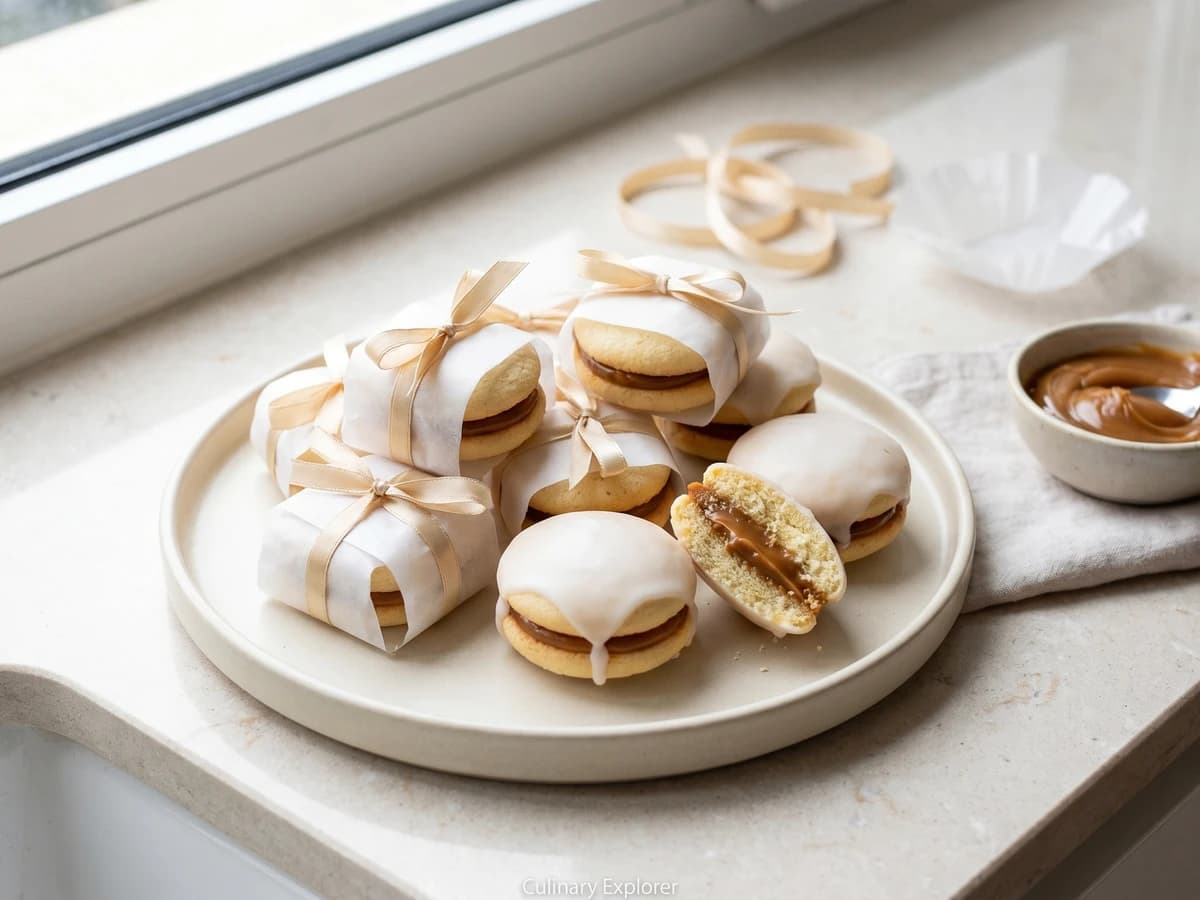
You think tiny wrapped wedding sweets are for people with magic hands. They're not. They're sponge, filling, glaze, and patience, taught in plain steps until they behave.

Chef Juliana
You think this is bakery magic. It isn't. Scald sour cassava starch, beat in eggs, pipe rings, and let a hot oven crack them into crisp, hollow biscuits.

Chef Juliana
You don't need bakery courage for this. Polvilho, queijo Minas, milk, butter, and your hands make crisp little sticks for coffee, lunchboxes, or the snack that keeps dinner sane.