Culinary Explorer
A cooking platform built around craft, culture, and the stories behind what we eat.
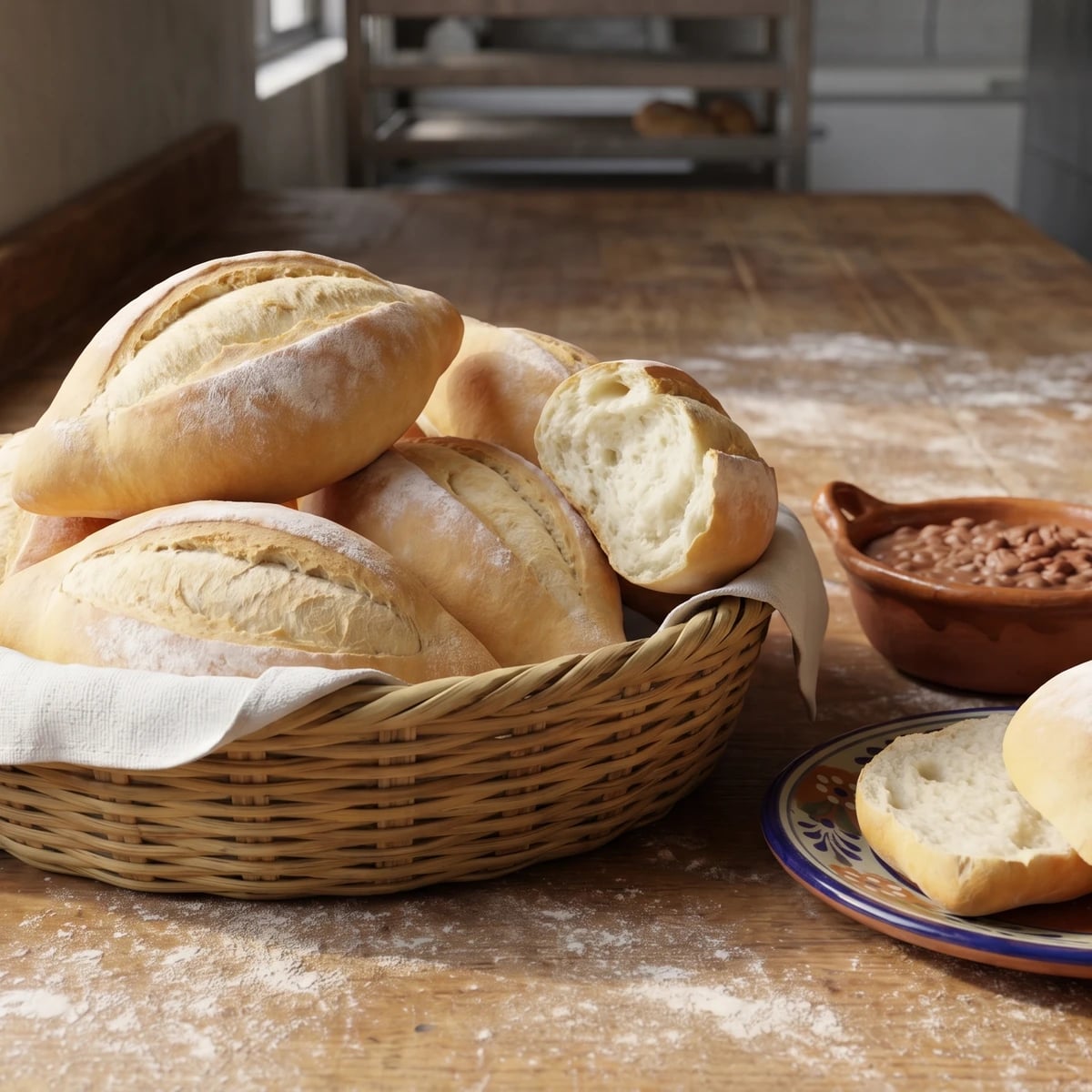
Bolillo Capitalino
Created by Chef Lupita
Ciudad de Mexico's everyday pan de sal, shaped like a small football, slashed once, baked crisp outside and airy inside for molletes, tortas, and the first bread of the morning.
Ciudad de Mexico and the Valle de Mexico own the daily rhythm of the bolillo. Yes, you find it across the country now, from Veracruz to Baja California, but the capital's panaderias made it the morning bread of office workers, schoolchildren, market vendors, and anyone carrying a cloth bag home before breakfast.
This is not a sweet bread. It is pan de sal: wheat flour, water, yeast, salt, and a small spoon of manteca de cerdo or oil to soften the crumb. The shape matters. The pointed ends, the single slash, the thin crust, the airy migajon inside. A home cook in the capital knows what it is for: molletes with frijoles refritos and queso, tortas packed in paper, or a piece torn open with cafe de olla before the day starts.
I learned this one from a panadero near La Merced who shaped faster than I could write. He watched the dough, not the clock. He told me, 'si la masa esta dura, la torta sale triste.' If the dough is hard, the sandwich comes out sad. He was right. Recetas probadas y garantizadas, but your hands still have to pay attention.
Ingredients
bread flour
Quantity
4 cups
plus more for dusting
warm water
Quantity
1 1/2 cups
about 95F to 100F
active dry yeast
Quantity
2 1/4 teaspoons
| Ingredient | Quantity |
|---|---|
| bread flourplus more for dusting | 4 cups |
| warm waterabout 95F to 100F | 1 1/2 cups |
| active dry yeast | 2 1/4 teaspoons |
Where cooking meets culture.
Culinary guides, cultural storytelling, and the editorial depth that makes cooking meaningful.
Discover Culinary Explorer