
Chef Joost
Aardappelschotel met Gehakt
A plain name for a quietly clever dish: fresh mince, sweet fried onion, nutmeg, and mashed potato baked until the top goes golden and the table goes silent.
A cooking platform built around craft, culture, and the stories behind what we eat.
Created by
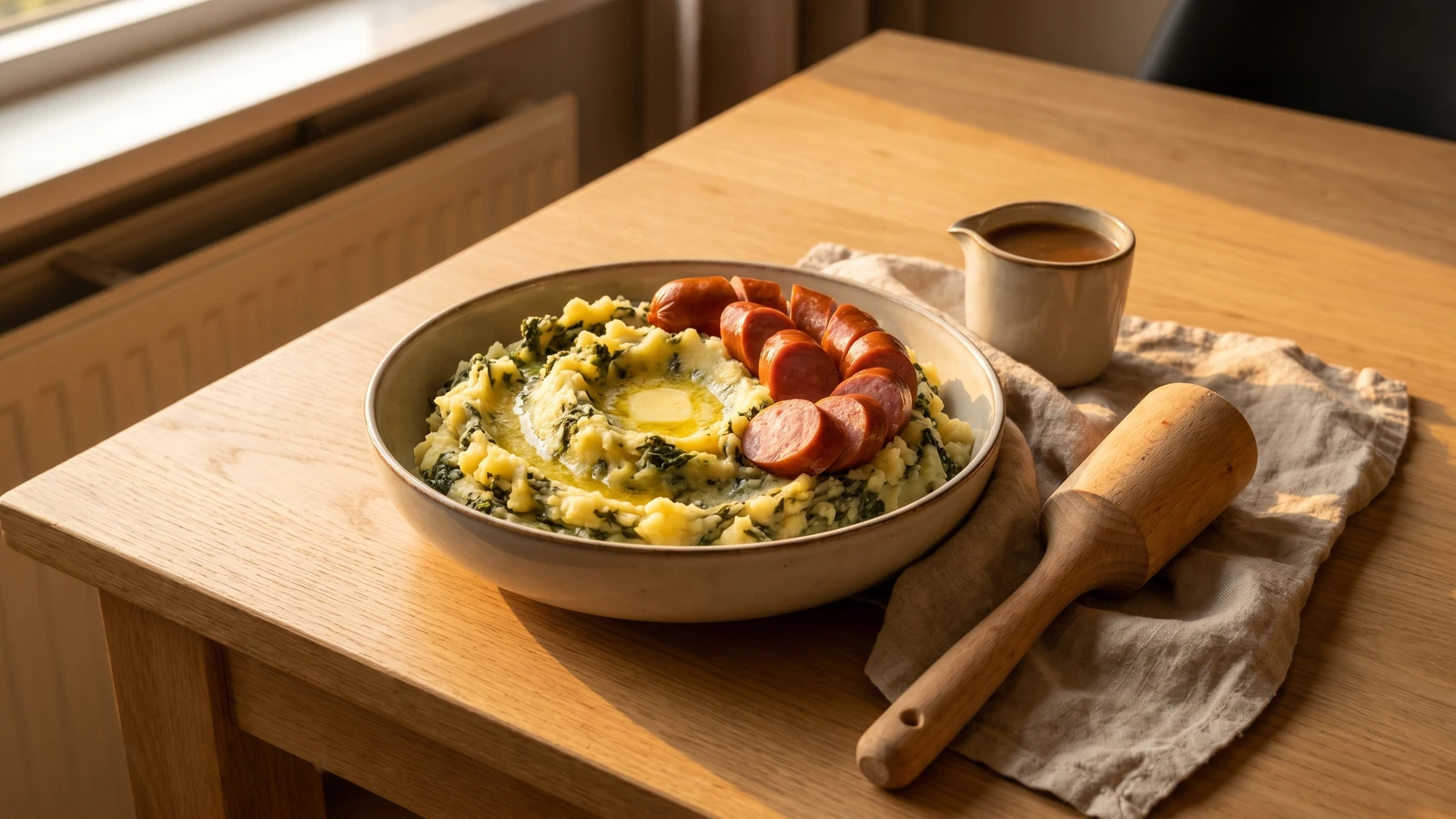
The name means farmer's cabbage mash, and there it is: winter kale, floury potatoes, smoked sausage, and the Dutch talent for making severity generous.
In my grandmother's second notebook, boerenkoolstamppot sits on a page with no decoration at all. Potatoes, kale, milk, butter, sausage. The handwriting is brisk, because nobody in that kitchen needed persuading. When the fields went dark and the frost came low over the ditches, this was not a recipe so much as a household reflex.
The name already tells you the whole honest business. Boerenkool is farmer's cabbage, the sturdy winter kale that improves after cold weather has had its hand on it. Stamppot comes from stampen, to pound or mash, and that is exactly the method: no elegance, no architecture, just potato and greens beaten together until they become one sustaining thing. Then rookworst, smoked sausage, lies across the top like a small ceremony in a country suspicious of ceremony.
But let me tell you a secret: the frost is not romance. Cold pushes the kale to turn some of its starches into sugars, softening the bitterness and giving the mash its roundness. Cook the potatoes under the kale so the greens wilt in their own time, warm the sausage gently, and make a kuiltje, a little hollow, in the mash for gravy or melted butter. Hou het altijd simpel, always keep it simple. This dish has survived because it asks for little and gives back more than it admits.
Kale has been grown in the Low Countries since the medieval period, but boerenkoolstamppot in its familiar potato-based form belongs to the period after potatoes became everyday Dutch food in the eighteenth and nineteenth centuries. Stamppotten, mashes of potatoes with vegetables, spread because they suited frugal winter households: one pot, stored crops, and enough fat or sausage to carry the meal. Rookworst reflects an older preservation logic, smoked meat keeping through cold months, though the soft modern Dutch sausage became a factory and butcher's-shop staple in the twentieth century.
Quantity
1.2kg
peeled and cut into chunks
Quantity
600g
stripped from tough stems and finely chopped
Quantity
1, about 275g
Quantity
200ml
Quantity
50g
Quantity
1 tablespoon
Quantity
1/2 teaspoon
Quantity
to taste
Quantity
150ml
| Ingredient | Quantity |
|---|---|
| floury potatoespeeled and cut into chunks | 1.2kg |
| fresh kalestripped from tough stems and finely chopped | 600g |
| smoked sausage (rookworst) | 1, about 275g |
| whole milk | 200ml |
| butter | 50g |
| mild mustard | 1 tablespoon |
| freshly grated nutmeg | 1/2 teaspoon |
| salt and black pepper | to taste |
| beef gravy or melted butter (optional) | 150ml |
Put the potato chunks in a large heavy pot and add cold water to just cover them. Add a generous pinch of salt, then pile the chopped kale on top. It will look like too much, which is the first correct sign. Put on the lid and bring the pot to a steady boil.
Cook for 20 to 25 minutes, until the potatoes break easily under a fork and the kale has softened from stiff green shreds into something darker and kinder. Do not stir too much early on; the potatoes need the water below, the kale needs the heat above. One pot can have an upstairs and a downstairs.
While the potatoes cook, warm the rookworst according to its type. A butcher's smoked sausage can sit in water just below a simmer for about 15 minutes; a packaged rookworst usually needs gentle heating in its wrapper, following the label. Keep it gentle. A burst sausage is not tragedy, but it is untidy.
Drain the potatoes and kale very well, then return them to the warm pot for one minute so excess moisture leaves. Warm the milk with the butter until the butter melts, pour it in, and mash firmly. You want a rough mash with flecks of kale everywhere, not a smooth puree. Stir in the mustard, nutmeg, black pepper, and salt to taste.
Spoon the stamppot into deep bowls or onto warm plates. Make a kuiltje, a little hollow, in the centre and fill it with gravy or a knob of melting butter if you like. Slice the rookworst into thick coins or lay it whole across the top. Eat at once, while the butter still glosses the mash.
1 serving (about 545g)
Culinary guides, cultural storytelling, and the editorial depth that makes cooking meaningful.
Discover Culinary ExplorerChef Joost
A plain name for a quietly clever dish: fresh mince, sweet fried onion, nutmeg, and mashed potato baked until the top goes golden and the table goes silent.

Chef Joost
Ajam Besengek is the golden chicken stew of the Indo-Dutch table: coconut milk, turmeric, and candlenut cooked down until the sauce clings to the meat like memory.

Chef Joost
The old Dutch spelling says ajam, the city says Batavia, and the pot says exactly what the rijsttafel always was: memory, trade, and dinner in one dish.

Chef Joost
The name means simply fried chicken, but the Dutch spelling carries a whole Indies kitchen: turmeric, coriander, garlic, and a golden crust that remembers the boemboe.