
Chef Lupita
Aporreadillo Michoacano con Huevo
Michoacán's Tierra Caliente almuerzo, where salted beef is softened, pounded, fried in lard, folded with egg and chile perón salsa, then served beside morisqueta like a proper working table.
A cooking platform built around craft, culture, and the stories behind what we eat.
Created by
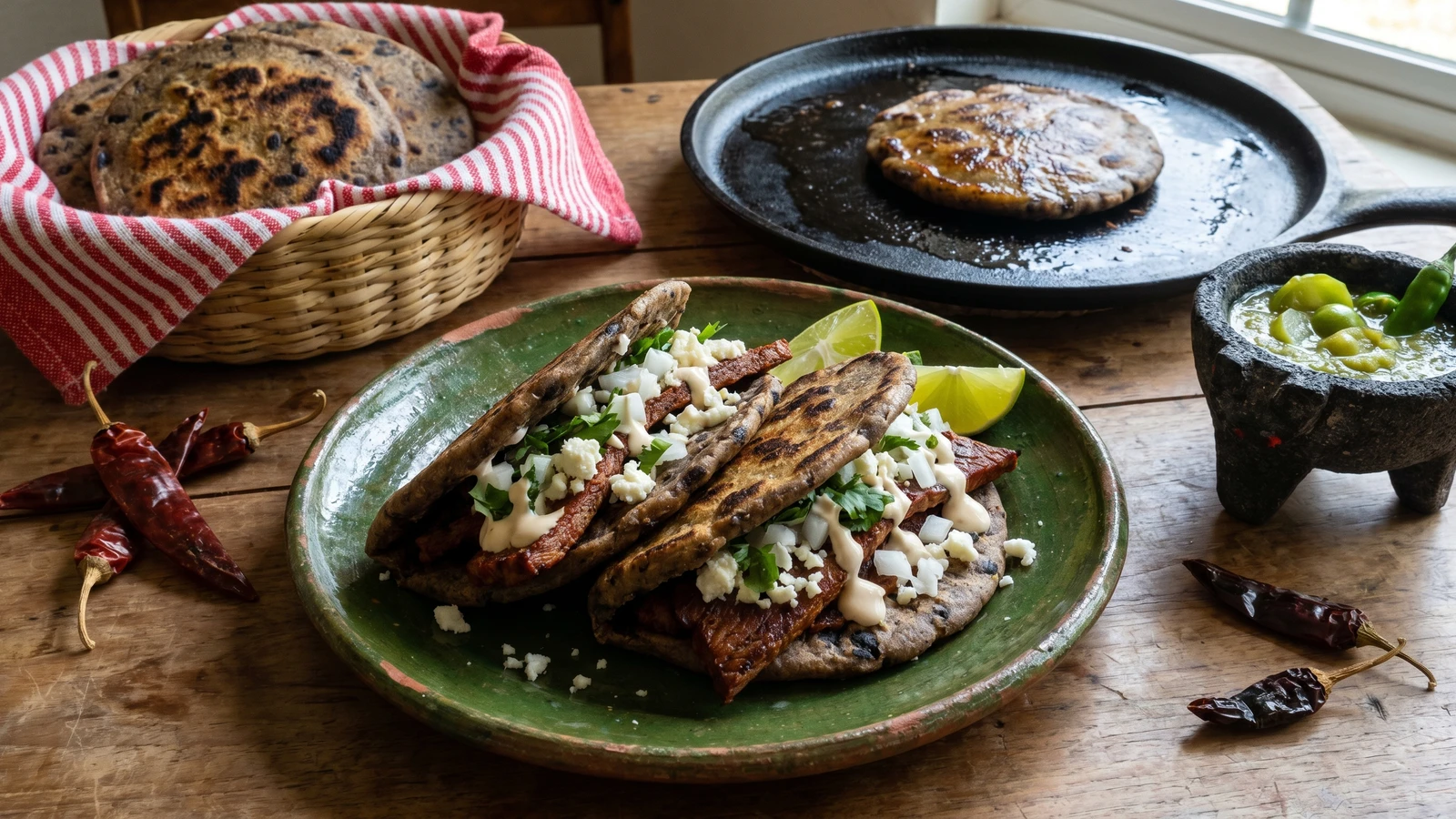
Hidalgo's Huasteca breakfast: thick masa cakes kneaded with black beans and lard, comal-toasted until the edges crackle, then split open and stuffed with chile-rubbed cecina, queso fresco, and crema. Morning street food that feeds a whole family before the sun is up.
This is from the Huasteca Hidalguense, the eastern stretch of Hidalgo that bleeds into Veracruz, San Luis Potosi, and Tamaulipas. Not Pachuca, not the central highlands of the state. The Huasteca. The land of zacahuil, of enchiladas huastecas, of bocoles that come off a wood-fired comal before the roosters finish arguing. If you have only eaten Hidalgo through its pastes and its barbacoa de Actopan, you have not eaten Hidalgo. Cada estado, su propia cocina, and Hidalgo has at least three.
The bocol is masa thickened by frijoles negros and enriched with manteca de cerdo. Not a thin tortilla. A thick disc, almost half an inch, that toasts dark on a comal and stays soft inside. The bean is not a filling. The bean is in the dough. That is the trick. The masa, the lard, and the bean cook together into something with the weight to hold cecina enchilada without falling apart, and the flavor to stand up to it. La manteca es el sabor, and in the Huasteca, manteca is not optional.
The cecina enchilada is the other half of this dish. Thin sheets of beef rubbed with a paste of guajillo, ancho, and morita, then seared fast on a hot comal until the chile darkens and the edges curl. In Huejutla and Tantoyuca, the carnicerias hang the cecina in long curtains and the women buy it by the meter on Saturday mornings. If you can find a Mexican butcher who already sells cecina enchilada, buy it. If you cannot, you make the rub yourself, and the recipe below tells you exactly how.
My mother did not cook Huasteco food. She was from Jalisco. But she had a friend from Huejutla who came to Colonia Roma once a month with a basket of bocoles wrapped in a cloth, still warm from her morning comal. I copied the recipe into my mother's notebook when I was nineteen, after I made my first batch with that friend looking over my shoulder, telling me my masa was too dry and my comal was not hot enough. She was right on both counts. Saber cocinar es saber vivir.
The bocol belongs to the Huasteca, a cultural region that crosses six Mexican states and is anchored in the Teenek (Huastec) and Nahua peoples who have cultivated corn in the region for over three thousand years. The thick masa-and-bean disc is a pre-Columbian form, predating the thinner wheat-flour-influenced tortilla that came with Spanish colonization, and it survives today as one of the most direct living examples of Mesoamerican corn cookery. Cecina, by contrast, is a Spanish import; the practice of salt-curing and air-drying thin sheets of beef arrived with the conquistadors and was adopted across central Mexico, with Yecapixtla in Morelos and the Huasteca regions of Hidalgo and Veracruz developing their own distinct cecina traditions, the Huasteca version distinguished by its chile rub applied before searing.
Quantity
1 pound
or 2 cups masa harina mixed with 1 1/3 cups warm water
Quantity
1 cup
drained and lightly mashed, reserve a few tablespoons of bean broth
Quantity
3 tablespoons, plus more for the comal
Quantity
1 1/2 teaspoons, divided
Quantity
12 ounces
from a Mexican carniceria
Quantity
4
stemmed and seeded
Quantity
2
stemmed and seeded
Quantity
1
Quantity
2
peeled
Quantity
1/4 medium
Quantity
1 teaspoon
Quantity
1/2 teaspoon
Quantity
2 tablespoons
Quantity
8 ounces
crumbled
Quantity
1 cup
Quantity
1
finely chopped
Quantity
1/2 cup
chopped
Quantity
for serving
Quantity
for serving
| Ingredient | Quantity |
|---|---|
| masa fresca for tortillasor 2 cups masa harina mixed with 1 1/3 cups warm water | 1 pound |
| cooked frijoles negrosdrained and lightly mashed, reserve a few tablespoons of bean broth | 1 cup |
| manteca de cerdo (pork lard) | 3 tablespoons, plus more for the comal |
| kosher salt | 1 1/2 teaspoons, divided |
| cecina enchilada (chile-rubbed thin-cut beef)from a Mexican carniceria | 12 ounces |
| dried chile guajillo (optional)stemmed and seeded | 4 |
| dried chile ancho (optional)stemmed and seeded | 2 |
| dried chile chipotle morita (optional) | 1 |
| garlic cloves (optional)peeled | 2 |
| white onion (optional) | 1/4 medium |
| dried Mexican oregano (optional) | 1 teaspoon |
| ground cumin (optional) | 1/2 teaspoon |
| apple cider vinegar (optional) | 2 tablespoons |
| queso frescocrumbled | 8 ounces |
| Mexican crema | 1 cup |
| small white onion (optional)finely chopped | 1 |
| fresh cilantro (optional)chopped | 1/2 cup |
| salsa verde cruda de molcajete (optional) | for serving |
| lime wedges (optional) | for serving |
Place the masa in a wide bowl. Add the mashed frijoles negros, the manteca de cerdo, and 1 teaspoon of the salt. Knead with your hands for three or four minutes, the way the women in Huejutla do it, until the dough is uniform, the color of wet earth, and the bean and lard are completely worked through. If the masa feels stiff or cracks at the edges, add a tablespoon of the reserved bean broth. The dough should be soft but not sticky, holding the print of your finger without collapsing.
Divide the masa into 12 equal balls, about the size of a small lime. Roll each one smooth between your palms, then flatten into a thick disc about three inches across and almost half an inch thick. Bocoles are not tortillas. They are thick. The interior has to stay tender after the outside crisps on the comal.
If your cecina did not come already enchilada from the carniceria, build the rub now. Toast the guajillo, ancho, and morita on a dry comal over medium heat, about 20 seconds per side, until they puff and smell awake. Soak in hot, not boiling, water for 15 minutes. Drain and blend with the garlic, white onion, oregano, cumin, vinegar, and 1/2 teaspoon salt until you have a thick paste. Rub it into the cecina on both sides and let it sit while you cook the bocoles. If your butcher already sold you cecina enchilada, skip this step. Hidalgo butchers know what they are doing.
Heat a cast iron comal or heavy skillet over medium for several minutes. Rub it with a thin film of manteca. Lay the bocoles on the comal, leaving space between them. Cook for four to five minutes per side. The outside should turn deep golden with dark freckles where the lard caught the heat, and the surface will firm up while the inside stays soft. Press lightly with a spatula to check: a bocol that is ready feels firm at the edge and gives a little at the center. La cocina no es decoracion, es trabajo. Move them to a basket lined with a servilleta as they come off the comal.
Raise the heat on the comal to medium-high. Add a small spoonful of manteca and lay the cecina down flat. It is thin, almost paper, so it cooks fast. Forty-five seconds to a minute per side, until the edges curl, the chile rub darkens, and the meat is just cooked through. Pull it off and let it rest one minute on a board, then slice or tear into rough strips. Cecina that sits on the comal too long turns to leather. No me vengas con atajos: watch the meat, do not walk away.
Take one warm bocol at a time. Slice it open along the edge like a pita, leaving a hinge on one side. The inside should be soft and steamy, the color of the masa darkened by the frijoles. Stuff with a few strips of cecina enchilada, a generous pinch of queso fresco crumbled in, a spoonful of crema, a little chopped white onion, and a scatter of cilantro. Pass the salsa verde and the lime at the table. Eat with your hands, standing if that is how it lands in your kitchen. This is morning street food. It does not wait for forks.
1 serving (about 265g)
Culinary guides, cultural storytelling, and the editorial depth that makes cooking meaningful.
Discover Culinary ExplorerChef Lupita
Michoacán's Tierra Caliente almuerzo, where salted beef is softened, pounded, fried in lard, folded with egg and chile perón salsa, then served beside morisqueta like a proper working table.

Chef Lupita
Guerrero's Costa Grande aporreado is salted cecina pounded soft, scrambled with egg, and finished in a red guajillo and chile de árbol salsa loud with garlic and cilantro.

Chef Lupita
Los Altos de Chiapas turns two-night fermented white corn into a tart-sweet atole, cooked with canela and piloncillo, then poured hot into jícaras for desayuno.

Chef Lupita
Oaxaca's Mixteca region ferments nixtamalized masa for days until it turns tart and alive, then simmers it with piloncillo and canela into a thick, warm atole served at first light in clay.